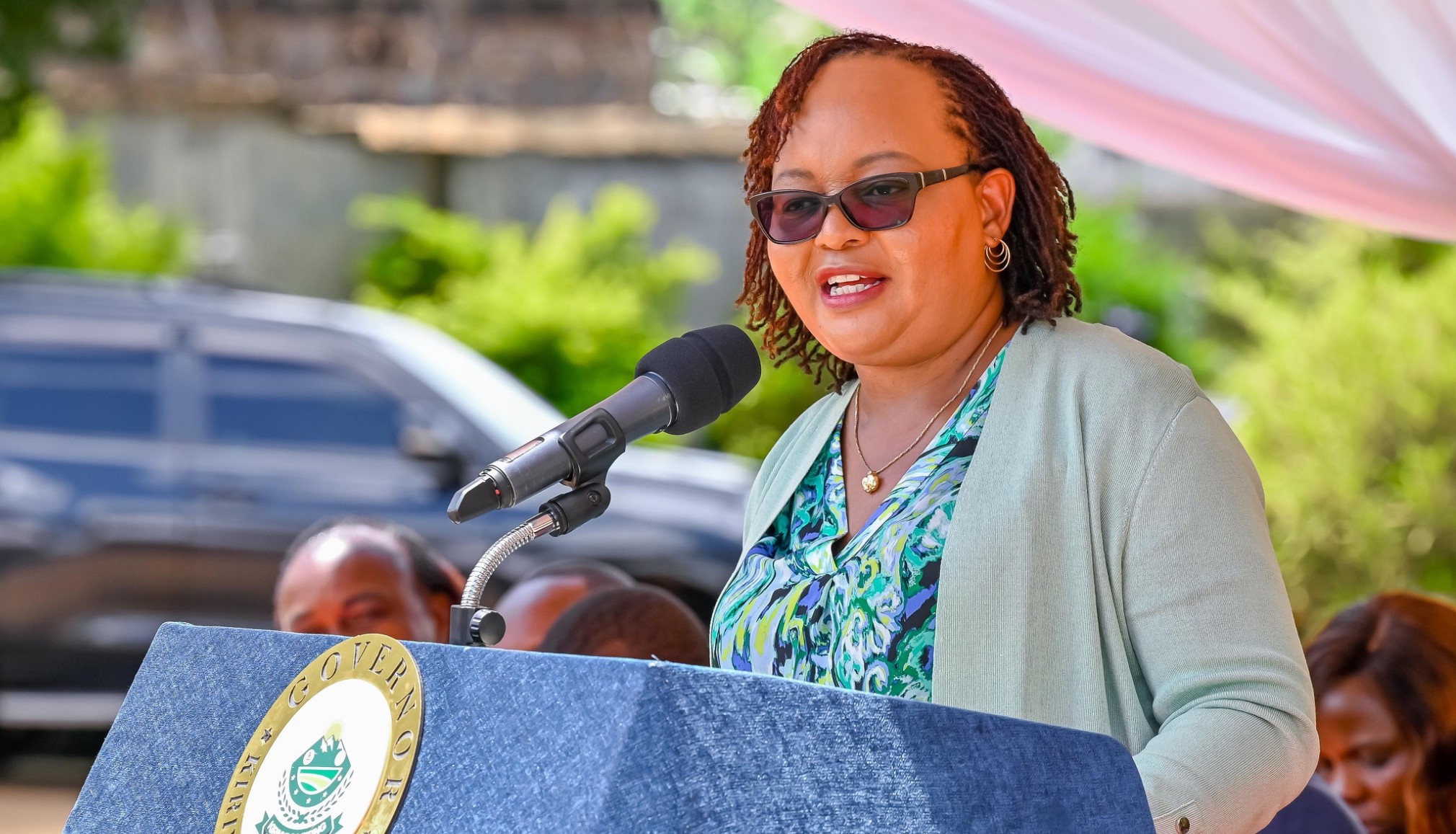
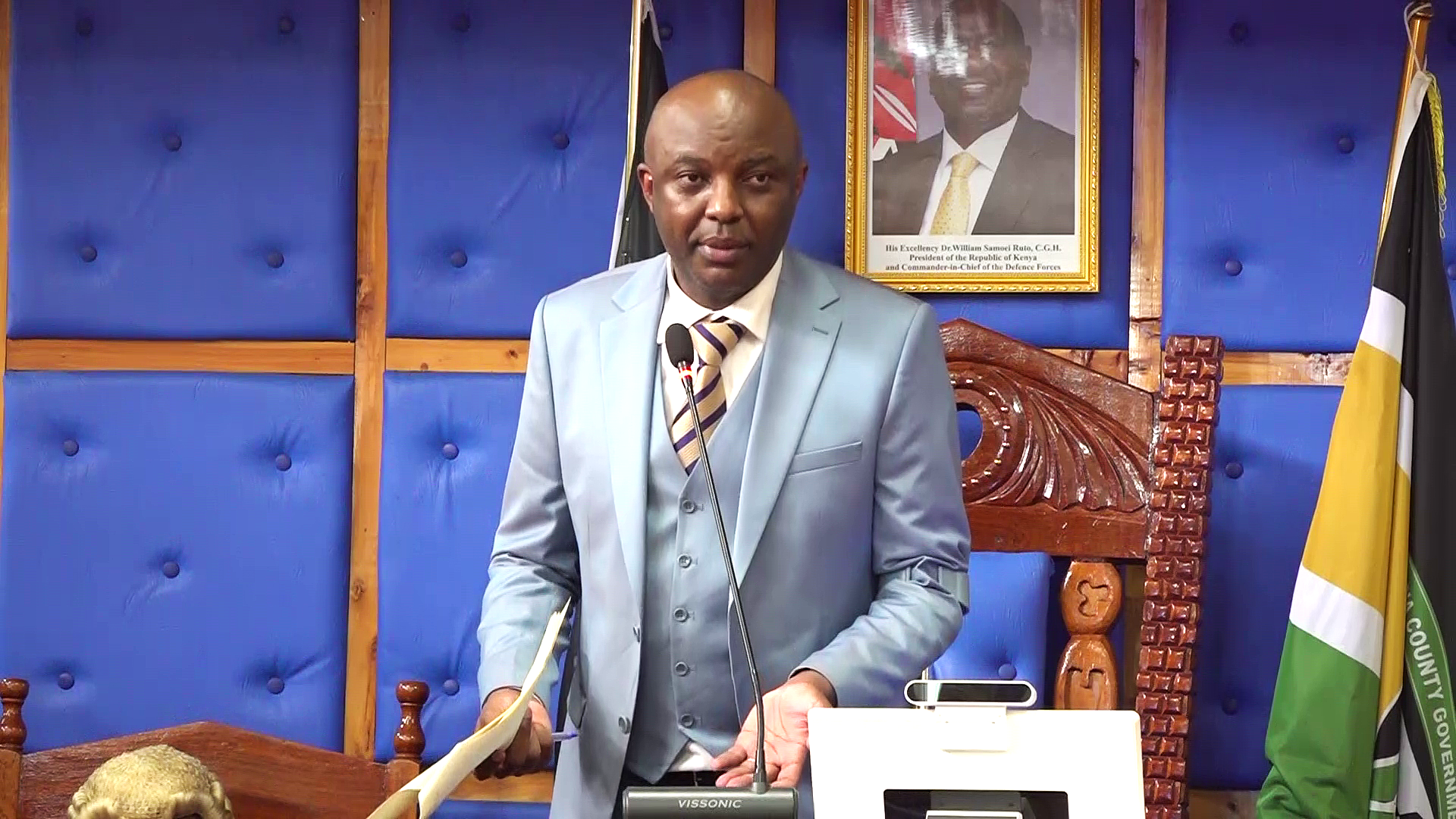
 Governor Irungu Kang'ata addressing Murang'a MCAs during the state of the county address on April 14, 2026/ ALICE WAITHERA
Murang’a Governor Irungu Kang’ata has defended the requirement that large-scale landowners surrender 10 per cent of their land when converting it from agricultural to commercial or residential use.
He insists the policy is necessary to safeguard the county’s future growth.
Kang’ata said the provision anchored in the Murang’a County Land Allocation and Lease Management Act, 2023, is designed to ensure adequate space for public utilities and orderly urban development amid increasing investor interest in real estate.
“We have been urged to allocate land freely. But public land is not a favour to be given, it is a trust to be protected,” he said during his state of the county address at the county assembly on Tuesday.
The law requires developers, particularly those converting large tracts of agricultural land, to set aside part of their land for public use such as roads, markets, schools and health facilities as a condition for development approval.
The governor acknowledged concerns raised by investors who have questioned the clause but maintained it is grounded in sound planning principles and long-term sustainability.
“We believe that the referred clause has logic. Where physical planning failed in the past, we now pay dearly,” he said, citing cases such as Kenol town where land for public utilities is now purchased at more than Sh50 million per acre due to poor prior planning.
Kang’ata warned that failure to enforce such measures would burden future administrations and residents with high costs of acquiring land for essential services.
“Therefore, we made a decision that we will not mortgage the future of the county to satisfy the present,” he said.
The county chief noted that the policy is intended to guarantee space for public services, promote orderly urban growth and ensure long-term value for both investors and residents, adding that proper planning is critical to sustainable development.
The county is currently experiencing rapid expansion, especially in real estate with the law expected to prevent unplanned settlements and integrate infrastructure with population growth, with developers who comply promised faster approvals.
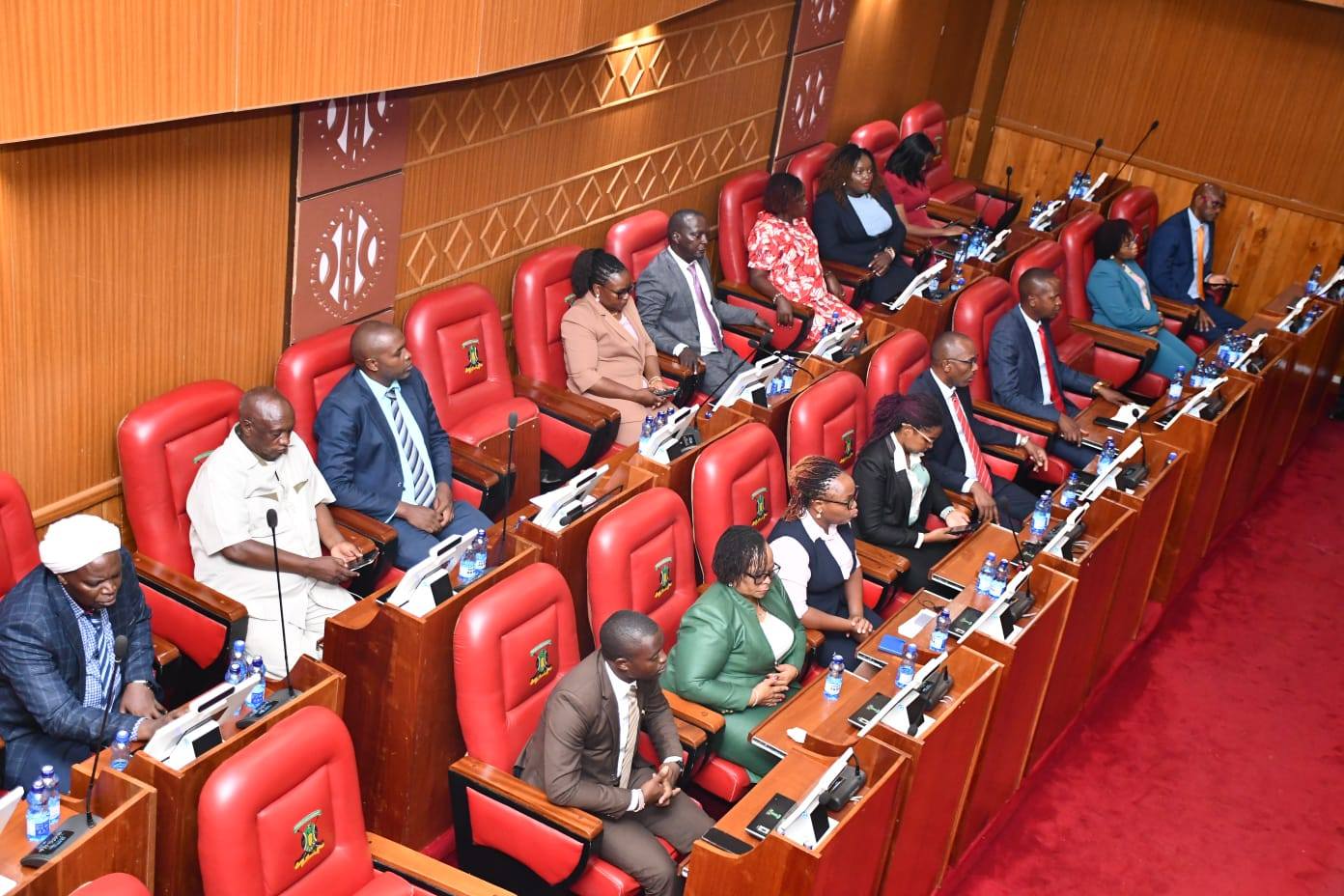 Murang'a MCAs during the state of the county address by Governor Irungu Kang'ata on April 14, 2026 /ALICE WAITHERA
The governor used the address to outline a broader vision centred on industrialisation, describing it as the county’s top priority in its next phase of development.
“Industrialisation is not one of our priorities, it is the priority. It is the only path to jobs at scale, higher incomes and a modern, urban economy,” he said.
Kang'ata said the county is focusing on agro-processing, establishment of industrial parks and strategic partnerships to transition Murang’a from a producer of raw materials to a value-adding economy.
He said ongoing investments in healthcare have significantly improved access to services, particularly for low-income households.
Through the Kang’ataCare programme, about 40,000 vulnerable families, translating to roughly 160,000 beneficiaries, are provided with free health insurance, enabling them to access affordable healthcare.
The county has also expanded specialised treatment with dialysis capacity at Murang’a Level 5 Hospital increasing from four to 12 units, handling about 25 patients daily.
Kigumo Subcounty Hospital has an additional five units serving 15 patients daily while a mobile dialysis truck with three units attends to nine patients each day in Gatanga and Kandara.
To address distance barriers, the county has scaled up telemedicine services, recording more than 70,000 virtual consultations in 2025 and more than 26,000 in 2026 so far.
Kang’ata said investments in infrastructure have seen the construction of new facilities such as Nyakianga Hospital in Mathioya, upgrading of Murang’a Level 5 Hospital and all level 4 hospitals, as well as the establishment of about 20 new dispensaries across the county.
“Delivery of health services requires efficiency, accountability and transparency,” he said, noting all health facilities have now been automated to improve service delivery.
In agriculture, the governor highlighted the Inua Mkulima programme, which has supported 86,000 farmers with certified maize seeds and fertiliser each planting season.
Additionally, 23,000 dairy and mango farmers receive quarterly subsidies of Sh2,400 each to boost production.
The county has also strengthened early childhood education through a school feeding programme that benefits about 40,000 learners in public ECDE centres, helping improve attendance and retention.
Kang’ata further pointed to ongoing urban upgrades under the Smart City programme, where streets in 47 shopping centres have been improved through tarmacking and enhanced drainage systems to create a more conducive business environment.