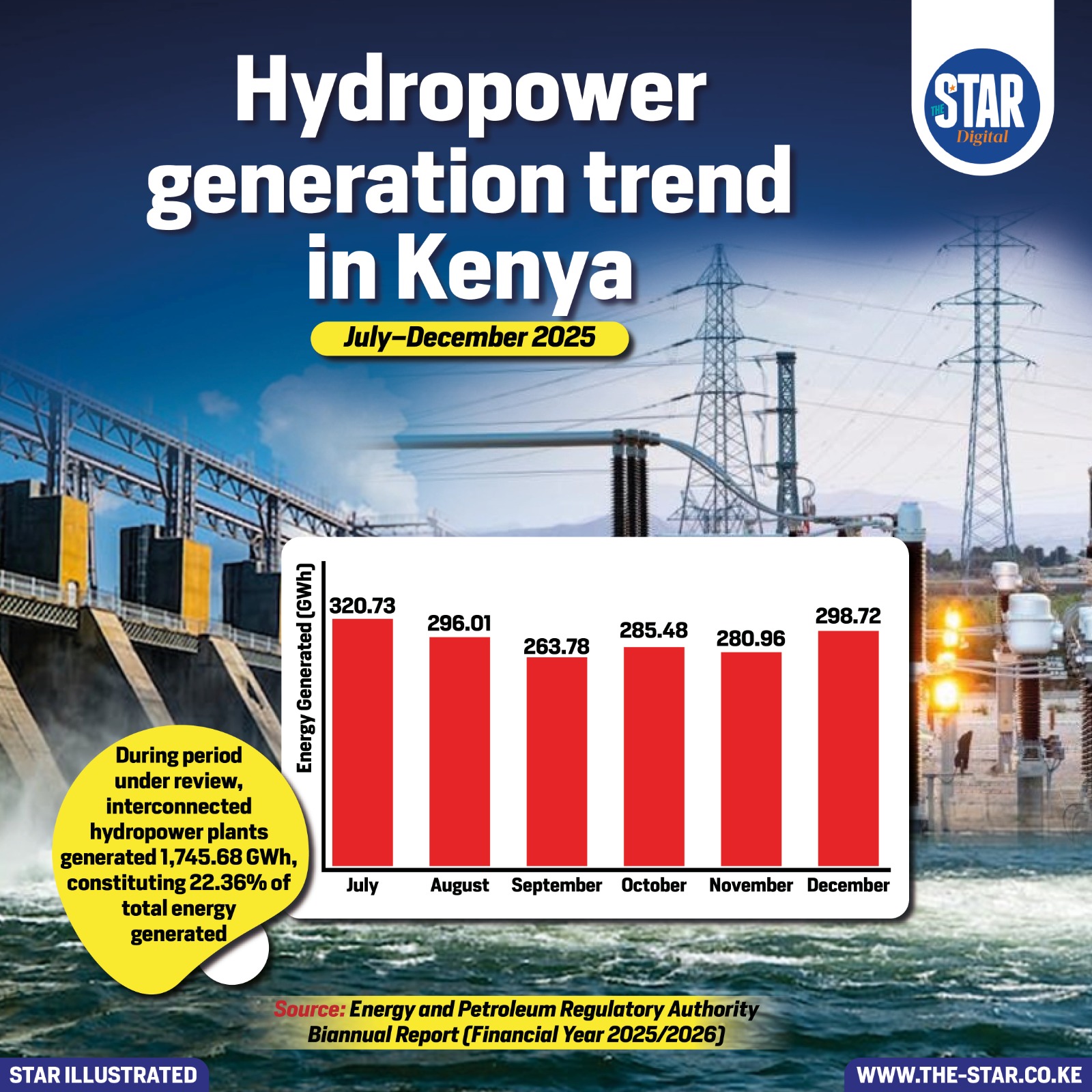
Hydropower remains a cornerstone of Kenya’s energy matrix, accounting for 22.36% of the total energy generated during the second half of 2025.
Between July and December, interconnected hydropower plants produced a cumulative 1,745.68 GWh of electricity. This contribution is a critical component of the national power supply, supporting both industrial needs and domestic consumption across the country.
The generation trend during this six-month window showed notable fluctuations. Production peaked in July, with hydropower plants contributing 320.73 GWh to the grid.
Following this high point, there was a gradual decline throughout the third quarter. August saw production dip to 296.01 GWh, eventually reaching the period's lowest output in September at 263.78 GWh.
A recovery phase began in the final quarter of the year. Output rose to 285.48 GWh in October, followed by a slight contraction to 280.96 GWh in November.
The year closed on a stronger note, with December recording a generation increase to 298.72 GWh. These variations in monthly output reflect the seasonal nature of hydropower, which is inherently tied to water availability and hydrological conditions.
As the Energy and Petroleum Regulatory Authority (EPRA) notes in its biannual report for the 2025/2026 financial year, the consistent performance of these plants ensures that renewable water-based energy continues to play a significant role in meeting the nation’s growing demand for electricity.