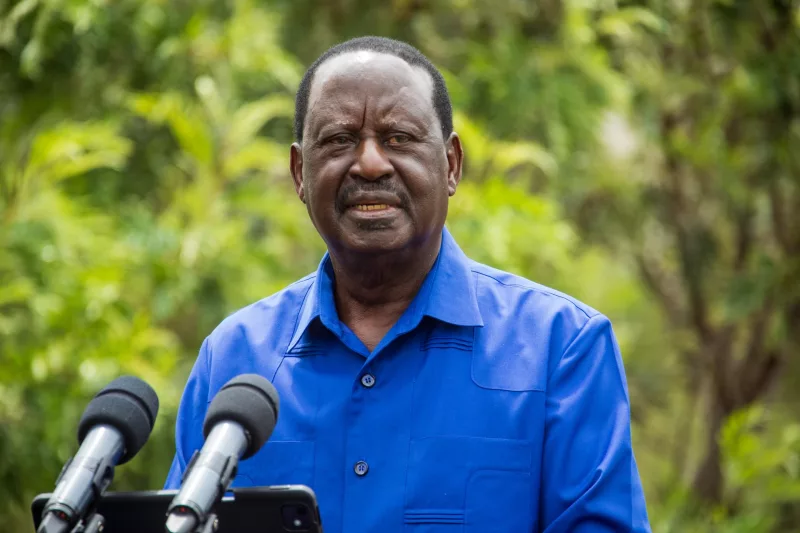

Mohamoud Dagane is a governance & public policy expert and former CECM for Roads, Transport and Public Works, Nairobi City County.
There is an old African wisdom that cautions: when a frog is seen running in broad daylight, it is not acting out of habit—it is escaping danger. Frogs belong to still waters and shaded quietude; they do not abandon their refuge without cause. So, when one darts into the open, the wise do not laugh at its movement—they interrogate the disturbance.
This timeless proverb could not be more fitting for the disturbing scenes recently witnessed outside Parliament, where a sitting governor was forced to flee in full public glare. It was not merely a moment of disorder—it was a signal that something within our governance architecture has gone fundamentally wrong.
Governors, like institutions, are not designed to run. They operate within structured legal frameworks—summons, hearings, and constitutional processes. Yet when these frameworks fracture, when civility yields to confrontation, even the most established offices can be reduced to survival mode.
The image of a governor sprinting under the midday sun is therefore not just dramatic—it is deeply symbolic. It reflects an institutional imbalance where oversight risks mutating into hostility, and accountability degenerates into public spectacle.
At the heart of this issue lies a constitutional paradox. The Kenyan Constitution is unequivocal on the Senate’s oversight role over county governments. Articles 96(3), 125, 226, and 185 collectively empower the Senate to summon governors, scrutinize public expenditure, and demand accountability.
These provisions are not ornamental—they are foundational to the integrity of devolved governance. However, such authority is neither absolute nor anarchic; it is bounded by the rule of law, procedural fairness, and institutional dignity.
What the country witnessed outside Parliament, involving the alleged manhandling of Samburu Governor H.E. Jonathan Lelelit Lati, marks a troubling departure from these principles. Physical confrontation, intimidation, and coercion have no place in a constitutional democracy.
They are not instruments of oversight—they are symptoms of its collapse. When the exercise of lawful authority descends into aggression, it ceases to be oversight and becomes abuse.
Equally concerning are the allegations by the Council of Governors in a press statement they issued on 10th of February 2026, the council of governors alleged that some senators have solicited bribes in exchange for leniency during oversight proceedings. A statement the senators have denied.
If true, these are not trivial claims—they strike at the very core of parliamentary integrity. Those allegedly accused occupy positions of immense public trust. Whether these allegations are substantiated or not, they demand urgent, impartial, and transparent investigation.
The Constitution provides clear mechanisms for such accountability. The Powers and Privileges Committee exists precisely to investigate misconduct, ethical breaches, and abuse of office within Parliament. Similarly, the Ethics and Anti-Corruption Commission (EACC) is mandated to independently probe corruption allegations.
The failure to activate these institutions in the face of such serious claims only deepens public suspicion and erodes confidence in governance systems.
It is important to state plainly: neither governors nor senators are above scrutiny. Governors must remain fully accountable for public resources, and the Senate must discharge its oversight mandate rigorously. But rigor must not be confused with recklessness. Oversight is not a weapon—it is a public trust function, to be exercised with fairness, objectivity, and respect for institutional boundaries.
The ongoing standoff, including the governors’ conditional refusal to appear before certain committee members, reflects a dangerous erosion of trust between two critical arms of devolved governance. This impasse cannot be resolved through confrontation or brinkmanship. It requires a return to constitutionalism—anchored in due process, mutual respect, and the primacy of law.
A Somali proverb captures this dilemma with piercing clarity: when one falls sick, he goes to the hospital for medicine—but what if the medicine itself falls sick? Or as another puts it: when you feel cold, you warm yourself by the fire—but what if the fire itself grows cold? These metaphors remind us that when the very institutions designed to resolve disputes become sources of dysfunction, the solution lies not in abandoning them, but in restoring their integrity.
And so, we return to the image of the running frog. It is easy to focus on the spectacle—the dust, the commotion, the indignity. But the wiser path is to ask the deeper question: what danger forced it out of its natural habitat?
When a governor runs in the open corridors of power, it is not just a personal moment of panic—it is a national alarm bell. It calls on us to look beyond the individual and confront the systemic failures beneath. For if our institutions can no longer guarantee order, dignity, and justice, then we must urgently ask: who—or what—will restore them?
The writer is a governance & public policy expert and former CECM for Roads, Transport and Public Works, Nairobi City County.