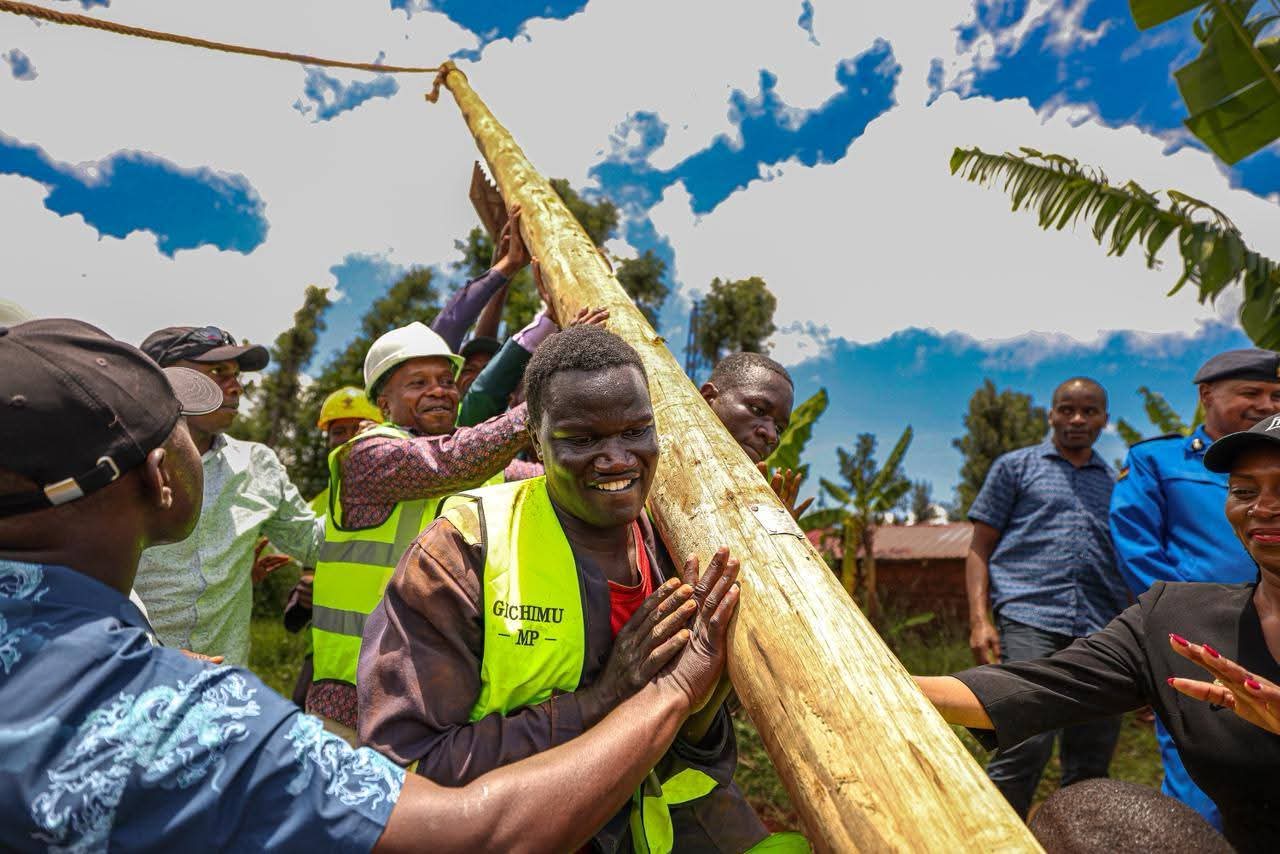
Residents of Kiaumbui in Gichugu constituency are set to benefit from a Sh10.9 million lastmile electricity connectivity project rolled out by the national government.
The project is expected to resolve long-standing disputes between residents and Kenya Power company over illegal connections and faulty meters.
Launched two weeks ago by Deputy President Kithure Kindiki, the project will connect more than 150 households, businesses and public facilities to the national grid, bringing hope to a community that has for years struggled with unreliable and informal electricity access.
Residents have said the initiative has marked a turning point in addressing persistent confrontations with Kenya Power officials, largely driven by past irregular connections undertaken by private contractors.
“We are happy that our village has been connected to power. This will go a long way in helping the vulnerable households and improving livelihoods in our community,” James Mwendia, a resident, said.
According to Mwendia, the root of the conflict dates back to between 2008 and 2009 when the utility firm contracted individuals to install electricity in homes.
However, the contractors allegedly failed to properly register meters with Kenya Power, resulting in discrepancies in official records.
“When Kenya Power officials visit, they tell you that your meter does not have your name registered to it or does not belong to this county. That is what has been causing confrontations between residents and the company,” he said.
Mwendia added that the installation of new, properly registered meters under the current project is expected to eliminate such disputes and ensure residents are formally recognised within the power provider’s system.
Beyond resolving conflicts, residents said the electrification drive will have far-reaching social and economic benefits, particularly in education and security.
Mwendia, a teacher, said that many learners have been disadvantaged due to lack of electricity at home.

“Some students have not been able to study effectively because of darkness. Electricity will give them the same opportunity as others. Education is an equaliser and this will uplift many families.”
Another resident, Martin Mugo, highlighted the irony of living near power lines yet remaining in darkness for years.
He said access to reliable electricity will unlock opportunities in business, healthcare and overall livelihoods while also enhancing security in the area.
Mugo revealed that some residents with irregular connections often fled their homes upon spotting Kenya Power officials, fearing penalties due to unregistered meters and illegal connections.
Francis Muriithi, also a resident, said the project has eased tensions related to wayleave disputes among neighbours, where some had previously denied access for power line installation across their land.
“In the past, getting electricity was difficult because of wayleave issues and we had to travel to Kerugoya to apply for connection. Now the process is being done here and it has made everything easier for us.”
He added that reliable electricity will spur local economic growth by enabling small businesses such as welding workshops and beauty shops to thrive within the village, reducing the need for residents to travel long distances for services.
He expressed optimism that the initiative will transform the village into a more secure, economically vibrant and self-sufficient community.
The Kiaumbui project is part of a broader electrification programme in Kirinyaga county targeting an additional 7,300 households at a cost of Sh440 million.
DP Kindiki had revealed that nationally, about 10.3 million out of 15.6 million households are already connected to electricity, with 1.4 million new connections achieved since 2023.