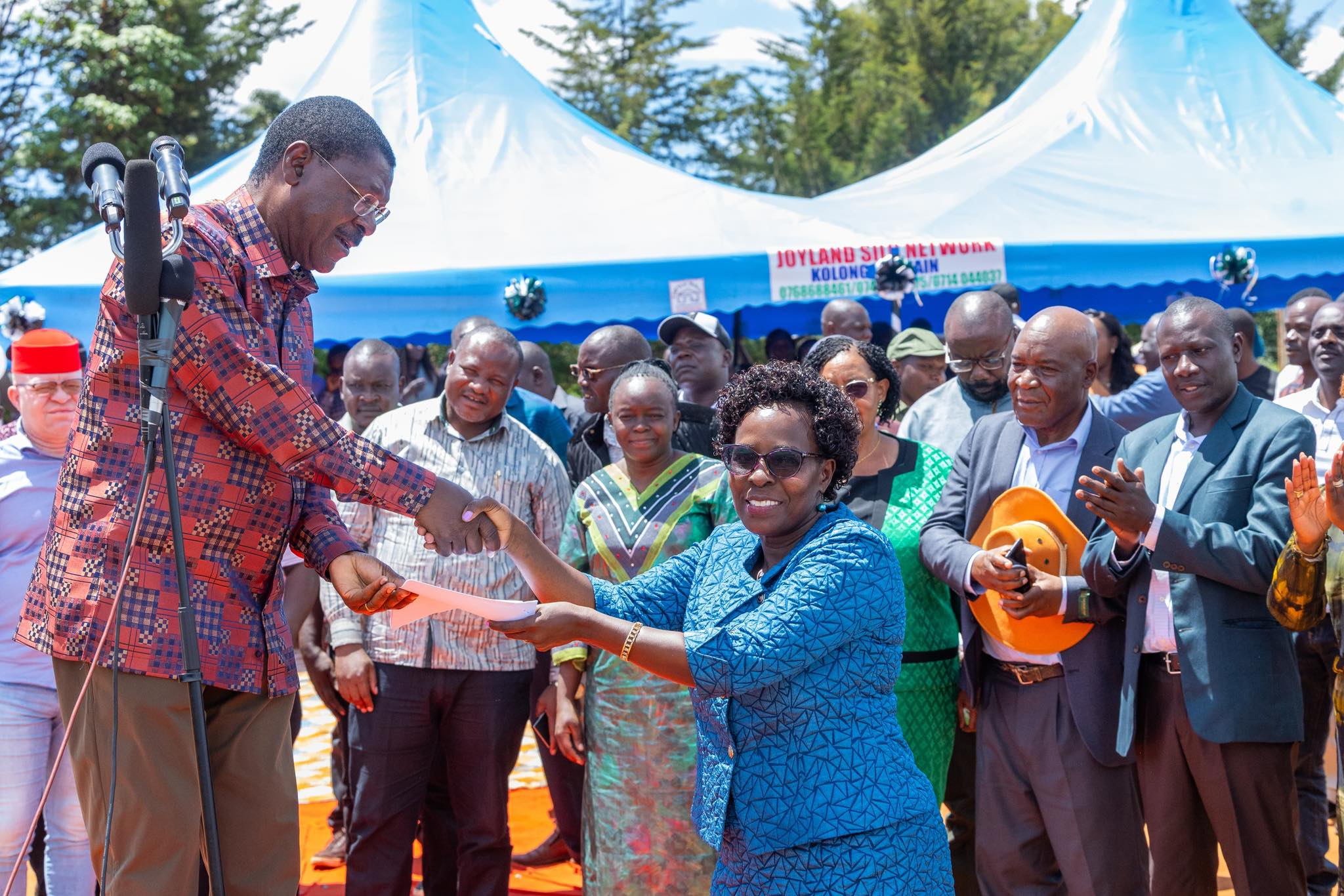
National Assembly Speaker Moses Wetang’ula is emerging as a key ally in President William Ruto’s 2027 re-election strategy, especially in Western Kenya politics.
Wetang’ula, popularly known among his supporters as “Papa Wa Roma”, is widely regarded as one of the most experienced political operators in the current leadership structure.
His dual roles as both Speaker of the National Assembly and leader of the Ford Kenya party places him at the intersection of parliamentary power and grassroots mobilisation, making him a valuable but complex ally in the Kenya Kwanza political arrangement.
His political weight was especially evident in the 2022 general election, when Western Kenya — particularly Bungoma county — delivered significant support for Ruto, defying earlier expectations of opposition dominance in the region.
That outcome not only reshaped the electoral map but also elevated Wetang’ula’s standing within the ruling coalition as a key regional mobiliser.
Political analysts said Wetang’ula’s strength lies in his long-game strategy, built over decades of political and legal experience.
From his early days as a magistrate to his long parliamentary career representing Sirisia and later Bungoma, he has steadily built a reputation as a calculated and resilient political actor.
His transition into the speaker’s chair has further expanded his influence, placing him at the centre of legislative decision-making at a time of heightened political sensitivity.
In recent months, the fluid political landscape has shifted further, following the working arrangement between Ruto’s United Democratic Alliance (UDA) and former opposition leader Raila Odinga’s (deceased) Orange Democratic Movement (ODM). The development has redefined parliamentary alliances.
The so-called “broad-based” arrangement, which includes major ODM figures, has eased legislative gridlock but also introduced new tensions over neutrality, balance and political influence within the House.
As speaker, Wetang’ula is now tasked with managing a more fragmented and unpredictable Parliament while ensuring smooth passage of government business.
Observers say he has become a stabilising force, holding together a delicate majority that depends on cooperation between former political rivals.
Critics say Wetang’ula’s active political engagement risks blurring the constitutional expectation of neutrality in the Speaker’s office, while his allies say his experience enhances his ability to manage political complexity without bias.
Wetang’ula has consistently defended his position, maintaining the constitution does not bar him from holding party leadership while serving as speaker.
He has also publicly emphasised his commitment to fairness and institutional integrity in parliamentary proceedings, arguing that political affiliation does not necessarily compromise procedural neutrality.
Looking ahead, speculation is already mounting about Wetang’ula’s longer-term ambitions beyond the current electoral cycle.
With a strong base in Western Kenya and an expanding network of parliamentary allies, he is increasingly being viewed not just as a regional power broker, but as a national figure with enduring influence.
Some political observers suggest his role in the 2027 elections may be just one phase in a broader trajectory that could extend into the post-2032 political order, where he could emerge either as a decisive kingmaker or a contender for higher office.
For now, however, Wetang’ula remains firmly embedded in the current power structure — balancing parliamentary leadership, party politics and shifting alliances in a political environment defined by negotiation, strategy, and long-term positioning.