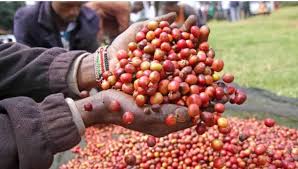
Kenya’s coffee is selling at some of the highest prices in decades. At the Nairobi Coffee Exchange, top lots are now fetching up to Sh51,743 per 50kg bag, nearly double what they earned just two years ago. It is worth noting that the prices of farm inputs and labour costs have also increased exponentially.
However, behind this surge lies a more uncomfortable truth: unless Kenya addresses two industry threats, a large share of this value could slip away just as quickly as it arrived.
The government has already signalled its intent. The recent enactment of the Coffee Act marks a major shift in how the sector is governed.
By separating coffee from the Agricultural and Food Authority and restoring a dedicated Coffee Board, the state is trying to bring focus, coordination and accountability back into the industry.
This is a necessary step. For years, fragmented regulation and weak oversight have held the sector back. A single, focused, regulator offers a chance to align policy with the needs of producers and the realities of global markets.
However, better laws alone will not fix the system. It is evident that two immediate challenges stand out; international market access and farmer payments.
The first challenge is external, but more urgent.
The European Union Deforestation Regulation, whose implementation kicks in December 30, now requires proof that coffee is not grown on land deforested after 2020. This means every farm must be digitally mapped and verified.
So far, progress has been slow. Estimates suggest that only about 30 per cent of Kenyan coffee farms have been geo-mapped, leaving nearly 70 per cent at risk of non-compliance.
Despite the adoption of the law nearly three years ago, this requirement is still poorly understood, especially among local farmers. Yet the implications are immediate.
Regardless of quality, coffee that is not properly documented will not be accepted into the EU, our single largest market taking roughly 55 per cent of our exports.
Unless Kenya accelerates the mapping and registration of farms, we risk losing access to a market worth an estimated about Sh90 billion annually, and the clock is ticking.
The second challenge is internal.
The Direct Settlement System represents one of the most important reforms in the sector. It is designed to ensure farmers are paid within 14 days of a sale. Timely payment is not just an operational issue, it is a matter of dignity and trust.
Yet implementation has stalled. Legal disputes and institutional resistance have slowed progress, leaving farmers exposed to the same delays and uncertainty that reforms were meant to eliminate.
As things stand, coffee is still moving through familiar channels where payments can take months and transparency is limited.
This gap between policy and practice is where the real risk lies, and while the introduction of a 2.5 per cent Coffee Development and Marketing Levy renews hope a new question emerges: how will these funds be used?
If managed well, the levy could support farmers in practical ways, by funding farm mapping and improving compliance with export requirements. If mismanaged, it risks becoming another cost that farmers carry without clear returns. The history of agricultural levies in Kenya makes producers cautious.
There is, however, one encouraging development. Domestic consumption of coffee is growing, with projections suggesting a 6.9 per cent increase in 2026, driven largely by urban youth and the expansion of café culture. It suggests that Kenya is slowly beginning to drink more of its coffee, reducing overreliance on export markets.
Still, exports will remain the backbone of the industry for the foreseeable future. What matters now is execution as Kenya does not lack policy ideas.
We have strong coffee, a respected global reputation and renewed political attention. What we have often lacked is follow-through, turning reforms into real improvements at the farm level.
The current price boom and local consumption surge give us a window to get this right. But we should be clear: high prices will not last. Global coffee markets are cyclical. What matters is whether we use this period to fix the fundamentals, payment systems and compliance capacity.
If we do, the sector can grow sustainably and bring more farmers back into coffee. If we do not, we risk repeating a familiar pattern: a temporary surge followed by another long decline.
Kenya’s coffee has always commanded respect in global markets because of its quality. That remains our strongest asset. We must now match that quality with systems that work, pays farmers on time, meet global standards and supports production over the long term.
The opportunity is real. So is the risk.
When the auction hammer falls at Sh51,743, the true measure of success will not be the price on the screen. It will be whether that value reaches the farmer, and whether the system behind it can sustain it as high prices at the auction do not automatically translate into high profits at the farm when the cost of production threatens the margins with the cost of fertiliser, labour and climate adaptation remaining at an all-time high.
The writer is a business leader, DBA graduate from the Indiana Wesleyan University and coffee farmer in Kenya