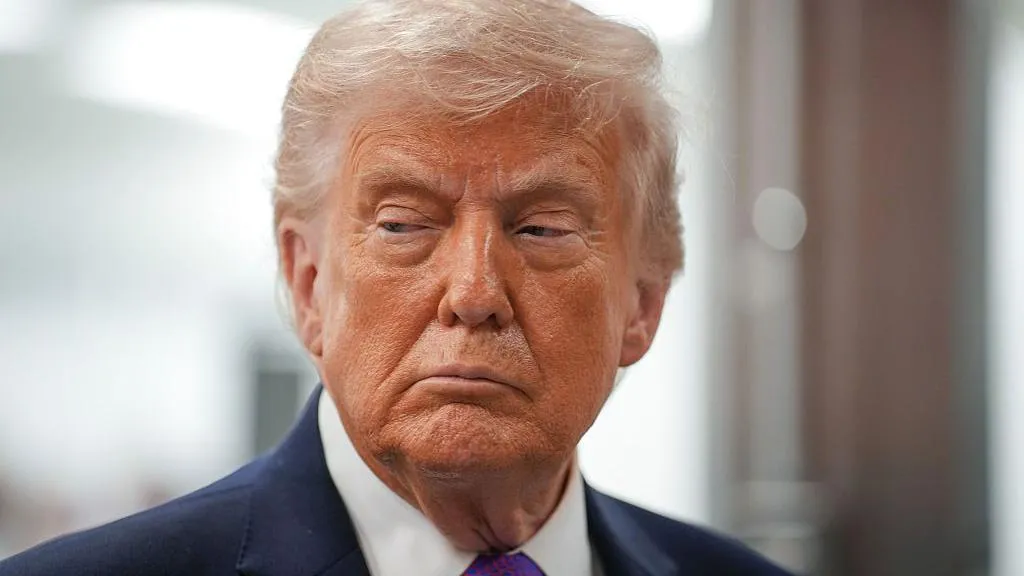
 US President Donald Trump.
US President Donald Trump has said American money should not buy condoms and other family planning products for Kenya.
He also said no American money should support male circumcision in the country or anywhere else in the world.
The proposal appears in the 2027 US Government Budget request released last Friday, which, unusually, mentions Kenya by name.
“The United States should not pay for the world’s birth control and therapy. Examples of eliminated activities include: Promoting health equity and providing condoms and contraception in Kenya,” the budget said.
Kenya stopped receiving US funding for circumcision and family planning last year when the current administration dismantled the Usaid.
Previously, such support would come through the Centres for Disease Control and Prevention, the President's Emergency Plan for Aids Relief (Pepfar) and other Usaid-funded programmes.
The proposed budget outlines a $4.3 billion cut to global health programmes compared to last year and signals a major shift in how Washington supports health systems in developing countries.
“The budget includes $5.1 billion for Global Health to end the previous administration’s abuse of these programmes and to execute the state’s newly released America First Global Health Strategy (AFGHS),” the proposal says.
Kenya, last December, signed a deal to receive $1.6 billion between 2026 and 2030 under the America First Global Health Strategy (AFGHS).
The proposal means the current US government is keen to direct how this money may be spent.
Health experts say condoms and circumcision are among the most effective tools in preventing HIV transmission, especially in high-burden regions.
The US government, in its statement to Congress, said President Trump wants to do more with fewer dollars and transition recipient countries to self-reliance.
“The budget would focus on new compacts that unify funding, achieving economies of scale in both implementation and oversight,” the statement said.
"Under the prior administration, only about 40 per cent of Pepfar funds supported actual service delivery, including medications, testing, commodities and health workers, with the remaining 60 per cent wasted on duplicative administrative costs, unwieldy supply chains and layers of endless bureaucracy."
The budget proposal will go to Congress, where lawmakers can change the figures, remove cuts or add funding, meaning the President’s plan is not final.
An analysis by the Kaiser Family Foundation (KFF), a health policy research organisation, raised concerns that the budget proposal does not mention US funding of the Global Fund, which buys HIV drugs for thousands of Kenyans.
“The bilateral funding does not include a specific funding amount for the Global Fund in financial year 2027 but commits to leveraging $2 from other donors for every $1 from the United States. It also states that funds may not exceed 33 per cent of the total amount contributed to the Global Fund,” KFF explained.
There’s also no provision of funding to Gavi, the major financier of vaccines to Kenya.
“[It] does not provide funding for Gavi and states that any future FY 2027 funding for Gavi is “contingent on the organisation making necessary reforms and meeting certain benchmarks on vaccine safety.”
The budget also proposes removing disease-specific funding streams.
“The budget would also eliminate disease-specific accounts and provide the department crucial agility to address the actual needs of each recipient country—across HIV-Aids and other infectious diseases such as malaria, tuberculosis and polio—to strengthen global health security and protect Americans from disease,” the budget statement said.
A separate analysis by Devex notes this budget proposal is not final, with Congress having the ultimate say on funding.
“Case in point: Congress approved in February $9.4 billion for global health for the fiscal year 2026 after Trump requested just $3.8 billion,” the analysis explained.
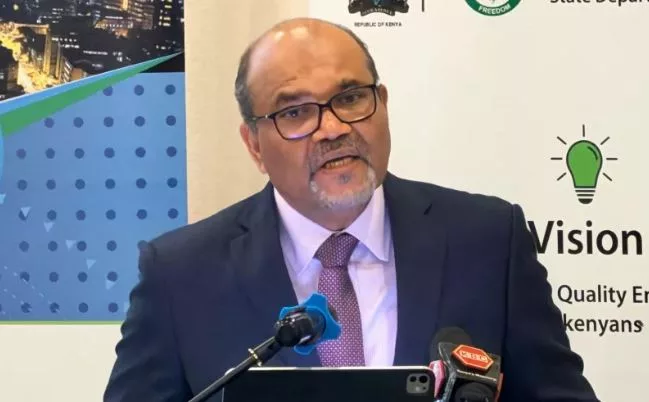
![Africa CDC Director General Dr Jean Kaseya at a past event. [Photo: Arthur Mbuguah, WHM]](https://cdn.radioafrica.digital/image/2026/10/8ced213c-affb-4dff-97ca-1b6bac1f958e.webp)