
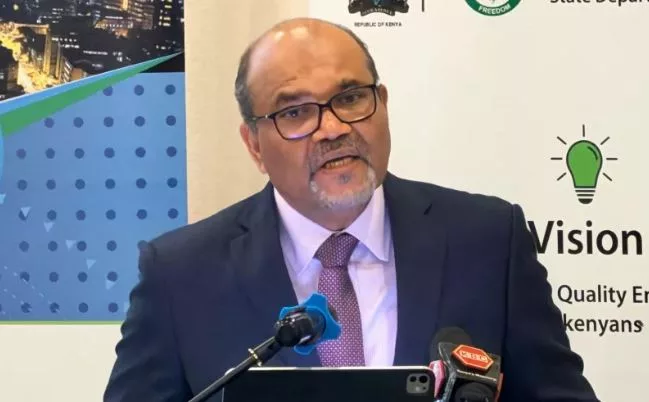
 Dr Mercy Mwangangi, the SHA CEO.
This benefit, which was offered under the defunct NHIF, was suspended when SHA took over in October 2024 but has now been restored.
SHA CEO Dr Mercy Mwangangi told The Star Health the new package will only be available to paid-up members and is limited to procedures that are not available locally.
She said the Benefits Advisory Panel, led by Prof Walter Jaoko, identified 36 such procedures, mainly involving highly specialised care.
“We're very pleased to inform Kenyans that starting on the 14th April, Kenyans can come to SHA and access the overseas treatment package. There's been a lot of hue and cry from Kenyans wanting to access this package, and we've finally been able to meet the merits of the law, we've finally been able to do the contracting process, we have nine providers who have already come in,” she said.
She explained that many of the procedures that used to take Kenyans to India will no longer be funded.
“For example, kidney transplants for adults are no longer eligible because we have providers locally. However, paediatric kidney transplants are still eligible because that speciality is not well developed in Kenya,” Dr Mwangangi said.
Other procedures, such as hip and knee replacements, have also been removed from the overseas list due to increased local capacity, while more complex interventions - including some congenital heart conditions in children and advanced cancer treatments like proton therapy - remain covered.
Under the new system, patients must go through a detailed referral and approval process before qualifying for treatment abroad. Dr Mwangangi said the aim is to ensure that overseas care is only used when necessary.
“Step one is that you must be seen by a doctor in Kenya who will provide a referral note confirming that your condition cannot be managed locally,” she said. “The doctor must then fill out a KMPDC referral form, which is certified by the regulator.”
Patients must also submit a SHA referral form confirming active membership, a comprehensive medical report, a treatment plan from the overseas hospital, and a proforma invoice indicating the expected cost.
“All these documents are then submitted to SHA for review. The case is assessed internally by a team of doctors and relevant experts to confirm that the procedure is not available locally and that the request meets the approved criteria,” she said.
If approved, SHA will cover up to Sh500,000 per patient annually. Any additional costs must be met by the patient.
The package does not cover travel, accommodation or other logistical expenses, meaning patients will still need to raise significant funds to access care abroad.


![Africa CDC Director General Dr Jean Kaseya at a past event. [Photo: Arthur Mbuguah, WHM]](https://cdn.radioafrica.digital/image/2026/10/8ced213c-affb-4dff-97ca-1b6bac1f958e.webp)