Kenya’s energy sector witnessed a consistent upward trajectory in electricity consumption during the final half of 2025, reflecting growing domestic and industrial activity across the country.
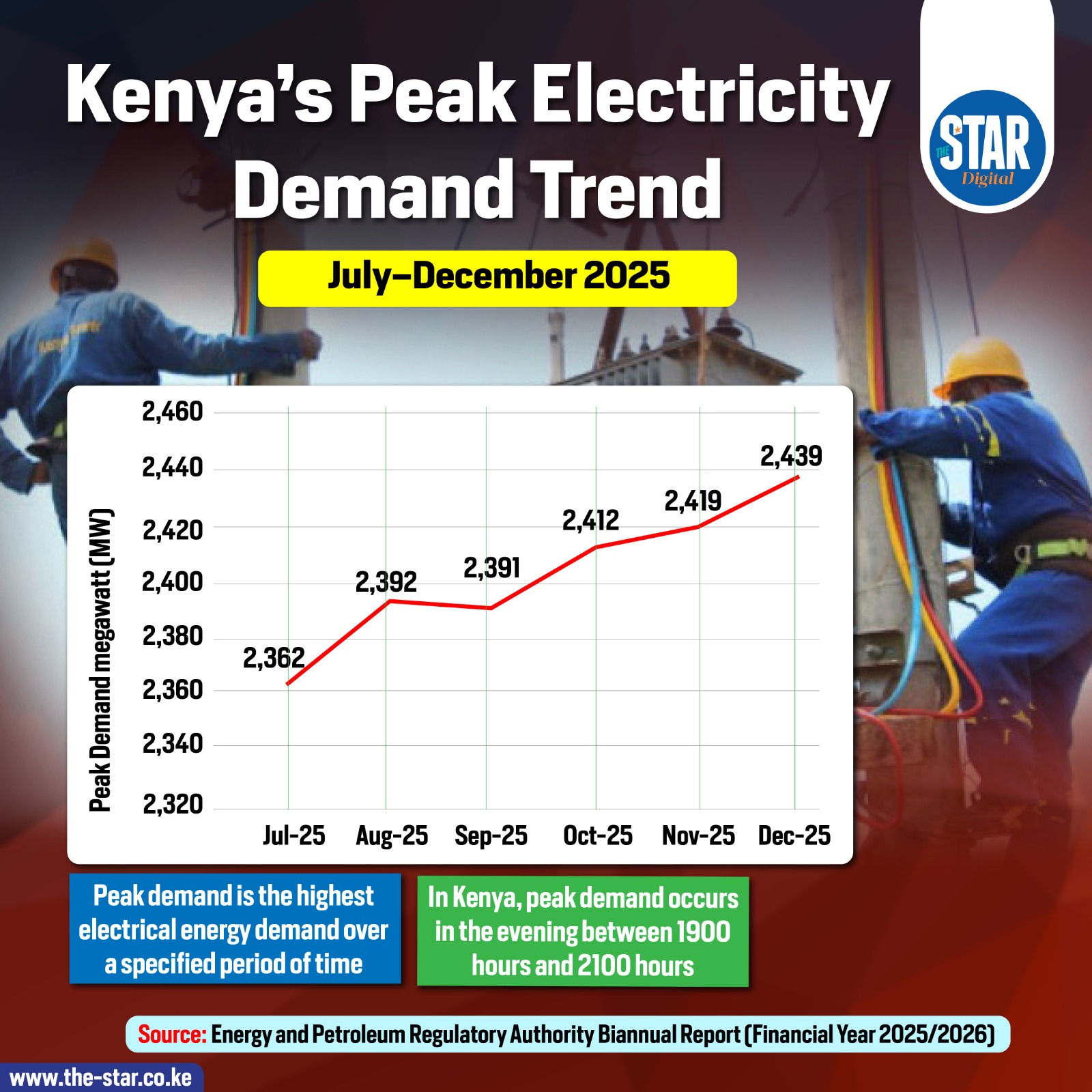
Data from the Energy and Petroleum Regulatory Authority (EPRA) reveals that peak demand rose from 2,362 megawatts in July 2025 to a high of 2,439 megawatts by December 2025. This steady growth highlights the increasing pressure on the national grid to meet the needs of a developing economy.
The trend showed a notable jump between July and August, where demand climbed to 2,392 megawatts. Following a slight, marginal dip in September to 2,391 megawatts, the requirement for power resumed a sharp climb.
By October, peak demand reached 2,412 megawatts, continuing to 2,419 megawatts in November, before hitting the year-end peak in December. This seasonal surge is often associated with increased commercial activity and holiday festivities that characterize the close of the calendar year.
In the Kenyan context, peak demand, defined as the highest electrical energy requirement over a specific period—typically occurs in the evening hours.
The most intensive pressure on the power system is recorded between 1900 hours and 2100 hours. This two-hour window represents the critical period when households and businesses simultaneously draw maximum power, necessitating robust management by energy providers.
These figures, captured in the EPRA Biannual Report for the 2025/2026 financial year, serve as a vital indicator for future infrastructure planning and the stability of the national energy supply.