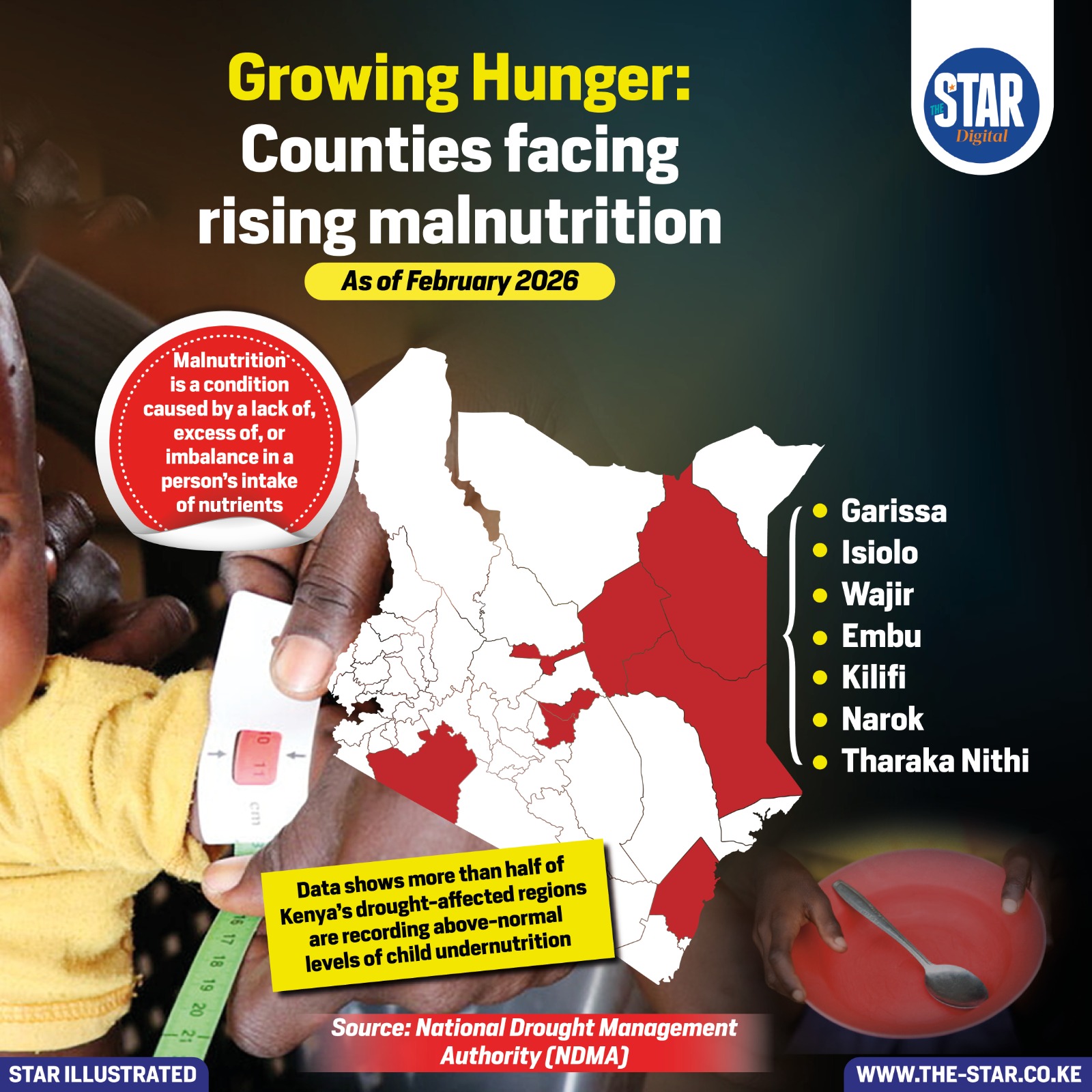
National Drought Management Authority reports indicate a deteriorating nutritional landscape across Kenya, with over half of the country’s drought-affected regions now recording above-normal levels of child undernutrition.
As of February, the surge in malnutrition cases has reached a critical threshold in seven specific counties, signalling a growing hunger crisis that demands immediate attention.
The affected areas span various geographical belts, including Garissa, Isiolo, Wajir, Embu, Kilifi, Narok, and Tharaka Nithi.
In these regions, the prevalence of malnutrition—defined as a condition stemming from a lack, excess, or imbalance in nutrient intake—is increasingly evident among vulnerable populations.
The NDMA data highlights a direct correlation between ongoing drought conditions and the rising inability of households to secure adequate dietary requirements, specifically impacting children who are most susceptible to the long-term effects of undernutrition.
While malnutrition is often associated with a simple lack of food, officials emphasise that the current trend includes a dangerous imbalance of essential nutrients necessary for healthy development.
The concentration of these cases in both coastal regions like Kilifi and arid northern counties like Wajir suggests a widespread systemic challenge.
With data showing that the majority of drought-hit areas are now surpassing historical norms for undernutrition, the situation underscores an urgent need for targeted nutritional interventions.
This spike in child undernutrition serves as a primary indicator of the deepening food insecurity currently gripping these seven counties as they struggle against the persistent impact of environmental shocks.