 Mwereni Secondary School performs a play titled Precious Blood about a student known who through TikTok won an education scholarship courtesy of Equity Bank's Wings to Fly/ ALICE WAITHERA
The Kenya National Drama and Film Festival has once again come under sharp focus over concerns about the direction of scripts.
Stakeholders are warning against the creeping influence of political messaging in student productions. Festival chairperson Prof Christopher Joseph Odhiambo emphasised that while the platform encourages bold storytelling, it is not meant to be a stage for ‘side shows’ that deviate from its educational purpose.
“Our mandate is not to engage in any side shows but to help the Kenyan child develop their talents and skills so that they can have something to live on,” he said.
“What we are interested in is work of art that enables us to create awareness about the social, economic and development issues that are facing this country,” he said.
“There are so many artistes out there. They can engage with the themes that we are not engaging with. And I think we should be very, very clear that ours is what we call edutainment.”
The organisers have reiterated their intention to reassert the original intent of the festival as an educational and developmental platform.
Prof Odhiambo clarified that while schools are free to interpret the annual theme, the responsibility lies with teachers and learners to remain within the broader goal of addressing social and developmental issues.
“The National Drama Festival, the Ministry of Education and the government do not decide for schools the topics they choose. Our job is not to prescribe. Our job is to describe,” he added.
This year’s theme, ‘Bold Storytellers: Digital Stages, Driving Kenya’s Development Through Theatre and Film,’ has given participants wide latitude to promote awareness of societal challenges.
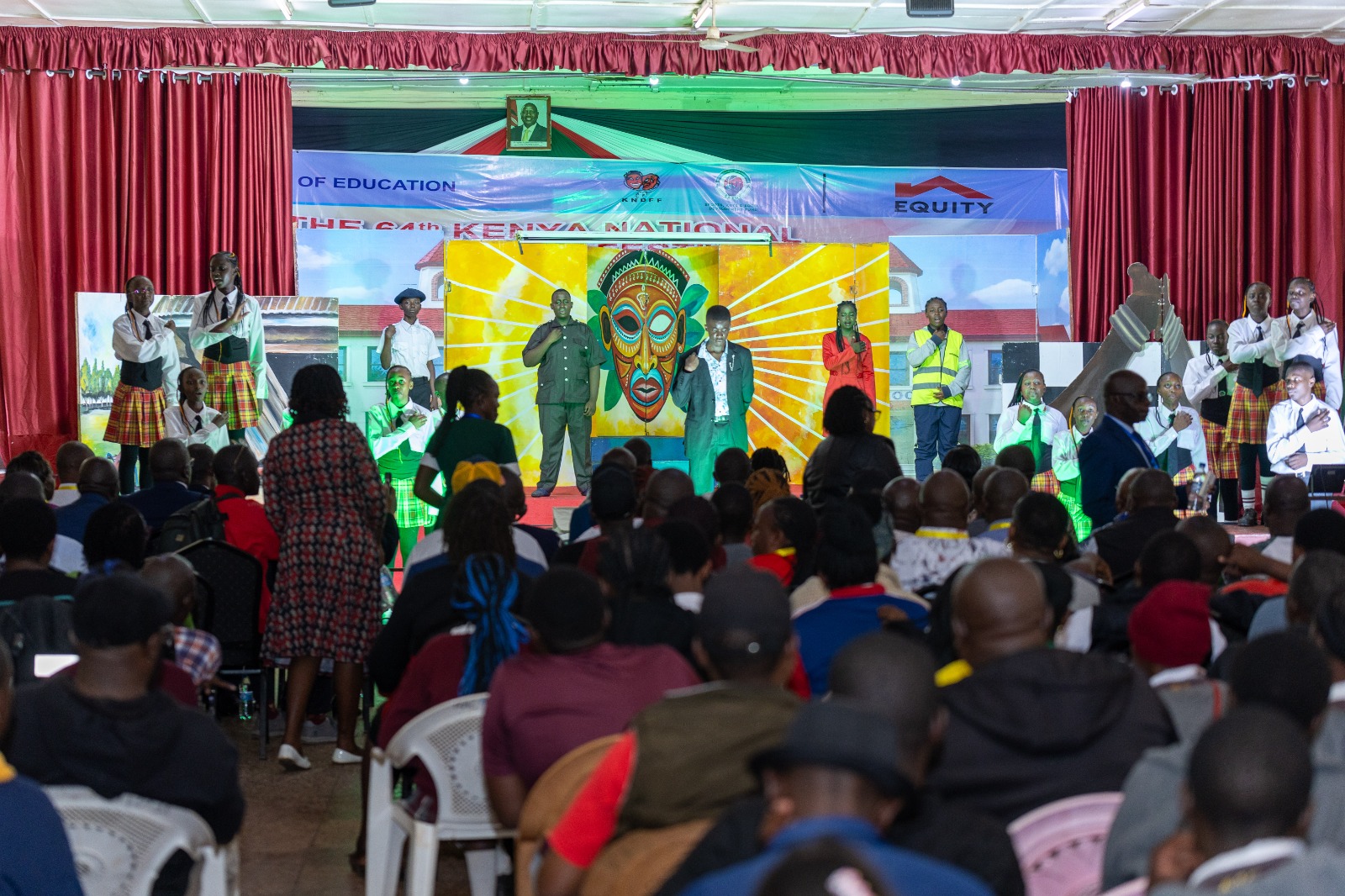 Fesbeth Academy Kakamega performs a play at the 2026 Kenya Nationals Drama and Film Festival (KNDFF) nationals edition at Kagumo TTC, Nyeri/ ALICE WAITHERA
Last year, a play by Butere Girls High School sparked national debate after it was reportedly barred from being staged over its perceived political undertones, raising questions about censorship and artistic freedom in schools.
The school went to court and an order was issued allowing it to perform.
Tensions later escalated during the festival and the learners only performed the national anthem before leaving the stage in protest.
The issue was reignited this year following reports that Moi High School Mbiruri’s play titled The Gap was disqualified for going against set guidelines and referencing ‘Singapore’.
The school earned top honours last year with their winning play The Classmate, a production widely praised for its emotional depth and for addressing issues faced by learners in the Kenyan academic system.
Kenya Institute of Curriculum Development CEO Prof Charles Ong’ondo underscored the importance of the festival in complementing formal learning.
"We recognise the powerful role of this platform in exercising the non-formal curriculum but also in complementing what we do in the formal curriculum,” he said.
He added that the institute has integrated technology into the festival experience, including live broadcasting and archiving performances for future reference.
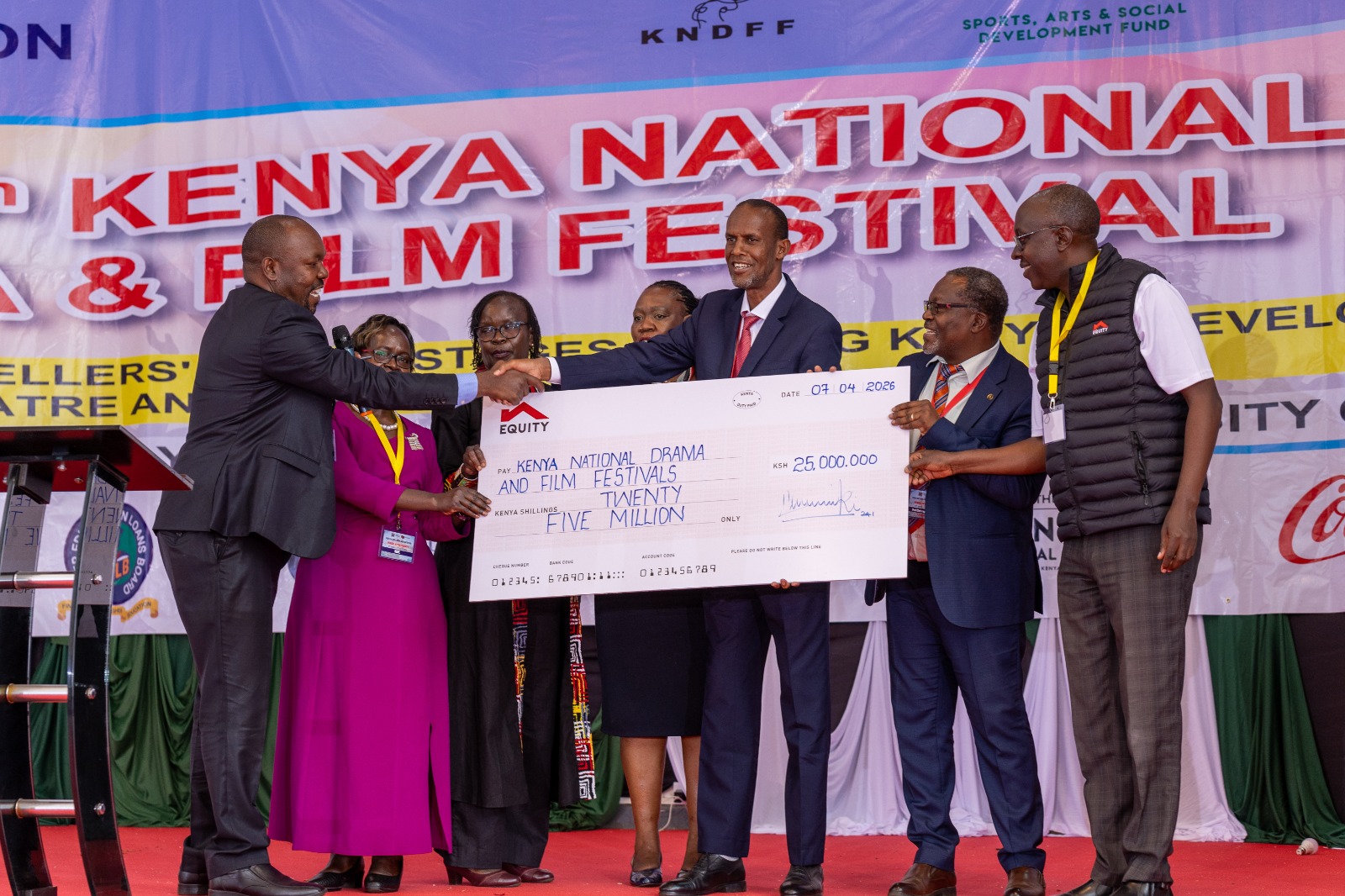 Equity Bank’s head of Education Peter Ndoro (far
left) hands over a Sh25 million cheque to Dr. Elyas Abdi Jillaow, the Director
General in the Ministry of Education at the opening ceremony of the drama
festival at Kagumo Teachers Training College, Nyeri/ ALICE WAITHERA
Equity Bank’s head of Education Peter Ndoro (far
left) hands over a Sh25 million cheque to Dr. Elyas Abdi Jillaow, the Director
General in the Ministry of Education at the opening ceremony of the drama
festival at Kagumo Teachers Training College, Nyeri/ ALICE WAITHERA