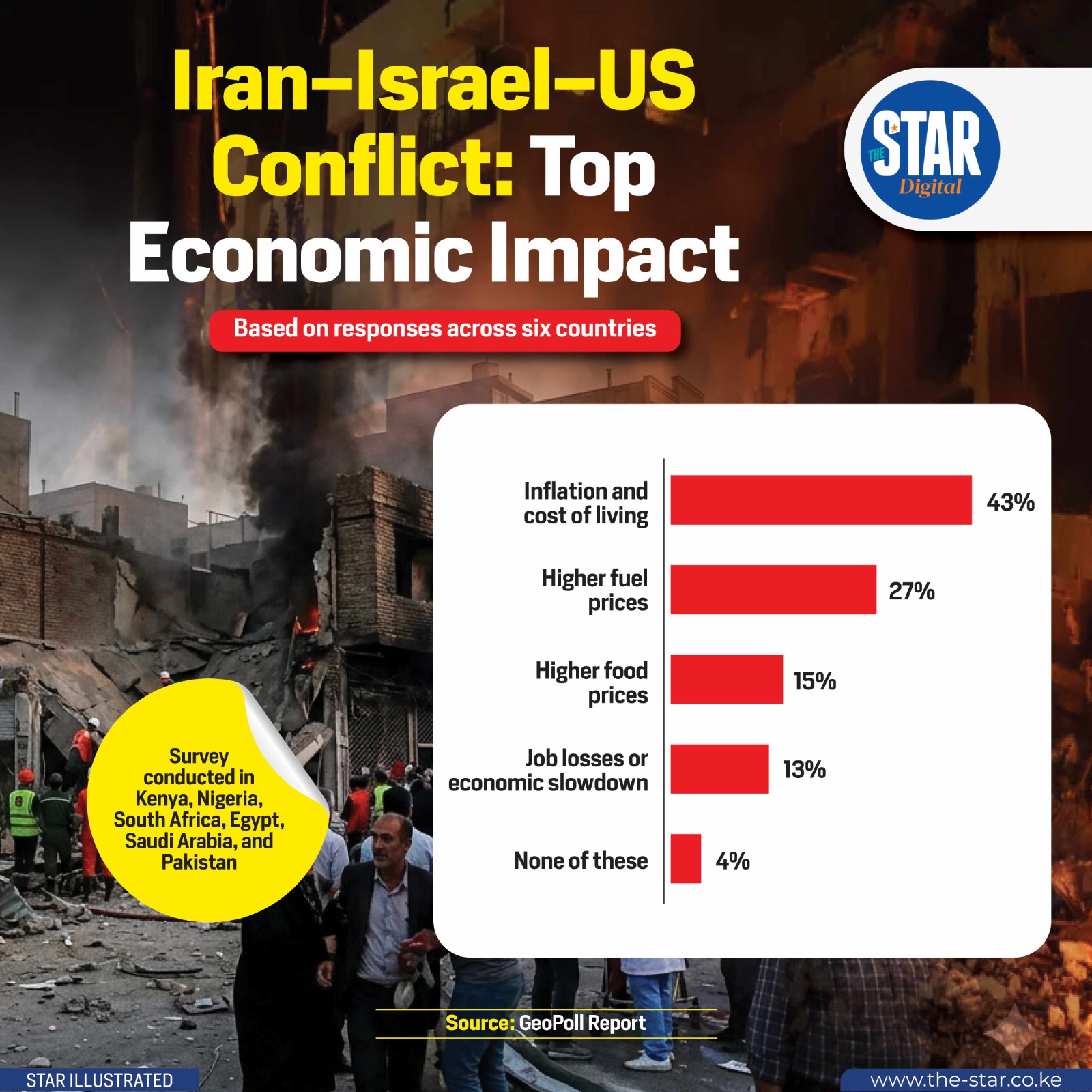
The intensifying conflict between Iran, Israel, and the United States has cast a long shadow over global economic stability, with citizens across six key nations—Kenya, Nigeria, South Africa, Egypt, Saudi Arabia, and Pakistan—reporting significant financial strain.
High-level geopolitical friction often translates into kitchen-table anxieties, and the current sentiment reflects a world bracing for impact.
Inflation and the rising cost of living stand out as the primary concern, cited by 43% of respondents. This widespread apprehension highlights how regional instability quickly disrupts global supply chains, devaluing local currencies and eroding purchasing power.
Following closely behind is the volatility of the energy market; 27% of those surveyed identify higher fuel prices as a top economic consequence. Because fuel costs underpin the transport of virtually all consumer goods, this spike acts as a secondary driver for broader inflation.
The ripple effects extend into food security, with 15% of respondents pointing to higher food prices as a direct result of the ongoing conflict.
Furthermore, 13% of the population in these regions is already witnessing or fearing job losses and a general economic slowdown. While a small minority of 4% reports feeling no impact, the overwhelming majority describes a landscape of tightening budgets.
These figures underscore the reality that in an interconnected economy, a conflict centered in the Middle East does not stay contained; it manifests as a tangible financial burden for millions across Africa and Asia.





Comments 0
Sign in to join the conversation
Sign In Create AccountNo comments yet. Be the first to share your thoughts!