The warning came even as the government revealed an attempted scheme that could have pushed pump prices up by more than Sh40 per litre.
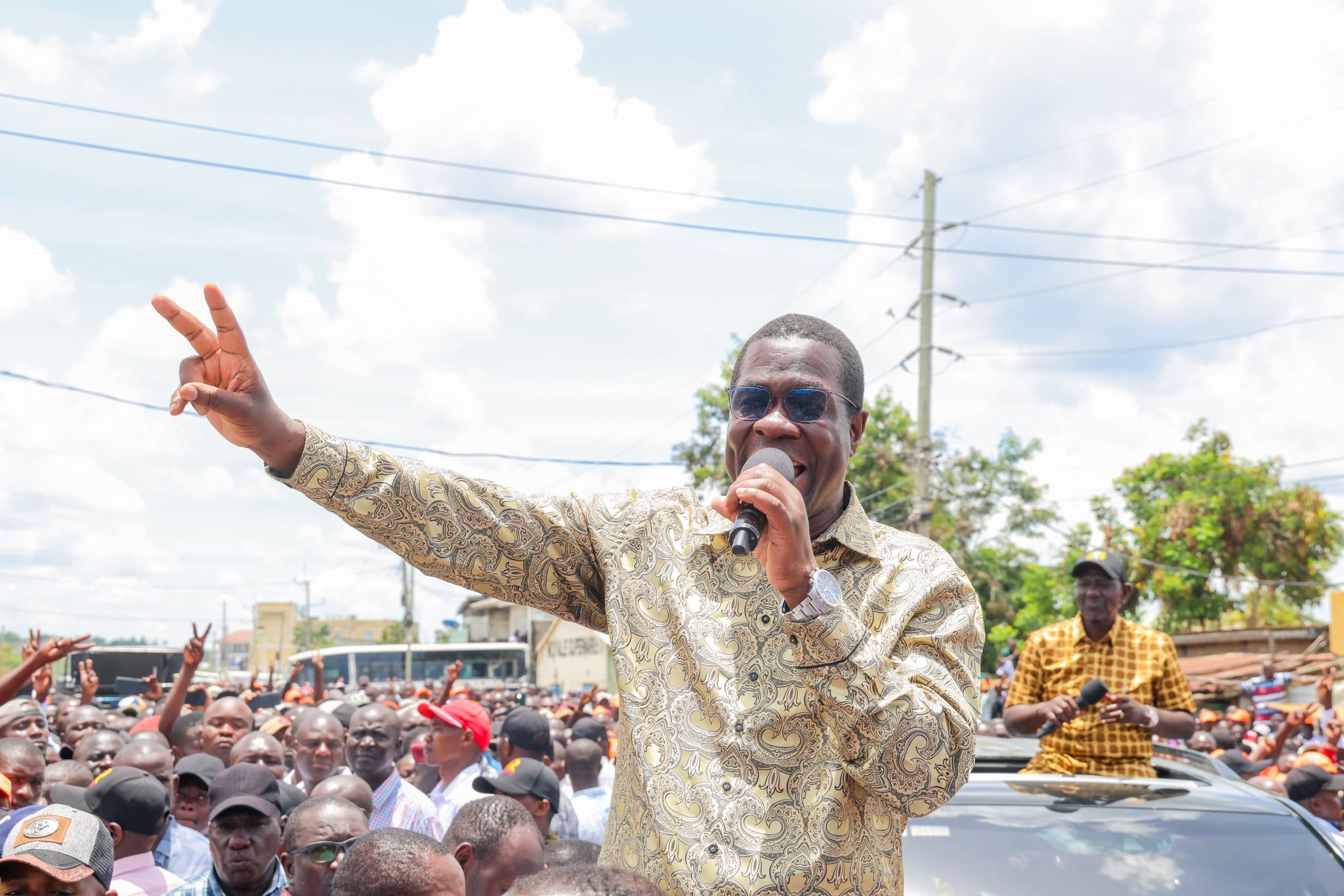
Speaking in Kilgoris, Narok county, Ruto said his administration will act decisively against cartels in critical supply chains.
“In this country, as I said before, we will not talk about corruption but will act decisively,” President Ruto said.
“We dealt with fertiliser cartels, sugar cartels and coffee cartels. The oil cartels will face the music; they cannot escape,” the President said.
His remarks came as Energy Cabinet Secretary Opiyo Wandayi broke his silence on the crisis, saying it was his call that saved the country.
“I called the PS (Mohamed Liban) at midnight and ordered him to cancel the second cargo,” he told the Star on Sunday.
In response to an enquiry by the Star on what his ministry knew about the deal, the CS said the directive is what saved the country.
“We would be now talking about two cargoes, all with the cost implication that would have ensued,” Wandayi said.
The Star established that the government was not aware that the imports were outside the G2G framework until March 30, when authorities discovered the foul play.
Correspondences by officials did not show the cargo was outside G2G because that would mean a policy shift and would have required Cabinet approval.
“We did not know, as the cargo was from the Saudi Aramco IOCs and One Petroleum. The prices were also not indicated, so it was impossible to detect,” a source familiar with the matter explained.
In a press statement, the CS disclosed that one cargo came through the government-to-government (G-to-G) framework and another through a separate supplier.
He disclosed that One Petroleum’s cargo was priced at Sh198,855 per metric ton, while that by Gulf Energy, which is under the G-to-G system, landed at Sh140,111 per metric ton.
The difference of Sh58,744 per metric ton, he argued, translated to a price hike of about Sh43.4 per litre.
The CS framed the pricing disparity as evidence of a possible attempt to push fuel prices higher at the expense of consumers.
The revelations came in the wake of resignations of senior officials in the Petroleum Ministry and its agencies.
They include Petroleum PS Mohamed Liban, Energy and Petroleum Regulatory Authority boss Daniel Kiptoo, and Kenya Pipeline Company managing director Joe Sang.
Investigators are questioning them over the alleged irregular fuel importation deal.
Others who resigned are the director for Petroleum, Joseph Wafula, and Logistics manager Joel Mburu.
Wandayi said the government took pre-emptive action after detecting anomalies and halted the delivery of the second fuel cargo.
“When full information about the fuel shipment emerged, we stopped the delivery of a second cargo under similar circumstances, thus protecting and securing public interest.”
Even so, the CS allayed fears of supply disruptions, insisting that the country has adequate fuel stocks to meet demand.
“We have sufficient stocks of petroleum products to meet current demand,” he stated.
He reassured motorists and businesses wary of potential shortages or price spikes, saying the G-to-G fuel import framework ‘remains stable and resilient’.
The system was introduced to cushion the country from global oil price volatility, including the ongoing tensions in the Gulf.
Wandayi struck a tough tone, warning that the state will not tolerate manipulation of the sector.
“There will be no tolerance for cartels, profiteers or extortionists seeking to exploit the uncertainty for personal gain,” he said.
He accused a section of political leaders of fuelling panic through a “campaign of disinformation” around the saga.
He said the ministry has launched an internal review of petroleum product management systems.
The review, Wandayi said, aims to reinforce accountability and prevent a recurrence of the issues now under investigation.
The ministry is also working with other state agencies to maintain operational stability in the sector as investigations continue.
Wandayi urged the public to remain patient and allow an independent probe.
He distancing the G-to-G framework from some of the companies mentioned in the saga in the debate on social media.
In particular, he said Stabex International is not among the firms nominated under the arrangement.