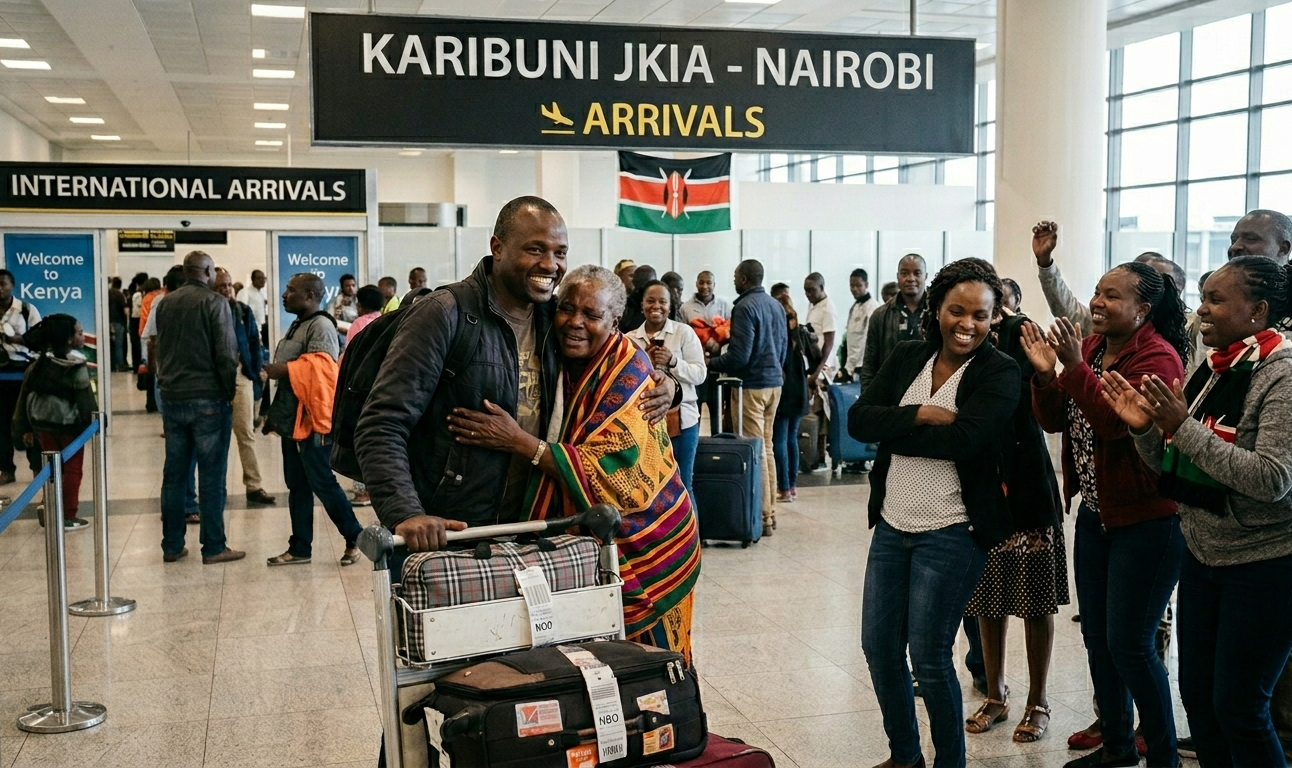
Theplanes land to applauseof families waiting with flowers at JKIA’s arrivalbay. These families are elated that their loved ones are back home from the conflict in the Gulf.
“Welcomehome,sweethome”istheclearmessagefromall.However,hiddenbehindthe smiles and embraces is a quieter truth that rarely makes headlines at that moment.
For many returnees, thereality may bedifferent fortheproblems do not end at theairportbut is most likely the beginning of a new phase of struggle. This struggle is both social and psychological.
There is no doubt that repatriation from a conflict zone is often framed as a rescue and rightlyso,butitisalsoarupture.ThisarticlecontendsthatthereturnofKenyanmigrant workersfromtheGulfmaybetheresultofthreedeeplyinterconnectedchallenges.They are social dislocation, stigma and strained relationships, and profound psychological distress.
The first challenge may not be apparent to the general masses, but social dislocation is a real problem for many returning migrants.
After a long time abroad, many returnees may find that the social worlds they had left behind had changed or even worse completely erased.Communitiesmayhavemovedon,friendshipstheyhadmayhavebeenovertaken by time, and social support networks disappeared.
This makes reintegration a herculean task and not automatic as people might envisage. In most cases returnees often feel like outsiders in their own homes, struggling to reconnect with routines, norms and expectations that no longer feel familiar.
The second problem is stigma and strained relationships. Migration is widely associated with success, and return is often expected to be accompanied by visible achievements. But when the return home is abrupt, as it is now, this may clearly not be the case.
In the current war climate, returning migrant workers may probably have little or no savings and this may elicit negative judgments which can both subtle or overt from their family members and local community.
Families who had high hope and expectations may express disappointment, creating tension within households. Consequently, in some instancesreturneesmaywithdrawsociallytoavoiddifficultquestions,furtherdeepening their isolation.
The third and most invisible issue is psychological distress. From the outset migration journeyofmigrantworkersisriddleswithexploitation,overwork,andloneliness.Indeed, there have been several reports of migrant workers being exploited by unscrupulous agents at home and in some cases host country employers.
With these experiences, an abrupt repatriation back to homes that they left in destitution can add another layer of psychologicaltrauma.Inthatsensereturneesendupgrapplingwithanxiety,depression, and a diminished sense of self-worth.
The transition from being an income provider abroad to feeling dependent at home can be particularly destabilising. Yet, in Kenya, mental health support remains limited, and many suffer in silence.
As evidence from previous conflicts suggest these challenges are real and do not exist in isolation. The experiences returning migrant workers go through can be likened to a scaffold, in that social dislocation can intensify social stigma which can deepen psychological distress. These three negative effects can create a cycle that makes reintegration not just difficult, but emotionally overwhelming.
However, these struggles remain largely unknown in the Kenyan public discourses because policy conversations tendtofocusonrecruitment,remittances,andlabouragreements.
Thetendencyisthatthe experience of returnees is seen through the lens of repatriation flights and a safe return back home newspaper headline. This means repatriation is seen as an endpoint which can be dangerous. It should rather be viewed as a transition that requires care, preparation, and support.
The government of Kenya’s full throttle labour migration policy is to be lauded as it helps reduces unemployment among the youths as is evident in the number of Kenyans working in different sectors in the economies of the GCC countries. However, it must also have long-term contingency plans for the unknown that may happen, the current crisis being a good example.
It must look beyond departures and destinations and confront the complexities of the return of these group of individuals. Because for many migrantworkers,thehardestjourneyisnotcrossingbordersitisfindingbelongingagain in the place they once called home.
FarahKalmeyisalecturerandaconsultantatOXUSManagementConsultants, Nairobi