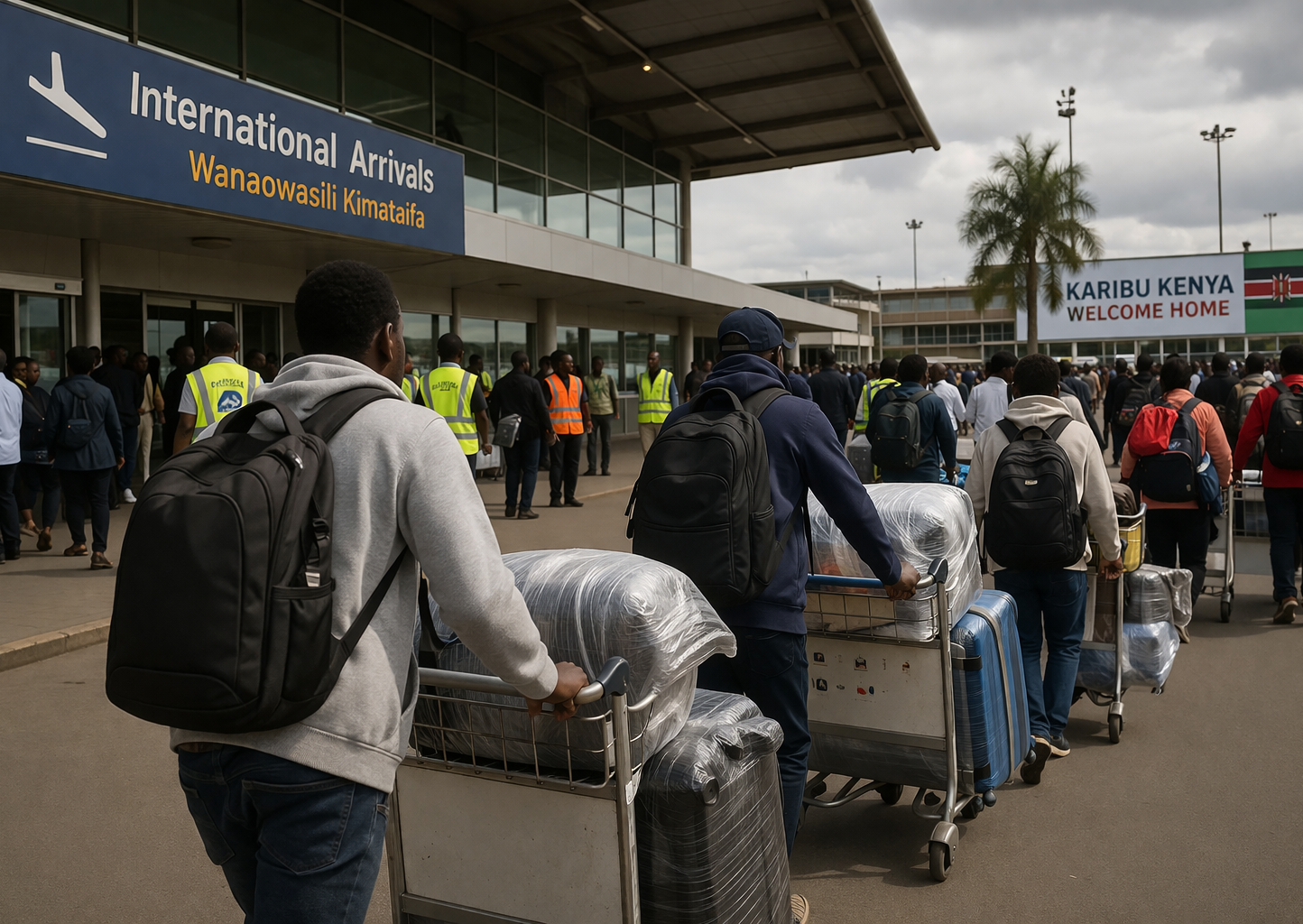
Wars bring displacements and destructions. People may be displaced internally, or in the current case in the GCC countries, many foreign migrant workers are getting displaced and must return to their countries at a short notice.
Inevitably, this is a bigger problem for migrants exporting countries in terms of short-term economic hit, but also long term social and psychological effects on the returnees.
When Kenyan migrant workers are repatriated from the Gulf, the public narrative often frames it as a rescue.
Planes land, officials receive returnees, and headlines move on. But for the workers themselves, coming home is not the end of a crisis but it is the beginning of a new challenge.
As can be witnessed now on our tv screens and social media, the current repatriation is sudden and unplanned. In many instances returnees arrive with little savings, unpaid wages, or unresolved disputes with employers which may affect their final gratuity.
For a country like Kenya, where overseas employment has been a key economic strategy of the current government, this creates an uncomfortable paradox.
A safety net for these returnees in terms of re-integration may be unlikely as there may not have been enough time to prepare for life after returning. Besides the conundrum of how to help these returnees, the economic consequences are immediate.
For years, remittances from the Gulf particularly Saudi Arabia, the United Arab Emirates and Qatar have supported millions of Kenyan households. When workers are abruptly repatriated, that income stops overnight.
As a result, families that depended on monthly transfers to pay, for example, school fees, rent or medical bills are suddenly exposed.
Moreover, at a national level, large-scale returns can dent remittance inflows, which are a major source of foreign exchange.
But the macroeconomic story, important as it is, risks overshadowing the more urgent reality, which is the struggle of reintegration.
Another big challenge returnees face is economic displacement. After months or years abroad, they come back to a labour market that is already saturated. Jobs that match their experience may be scarce too.
The skills these migrants acquired abroad, for example, domestic work, caregiving, or low-wage service roles may often be undervalued in the local economy.
Even when available, the pay may be too low compared to what they used to make abroad. Thus, it is arguable that without targeted reintegration programmes, many returnees may find themselves unemployed or pushed into informal and unstable work.
The psychological toll of abruptly leaving their jobs and trying to re-integrate to life back home is equally significant. In many cases migration is often framed as a success story, and returnees are expected to come back with visible achievements like land, houses, or thriving businesses.
However, a shock return home occasioned by the current war may not be laying a foundation for a rosy return. In most cases many migrant workers may encounter stigma, shame, and social isolation.
For some, the pressure to demonstrate success, despite the abrupt return may lead to silence about the hardships they endured abroad.
The ongoing war may also acutely expose Kenya’s structural policy in relation to returning migrant workers and this could be a major headache for the Department of Diaspora Affairs. While Kenya has made strides in facilitating labour migration through bilateral agreements, far less attention may have been paid to return and reintegration.
Whilst we may not be privy to the contingency plans the Kenya government has, the likelihood is that repatriation is treated as an emergency response rather than part of a broader migration cycle that includes preparation, protection, and return. This gap has real consequences.
Without financial support, counselling or skills recognition, returnees are left to navigate reintegration on their own. Some attempt to re-migrate, often under equally precarious conditions, perpetuating a cycle of vulnerability. However, this moment also presents an opportunity. With strategic and foresight planning, return migration could contribute to local development.
Many returnees bring back skills, networks, and a willingness to invest their earnings from abroad, the shock return notwithstanding. But this requires deliberate policy, for example, access to credit for small businesses, recognition of skills gained abroad, and structured reintegration programmes at both national and county levels.
Moreover, the government should try to shift the narrative from a perceived doomsday scenario because repatriation should not be seen solely as failure or crisis. Recognising this would allow policymakers to design systems that support workers not just when they leave, but when they return too.
Farah Kalmey is a lecturer and a consultant at Oxus Management Consultants, Nairobi.