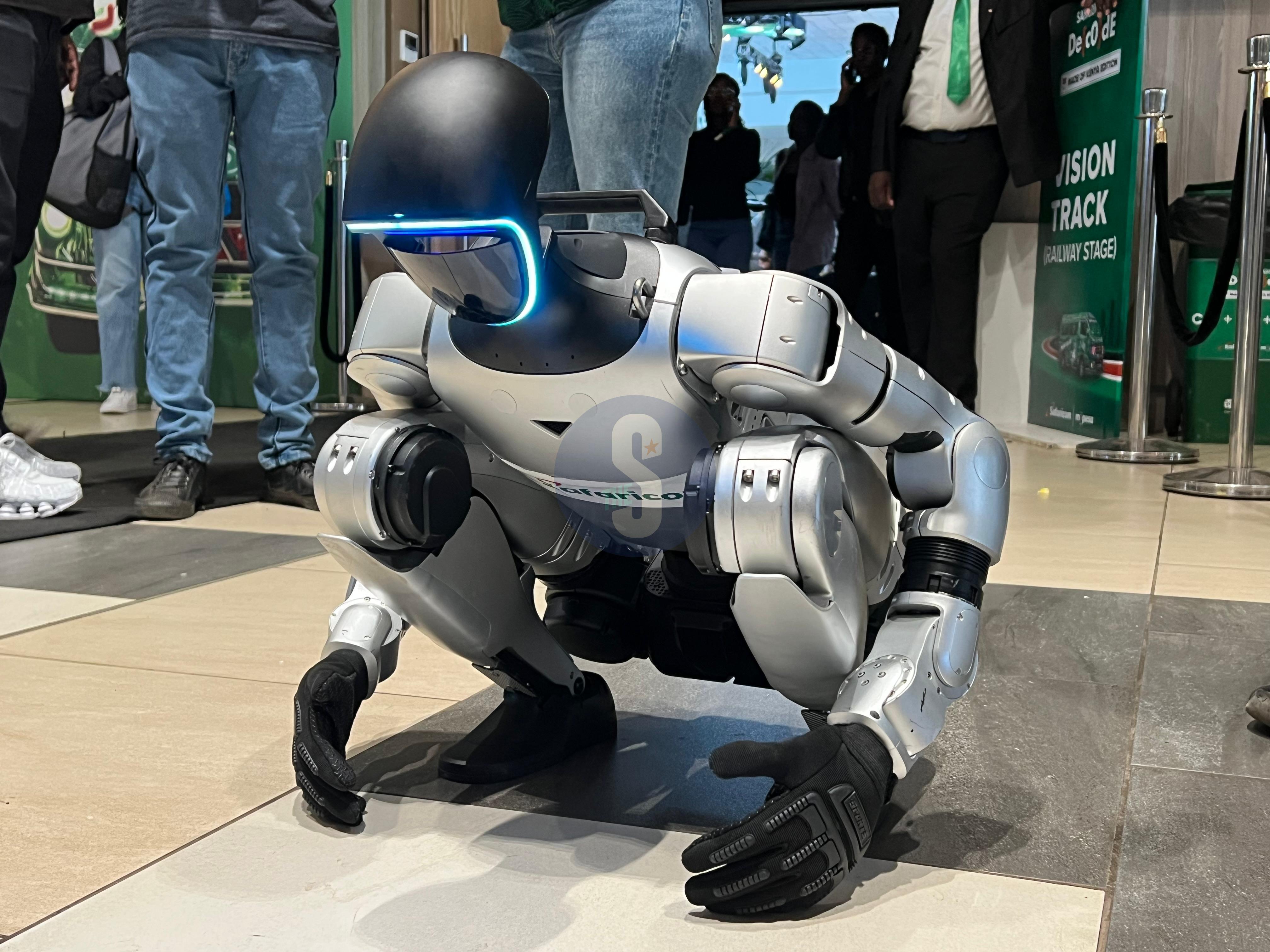
There was a moment of pause, then laughter and applause, as Sarah the robot waved back at a curious crowd at Safaricom’s Decode 4.0 summit in Nairobi, dancing, responding, and turning heads in a way few tech exhibits could.
In a space filled with engineers and innovators, it was the humanoid robot that drew the biggest crowds, offering a glimpse into a future where machines are not just tools, but interactive companions.
Developed by Huawei Kenya in collaboration with Safaricom, Sarah is part of a broader push to explore the role of artificial intelligence and robotics in Africa’s digital transformation.
According to Huawei Kenya’s Solution Director Alan Ren, the robot represents an early step in adapting advanced robotics already in use in China to the Kenyan market.
“Sarah is a small innovation we are developing with Safaricom. We’re leveraging experience from China to train her here and explore practical use cases,” he said.
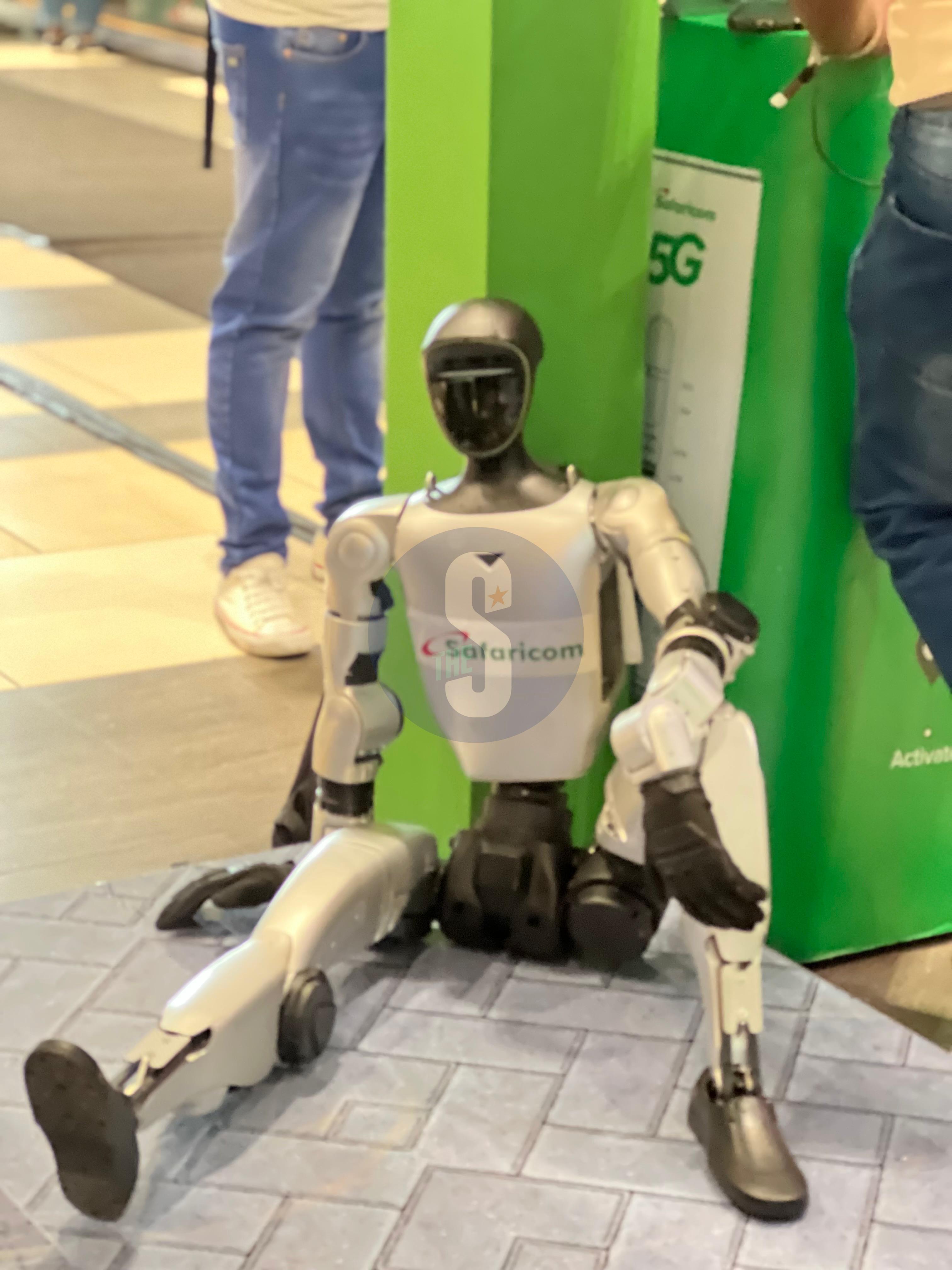
At the summit, Sarah demonstrated a range of capabilities from dancing and waving to performing basic interactions, signalling what is to come.
The next phase will see the robot powered by large language models, enabling real-time conversations and more dynamic engagement with users.
“Soon, you’ll be able to say ‘Hi Sarah’ and have a conversation. She will respond in real time while also performing actions,” Ren explained.
Sarah is set to play a role in Safaricom’s planned innovation hub, where artificial intelligence solutions will be tested and deployed across sectors.
Beyond the exhibition floor, developers are already exploring how such robots could be used in industries like mining, port operations, and delivery services areas, where automation could improve safety and efficiency.
Despite the excitement, Ren was quick to dismiss fears that robots could replace human workers.
He noted that while AI can automate tasks, it cannot replicate human creativity or original thinking.
“Robots are designed to execute tasks created by humans. They cannot generate ideas that change the world,” he said.
Building Sarah, however, has not been without challenges. While AI systems are increasingly mature, creating a robot that moves and behaves like a human remains complex.
Engineers had to focus on the robot’s physical structure its joints, balance, and motion to achieve smoother, more natural interactions.
Safety and regulation also remain key considerations.
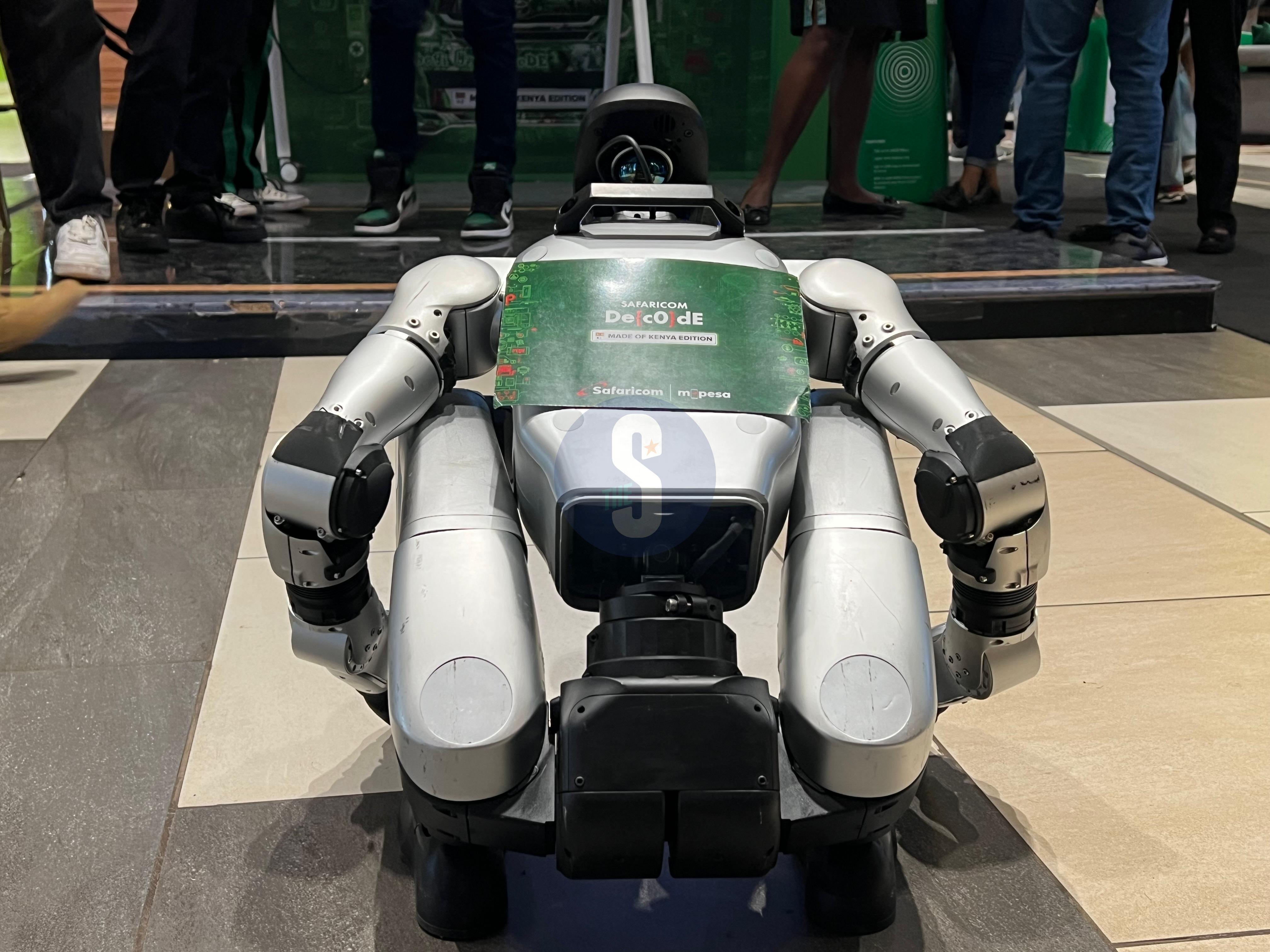
Alan pointed out that in China, strict rules govern who can own and operate such robots, suggesting that similar frameworks may be necessary in Kenya as the technology evolves.
Looking ahead, he predicts that robots will increasingly take on high-risk tasks in sectors where human safety is a concern.
“In the next five years, many dangerous jobs may be handled by robots. The pace of change will be faster than what we’ve seen before,” he said.
For now, though, Sarah’s biggest job may simply be winning people over and at Decode 4.0, she did just that.
For many young attendees at Safaricom’s Decode 4.0, the real magic was not only with the robot but also it was unfolding layer by layer on a small machine quietly building objects from scratch.
Crowds gathered, some watching for minutes, others lingering far longer, as a 3D printer turned digital ideas into physical products in real time.
At the centre of this fascination was Dennis Poriot, a product designer at Beyond 3D Africa, who spent three days introducing young people to the possibilities of 3D printing.
“What we do is help people make things,” Poriot said.
“We offer custom product design and 3D printing services, showing that anyone can take an idea and turn it into a real product.”
Through live demonstrations, Poriot and his team walked participants through the entire process from conceptualising an idea to designing and finally printing it.
The goal, he explained, was to demystify a technology many had only encountered in movies or online.
“Most people think 3D printing is something far off, but we’ve shown them it’s here and accessible. You don’t even need to own a printer. You can work with people like us to bring your ideas to life,” he said.
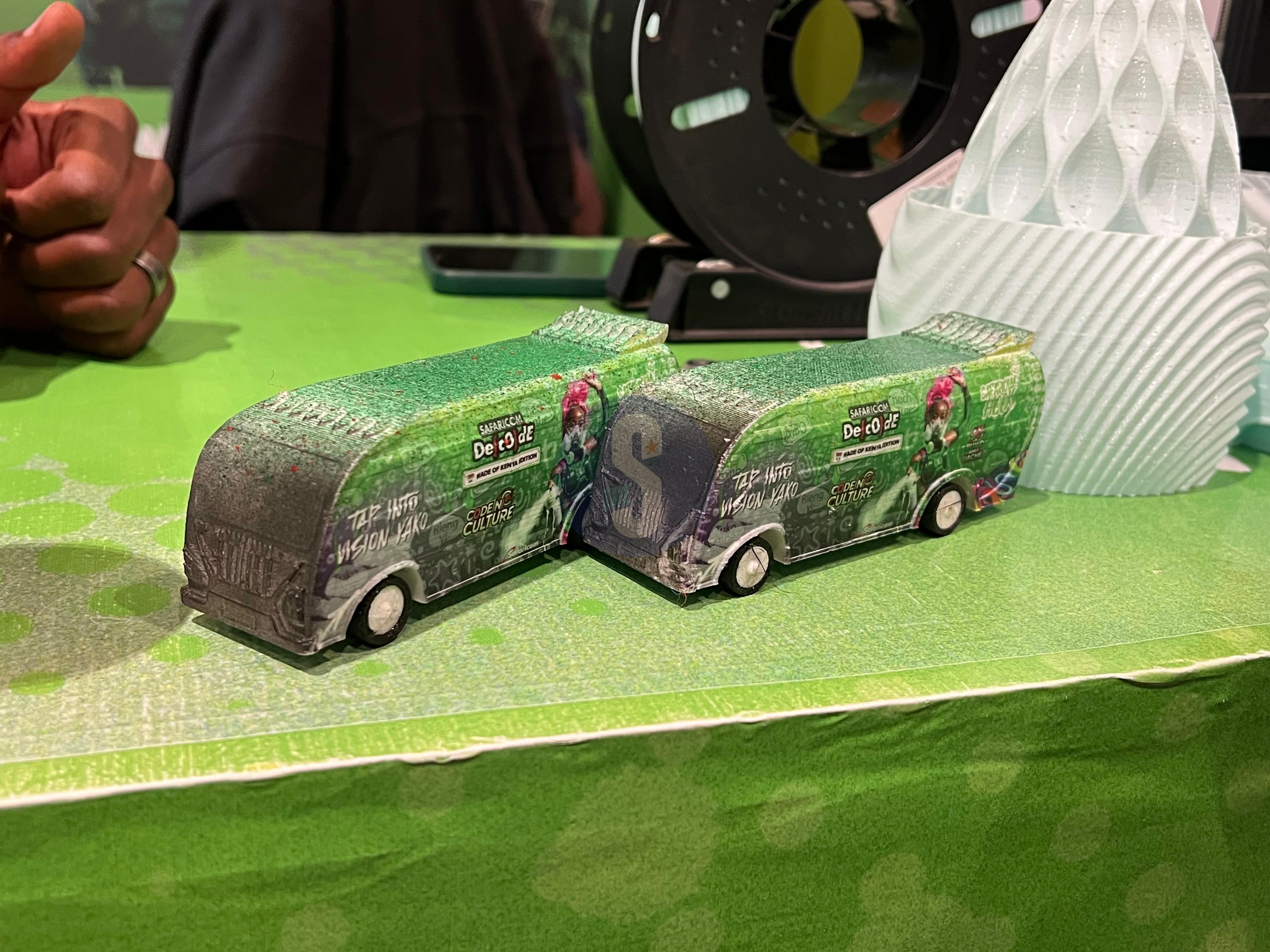
The reactions from attendees were immediate and striking. Many stood transfixed, watching the printer in motion as it gradually built objects.
“Watching a 3D printer for the first time is almost mesmerising,” Poriot noted.
“You see people just staring at it, saying they could stay there for hours.”
Beyond the spectacle, however, was a deeper message about innovation and problem-solving.
Poriot emphasised that 3D printing is not just a novelty, but a practical tool that can be used to create solutions, whether for business, personal use, or fixing everyday problems.
Events like Decode 4.0, he added, play a critical role in exposing young people to such opportunities. By bringing together industry players, students, and innovators, the platform helps bridge the gap between curiosity and real-world application.
“It’s important to engage young people in what’s happening in the tech space. We’ve seen university students, and even high school students, coming in. It shows them there are things they can do and opportunities they can explore.”
As Kenya continues to position itself as a growing hub for technology and innovation, the excitement around tools like 3D printing signals a shift from passive consumption of technology to active creation.
For many at Decode 4.0, that journey may have started with simply watching a machine at work, but it could lead much further.