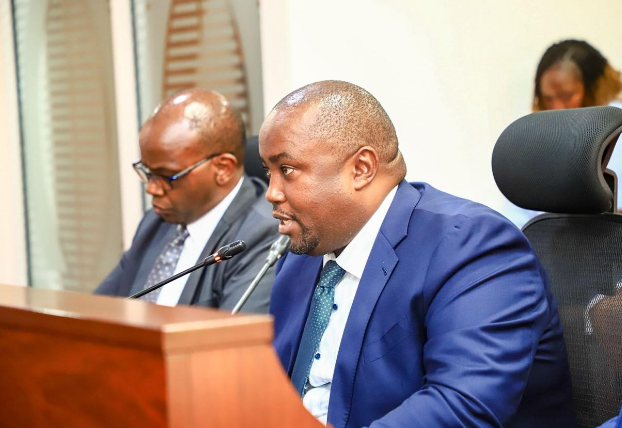
 KTDA officials, led by Acting CEO Engineer Francis Miano when they appeared before the Parliamentary Public Petitions Committee/HANDOUT
The Kenya Tea Development Agency (KTDA) has dismissed allegations linked to its hydro power projects, reassuring tea farmers in Bomet and Kericho counties that construction remains on course and funds have been properly utilized.
Appearing before the parliamentary Public Petitions Committee, KTDA officials led by Acting Chief Executive Officer Francis Miano defended the agency against claims raised in a petition by Konoin MP Brighton Yegon.
The petition alleged that KTDA had collected over three billion shillings from farmers without delivering any tangible hydro power projects.
However, Miano dismissed the claims as misleading and inaccurate. He clarified that the agency had collected approximately one billion shillings, not three billion, and emphasized that the funds had been prudently invested in ongoing developments.
“The Chemosit project is already 51 per cent complete and progressing steadily,” he told the committee.
The Chemosit and Kipsonoi Hydro Power Projects, being implemented under the Settet Power Generation Company, are expected to significantly reduce electricity costs for seven tea factories: Kapkoros, Mogogosiek, Kapset, Momul, Litein, Tegat, and Kapkatet.
Once operational, the projects will provide a more sustainable and affordable energy source for tea processing, a key economic activity in the region.
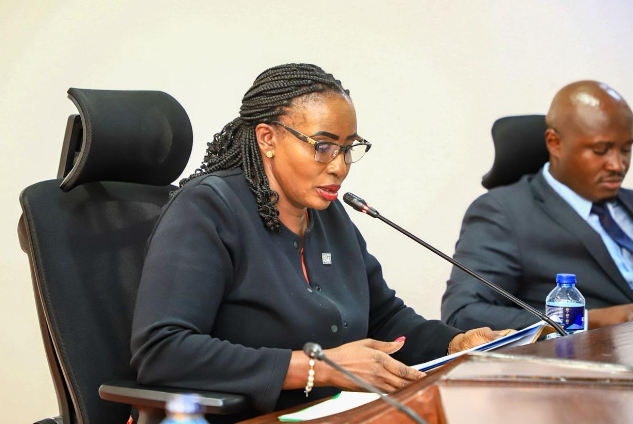 Parliamentary Public Petitions Committee chair Beatrice Elachi during a session with KTDA/HANDOUT
KTDA attributed delays in project completion not to financial mismanagement, but to challenges in land acquisition.
According to Miano, many landowners lacked proper documentation, while others inflated land prices during negotiations. He noted that KTDA, as a private entity, does not have the legal authority to enforce compulsory land acquisition, further complicating the process.
Energy Principal Secretary Alex Wachira also appeared before the committee and underscored the broader importance of the hydro power initiatives.
He highlighted that beyond supporting tea factories, the projects are designed to supply surplus electricity to the national grid, contributing to Kenya’s overall energy capacity.
Wachira further rejected assertions that KTDA had failed to complete similar projects in the past. He pointed to several operational hydro power stations, including Metumi, Gura, Kirinyaga, Thuchi, Greater Meru, Aberdare, Nyakwana, Chania, and Chemuka.
Collectively, these facilities generate approximately 50 megawatts of electricity, demonstrating KTDA’s track record in renewable energy development.
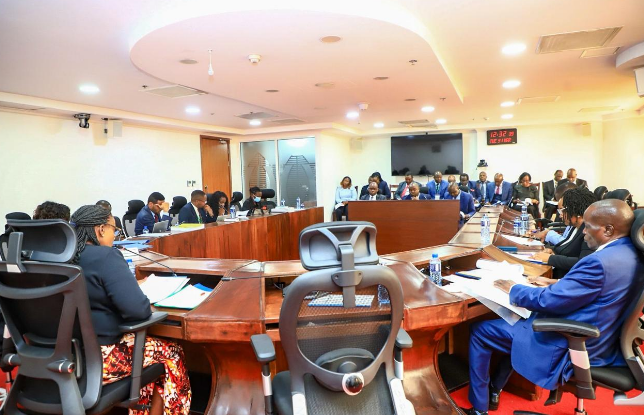 Parliamentary Public Petitions Committee during a session with KTDA/HANDOUT
During the same session, Tea Board of Kenya CEO Willy Mutai called on the government to support KTDA in overcoming land acquisition hurdles and securing wayleaves for power transmission lines.
He also urged policymakers to review existing wheeling tariffs and adopt a net metering framework that would allow KTDA to utilise national grid infrastructure to distribute power generated from its small hydro plants.
In response to the concerns raised, the parliamentary committee, chaired by Beatrice Elachi, pledged to conduct site visits to verify the progress of the projects and assess the validity of the competing claims.
The committee’s findings are expected to provide further clarity on the status and management of the hydropower initiatives.