A soft electric buzz fills the room as screens flicker to life, lines of code scroll in real time, and clusters of young innovators lean in, testing, questioning, building.
At Safaricom’s De{c0}dE 4.0 summit in Nairobi, the air carries a sense of urgency and possibility. Robotic demos hum in one corner, AI-powered tools respond instantly in another, and everywhere, conversations orbit the same idea: the future is no longer something to wait for, it is something to create.
In the middle of it all, laptops open and curiosity switched on, young people move with purpose, pausing at booths, exchanging contacts, absorbing knowledge at speed.
It is less about spectacle and more about immersion, where technology is not just displayed but experienced.
For David Omondi, a data and technology associate, the summit is a space to connect innovation with real-world impact. Moving between sessions, he is particularly drawn to conversations around how emerging technologies can be adapted for smaller businesses.
“My experience has been good. I have gotten insights about the small economy of SMEs, how they can use technology and integrate it, not like the big companies in corporate,” he says.
Already, AI is embedded in his daily work, supporting coding and research as he keeps pace with constant advancements.
 Mathematics and Computer Science student from Meru University, Phenny Mwaisaka / PERPETUA ETYANG
 Nearby, Phenny Mwaisaka, a Mathematics and Computer Science student from Meru University, stands among a group gathered around a live AI demonstration, her attention fixed on how the technology responds, learns, and adapts. For her, the summit is both discovery and direction.
“I came for the networking opportunities and to learn more about tech and AI,” she says.
Her highlight has been learning about AI agent tools designed to automate tasks and enhance efficiency, but more importantly, the experience has reshaped how she views her future.
“There have been concerns about AI taking jobs, but I’ve learned that if I use AI in my work, then it won’t replace me,” she says.
In a space defined by innovation, it is these individual moments of clarity, curiosity, and confidence that stand out.
Beneath the glow of screens and the language of algorithms, a generation is not just witnessing the rise of artificial intelligence, but actively preparing to lead it.
This is even as Safaricom is accelerating its adoption of agentic artificial intelligence (AI) to automate services, enhance operational efficiency, and transform customer experience, signalling a major shift from a traditional telecom to a technology-driven company.
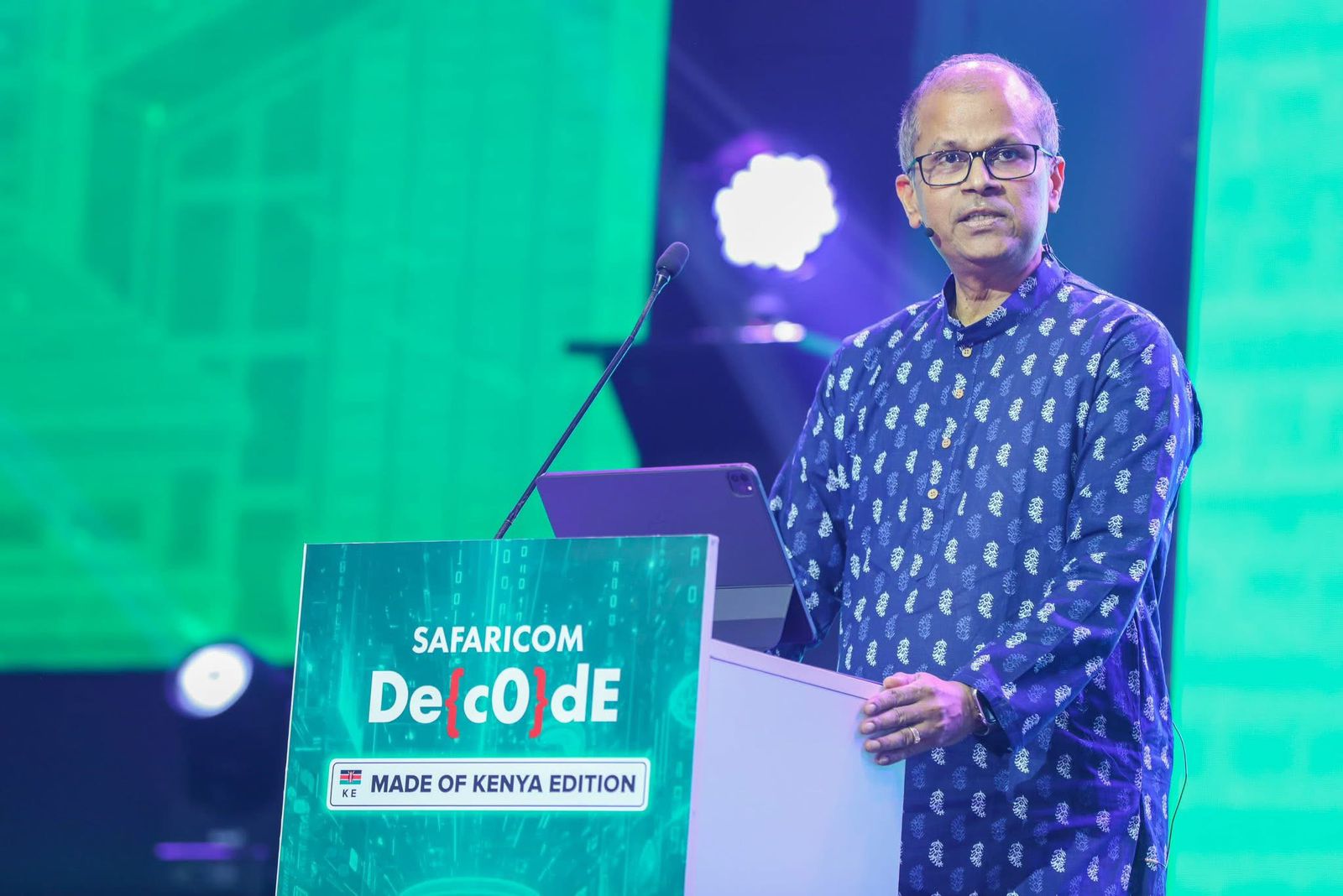
Speaking at the De{c0}dE 4.0 summit in Nairobi, Safaricom Group Chief Finance and Innovations Officer Dilip Pal highlighted the potential of AI to manage complex workflows independently.
“The biggest opportunity we see is in getting control of workflows that take multiple steps and automating them through agentic AI,” Pal said.
Agentic AI refers to systems capable of acting autonomously to complete tasks, make decisions, and execute processes with minimal human intervention, all while operating within defined governance frameworks.
Pal explained that the focus is not purely on generating revenue, but on reducing friction, improving efficiency, and enhancing customer satisfaction.
“If you remove friction and make it easy, customers stay loyal, and that ultimately drives growth,” he said.
Already, Safaricom has implemented agentic AI in multiple customer journeys, allowing users to access services directly through digital platforms without visiting shops or calling contact centers.
"When it comes to agentic AI, the biggest opportunity lies in automating workflows rather than focusing purely on revenue. By reducing friction and simplifying processes, we improve customer experience, which ultimately drives loyalty and growth. We have automated dozens of customer journeys, where customers don’t need to visit a shop or call a contact centre. They can do it by themselves,” Pal added.
"In customer engagement, we are using hyper-personalisation to better understand customer needs and deliver relevant solutions. We are also leveraging AI to optimise energy consumption, which is a major cost driver in our operations."
We are now moving from isolated use cases to fully productionized AI systems.
In customer engagement, we are using hyper-personalisation to better understand customer needs and deliver relevant solutions. We are also leveraging AI to optimise energy consumption, which is a major cost driver in our operations.
We are now moving from isolated use cases to fully productionized AI systems.
Safaricom Chief Technology Officer James Maitai said agentic AI is part of a broader transformation that will redefine the country’s technological landscape.
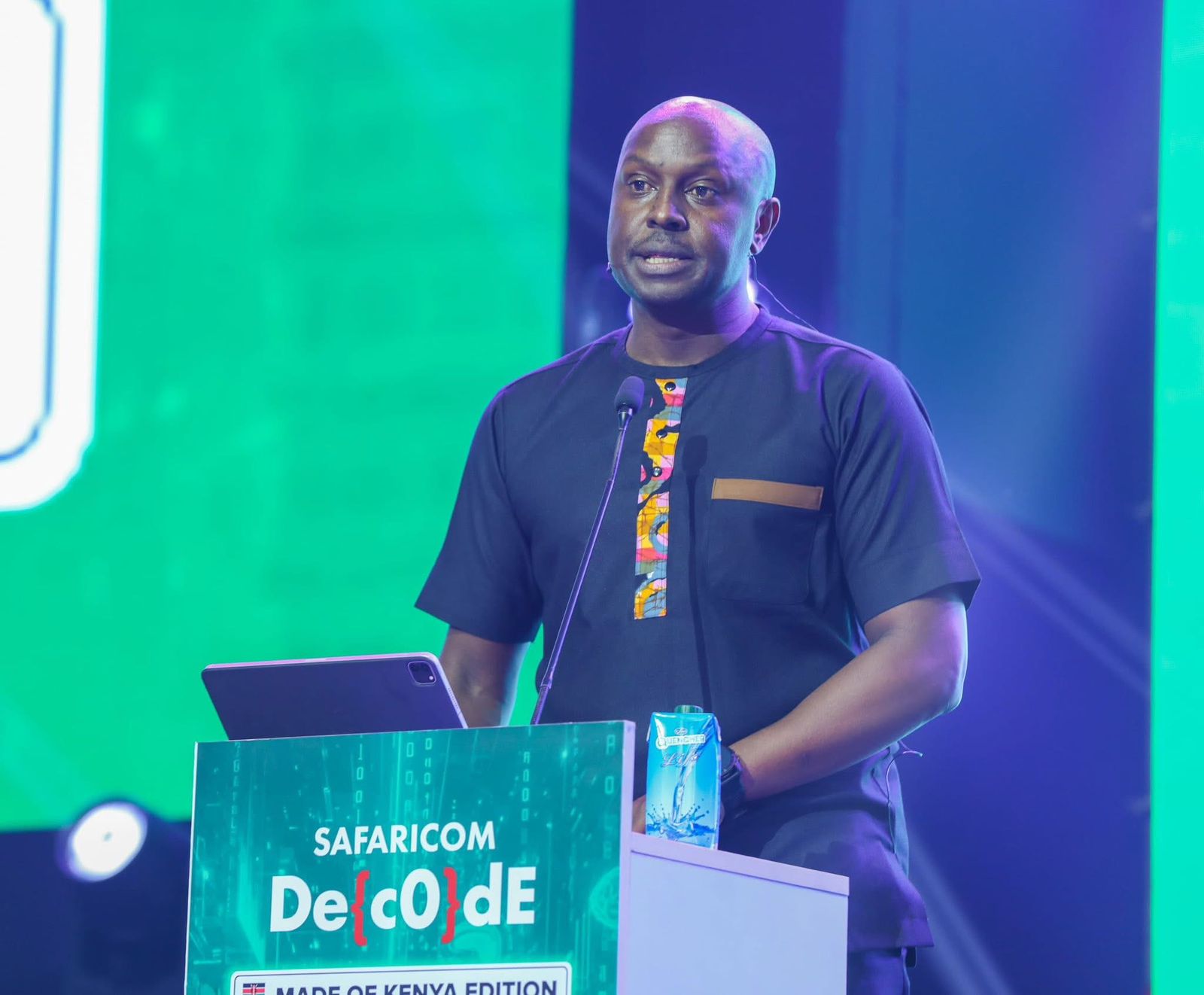
“In the next 10 years, we see a world where AI agents act as personal assistants, handling many of the tasks people do today,” Maitai said.
He noted that autonomous networks are also on the horizon, where AI systems manage operations with minimal human intervention.
“In our operations, we are moving towards systems that require minimal human intervention—what you would call autonomous networks,” he said.
The company is also applying AI across fraud detection, personalised customer engagement, and energy optimisation, with agentic capabilities expected to amplify these functions.
“AI is infrastructure-heavy. It requires a lot of computing power, data, and energy, and we have already started building in that space,” Maitai said.
"AI is already widely used within Safaricom. For instance, personalised product offers are driven by AI insights. M-Pesa systems use AI for predictive maintenance and self-healing capabilities. AI also supports energy management and software development."
Both executives stressed that human capacity is central to the AI transformation, with Safaricom training employees to work alongside AI systems.
“Success means ensuring AI is not limited to a few experts. It should empower every employee and, at a national level, every citizen to solve real problems,” Pal said.
De{c0}dE 4.0 brings together developers, engineers, innovators and industry leaders in a convergence of technical excellence and cultural expression.
The event highlights how technology is increasingly serving as a bridge connecting people, unlocking creativity and driving inclusive economic growth across sectors.