
Mohamoud Dagane is a governance & public policy expert and former CECM for Roads, Transport and Public Works, Nairobi City County.
Kenya stands at a defining moment in its development journey. Ours is a nation endowed with immense potential—rich in human capital, natural resources, and strategic geographic positioning.
Yet, for decades, this promise has not fully translated into tangible development outcomes. Instead, we grapple with urban congestion, widening inequality, and mounting environmental strain, particularly in our cities.
The challenge is not a lack of opportunity, but rather a complex interplay of structural inefficiencies, political contestation, and social fragmentation. In Kenya, even the most well-intentioned reforms are often swept into the turbulence of political rivalry, turning what should be constructive national conversations into divisive contests.
It is therefore deeply concerning that some critics of President William Ruto remain unwilling to acknowledge any positive strides made under his administration.
Democratic debate is essential—indeed, it is the lifeblood of a healthy republic—but intellectual honesty must accompany it. Where progress is evident, it deserves recognition.
Across the country, several transformative projects signal a deliberate and forward-looking development agenda. The ongoing upgrade of Bomas of Kenya into the proposed Bomas International Convention Complex (BICC) reflects a bold ambition to position Nairobi as a global conferencing hub.
This is not merely infrastructural expansion; it is an investment in Kenya’s soft power and international competitiveness.
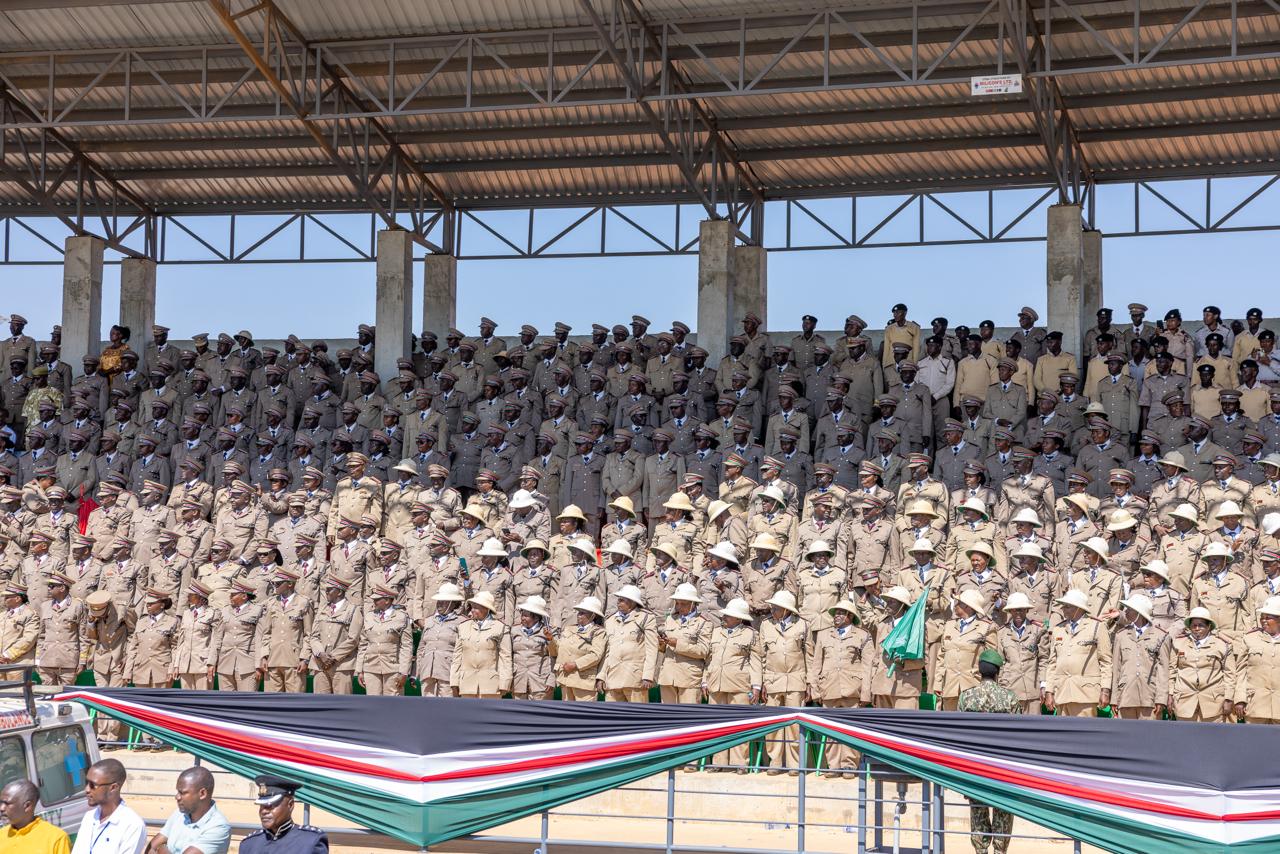
Similarly, the construction of the Talanta Sports City Stadium and the emerging modern stadium in Wajir— that is set to host the 2026 Madaraka Day celebrations—underscore a commitment to inclusive, nationwide development. Long-neglected regions are finally witnessing meaningful state investment.
Infrastructure corridors are also taking shape. The Mau Summit–Rironi highway upgrade promises to ease one of Kenya’s most notorious transport bottlenecks, while the planned extension of the Standard Gauge Railway toward Uganda is poised to unlock regional trade and economic integration.
Equally transformative is the road linking Mandera to Isiolo through Wajir—a project that, for the first time in Kenya’s history, meaningfully connects the northeastern frontier to the rest of the country.
These initiatives are not accidental; they are the product of deliberate planning and strategic prioritisation. One may disagree with the President politically, but it is only fair to acknowledge development where it is happening.
Nowhere is the tension between short-term discomfort and long-term gain more evident than at Gikomba Market. For years, traders have endured devastating fire outbreaks, repeatedly losing their livelihoods in unsafe and unregulated conditions.
The government’s recent directive to clear illegal structures and pave the way for a modern market is a necessary—if difficult—step toward safety, order, and economic resilience.
Parallel to this is the ambitious work of the Nairobi Rivers Commission, which is spearheading a comprehensive transformation of Nairobi’s River ecosystem.
This initiative goes far beyond river cleaning; it is a fundamental reimagining of the city’s relationship with its natural environment. Encroached riparian land is being reclaimed, illegal structures removed, and critical buffer zones enforced to mitigate flooding and restore ecological balance.
The long-term vision is compelling: vibrant river corridors featuring walkways, cycling lanes, green parks, and well-lit public spaces. For Gikomba traders, this transformation may bring temporary disruption, but it ultimately promises a safer, more organized, and more commercially viable business environment.
For Nairobi residents, it offers cleaner surroundings, reduced flood risks, and enhanced urban livability.
Development, by its very nature, is seldom comfortable. It demands sacrifice, adaptation, and, at times, difficult decisions. Yet, some leaders continue to politicize such initiatives, framing them as inhumane or punitive. This narrative, while emotionally appealing, is ultimately misleading and counterproductive. It risks entrenching stagnation at the expense of progress.
We must ask ourselves a fundamental question: should a modern capital city like Nairobi continue to be defined by hazardous informal structures of iron sheets, plastic, and timber? Or should it aspire toward order, dignity, and sustainability?
As the political season inevitably approaches, there is a growing temptation to reduce every national issue to electoral arithmetic. But Kenya cannot afford to exist in a perpetual campaign cycle. Leadership must transcend partisanship and focus on what genuinely advances the public good.
It is time for a shift in mindset. Supporting development should not be contingent on political allegiance. Progress is not the property of any one administration—it is a national imperative.
Let us choose reason over rhetoric. Let us choose honesty over hostility. Above all, let us choose development over division. Let us choose progress.
The writer is a governance & public policy expert and former CECM for Roads, Transport and Public Works, Nairobi City County.