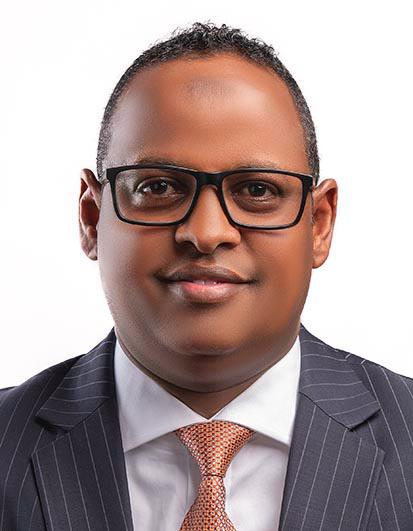
 Hon. Mustafa Abdirashid Ahmed MCA Iftin and current Deputy Speaker of Garissa County Assembly./COURTESY
CS Hassan Ali Joho’s political journey is one of the most absorbing in extant Kenya; a rise defined by resilience, charisma, and an undeniable command of regional politics.
From his early days as Member of Parliament for Kisauni to his tenure as Governor of Mombasa, and now as Cabinet Secretary, Joho has built a reputation as a formidable political operator.
Yet, as conversations shift toward national succession and the delicate arithmetic of a Deputy President pick, his name evokes both admiration and unease in equal measure. At the heart of the debate lies not legality, but perception and political suitability. CS Joho, by all constitutional standards, qualifies for high office.
He has held elective and executive positions, understands governance structures, and commands a loyal political base at the Coast. However, national leadership particularly at the level of Deputy President demands a broader appeal that transcends regional strongholds.
This is where the tension begins to surface. CS Joho’s political identity is deeply rooted in the coastal Muslim community, a constituency historically shaped by marginalization narratives, regional consciousness, and a strong sense of political identity. While this has been a source of strength for him, it also presents a structural limitation.
National leadership in Kenya often requires the ability to unify diverse blocs without being perceived as anchored to a single regional or communal identity. His influence, while significant at the Coast, does not yet convincingly translate into a cohesive national following. Compounding this is the shifting political terrain within his own backyard.
The emergence of younger, more agile leaders at the Coast is gradually redefining political loyalty in the region. CS Joho’s once unchallenged dominance is now being tested by a new generation that is less tied to legacy figures and more responsive to evolving socio-economic demands. This erosion, though subtle, raises questions about the sustainability of his political capital beyond his traditional base.
Equally significant is the matter of political temperament. The office of the Deputy President, by its nature, demands restraint, calculated communication, and a statesmanlike demeanor.
CS Joho’s political style, often characterized by bold rhetoric and populist energy, has served him well in competitive electoral environments. However, at the national executive level, such an approach can be perceived as lacking the sobriety and measured tone expected of a principal assistant to the President.
Leadership at that level is less about mobilization and more about stability, continuity, and quiet influence. Questions surrounding his personal wealth also continue to linger in public discourse.
While wealth in itself is not disqualifying, the opacity or perceived lack of clarity around its origins can become a political liability, especially in a country where governance and corruption remain sensitive issues. For a Deputy President, whose role includes symbolizing integrity and accountability, such perceptions, fair or not carry significant weight. The internal dynamics of his political party further complicate his positioning.
As a senior figure within ODM, CS Joho operates under the shadow of a dominant party leader whose national stature arguably eclipses that of any other member within the party. In a coalition government context, where political balance and hierarchy are carefully negotiated, it becomes difficult to envision a scenario where CS Joho emerges as the principal deputy figure while the party leader remains politically active and influential.
The optics alone would create an imbalance that could destabilize both party cohesion and coalition harmony. Beyond individual considerations, Kenya’s broader political calculus cannot be ignored.
The Deputy Presidency has increasingly become a tool for regional balancing, particularly aimed at consolidating vote-rich blocs. Central Kenya, for instance, remains a critical electoral battleground, and despite emerging fractures, it continues to command significant political weight.
The presence of a Deputy President from that region reflects a strategic necessity rather than mere coincidence. Any shift away from such a bloc would require a candidate with overwhelming national appeal, something CS Joho has yet to demonstrably secure.
None of this diminishes CS Joho’s political achievements or his significance in Kenya’s political landscape. He remains a powerful voice, a skilled mobilizer, and a symbol of coastal political assertion.
However, the threshold for Deputy President is not merely about experience or visibility; it is about trust across regions, perceived integrity, institutional temperament, and the ability to embody national unity in a deeply diverse polity.
In that light, the question is not whether CS Hassan Joho is qualified, but whether he is the most suitable fit for a role that demands both symbolic and practical balance at the highest level of governance.
At present, the answer remains contested and perhaps, for many observers, unconvincing.
The author is the MCA for Iftin ward and Deputy Speaker Garissa County Aasembly. A columnist and A playwright.