In 2002, Kenyans queued for hours in dusty constituency halls with a unanimous and thunderous message: put an end to the imperial presidency. They demanded a ceremonial president, an executive prime minister accountable to Parliament, elected local leaders and the total abolition of the colonial provincial administration. They wanted power returned to the people, not concentrated in one man above the law. That was the sovereign voice captured during the public hearings of the Constitution of Kenya Review Commission (CKRC).
The Sulumeti Consensus was meant to honour that voice. Bishop Sulumeti’s committee, weaving between taskforces, produced a compromise: the president as head of state exercising authority “in harmony” with a prime minister who would run government business. It was a Kenyan solution, forged through consensus as required by the Review Act.
The unspoken truth is that there was a tug of war between the National Alliance Party of Kenya (NAK), led by Mwai Kibaki, and the Liberal Democratic Party (LDP), led by Raila Odinga, who had merged under the National Rainbow Coalition (Narc). One was in favour of a system with concentrated powers, while the other was responding to the public will.
The NAK-affiliated MPs, the self-styled reformers who had ridden the Narc wave promising change, had other plans.
On March 15, 2004, at Bomas, 172 delegates supported, 297 opposed and one abstained from the amendment making the president explicitly "head of government" and “chairperson of the cabinet”. The Justice and Constitutional Affairs Minister, Kiraitu Murungi, together with the newly appointed Vice President, Moody Awori, led a dramatic walk-out.
Kiraitu’s grievance was not procedural nicety. It was raw power. He demanded the Sulumeti Consensus report, which vested executive supremacy in the presidency, be adopted wholesale, and all earlier votes nullified. When the people’s representatives refused to restore the imperial monster, NAK stormed out, branding the process rigged and compromised by underground forces.
The hypocrisy stinks to high heaven. These were the same men who had sworn to deliver the constitution Kenyans demanded within the first 100 days in office, back in 2002. Instead, they sabotaged it the moment it threatened their control of State House. The walkout was not about devolution or minor clauses; it was a calculated defence of the very imperial presidency the public hearings had condemned.
By rejecting the Bomas Draft’s checks and balances, NAK ensured that future presidents, rogue or otherwise, would inherit the same unchecked powers that had ruined Kenya for decades.
NAK’s betrayal had consequences we still live with: the Naivasha Accord, a political compromise reached among members of Parliament and party leaders to resolve the deadlock created by the Bomas walkout. It was not part of the official Bomas process but a backroom negotiation by the Parliamentary Select Committee (PSC) on Constitution Review. This led to the rejected 2005 Wako Draft, the 2007-08 bloodshed and the 2010 constitution’s uneasy compromises. They did not fight for Kenya; they fought to preserve the throne for their faction.
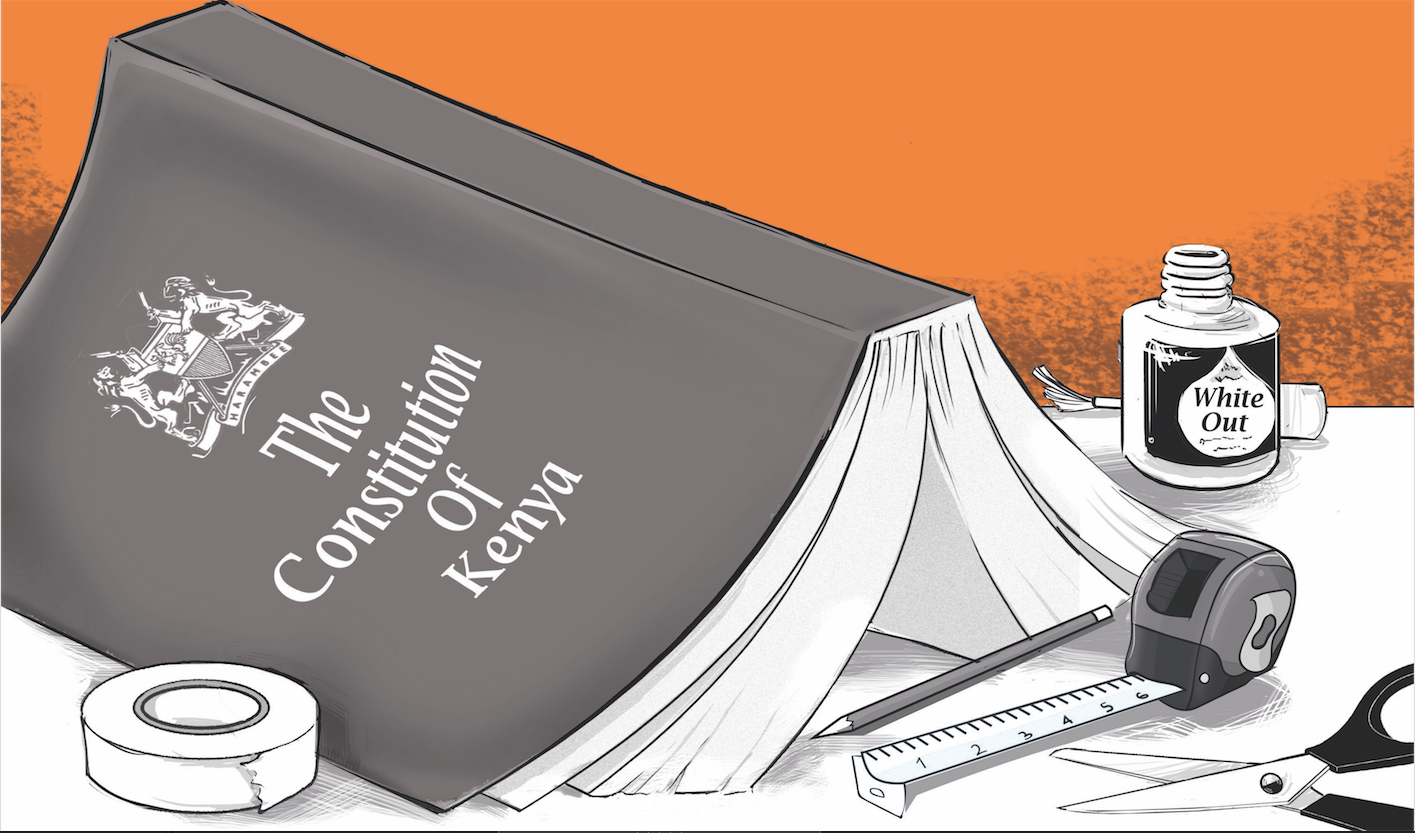
It is clear then that Kenyans must never allow for that precedent to recur. Constitutional review matters cannot be entrusted to MPs and the political class. They are too conflicted. Only the citizens of Kenya can correct the trajectory of a ship veering out of course by invoking Article 1, which commands: “All sovereign power belongs to the people of Kenya and shall be exercised only in accordance with this Constitution.”
It is incumbent upon Kenyans to assert Article 1(2), exercising direct sovereignty, by mobilising in wards, villages, estates and digital spaces to demand an absolute end to imperial presidency and to recall MPs who still romanticise the imperial model that renders independent commissions and state offices impotent.
The imperial presidency is not history; it is a temptation that lurks in every ambitious politician. If we allow NAK’s heirs to entrench it, a future rogue president will wield it against our children the way past ones wielded it against us.
The people spoke clearly and their verdict was a firm no to the imperial presidency. Politicians recrafted that verdict to suit their personal interests and left us with the consequences. It is time to course-correct and reassert the source of sovereign power.
Social impact adviser, social consciousness theorist, trainer and speaker, an agronomist consultant for golf courses and sportsfields, and author of 'The Gigantomachy of Samaismela' and 'The Trouble with Kenya: McKenzian Blueprint'