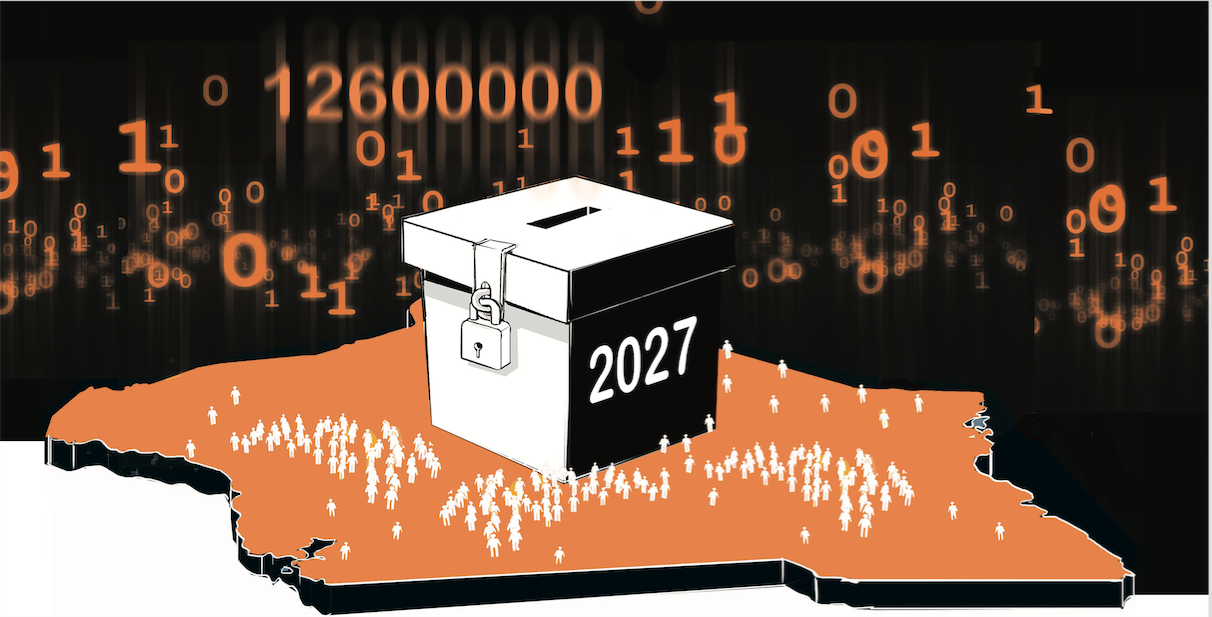
There are 12.6 million Kenyans who hold national ID cards but are not registered to vote. That is not just a statistic; it is a sleeping electorate. A silent majority. A decisive force waiting to be activated.
On March 27, 2026, through a Gazette Notice, the legal pathway to mass voter registration was reaffirmed, placing the responsibility squarely on the state and citizens to complete the democratic chain: from identification to participation. This moment is not merely administrative; it is deeply political. It signals the opening of the 2027 battlefield.
For years, conversations around elections have centred on coalitions, personalities and political realignments. Yet beneath all that noise lies a more fundamental truth: elections are decided not just by those who campaign, but by those who register and show up. The 12.6 million unregistered ID holders constitute a bloc larger than any single voting bloc observed in recent elections. Ignoring them is not just an oversight—it is a strategic mistake.
The law is clear. The right to vote is guaranteed by the Constitution, but it is exercised through registration. Without that essential step, citizenship stays politically inactive. This is why the renewed emphasis on voter registration must be seen as a key part of democratic inclusion. It serves as the link between legal identity and political power.
Encouragingly, government efforts in expanding access to national identification documents have already laid a strong foundation. The ongoing issuance of IDs, particularly to young people and marginalised communities, is steadily dismantling historical barriers to participation. This progress must now be matched with an equally robust and deliberate voter registration drive.
But the responsibility does not lie solely with institutions. Political parties, civil society and community leaders must rise to the occasion. Mobilisation can no longer be seasonal. It must be sustained, intentional and rooted in civic education. The question is no longer whether Kenyans have the right to vote—it is whether they will exercise it.
For young people, especially, this moment demands a shift in mindset. The energy often expressed online and in public discourse must now translate into formal political participation. Registration is not a bureaucratic inconvenience; it is the first act of leadership. It is the declaration that one’s voice matters in shaping the country’s future.
The implications for 2027 are profound. A fully registered electorate could significantly alter political calculations, disrupt traditional voting patterns and redefine what it takes to win. It introduces a level of unpredictability that should energise democracy, not threaten it. After all, the essence of elections lies in their ability to reflect the will of the people—not just a fraction of them.
There is also a deeper governance question at play. A broader voter base enhances legitimacy. Leaders elected by a more representative electorate carry a stronger mandate, one that is harder to contest and easier to defend. In this sense, voter registration is not just about numbers; it is about strengthening the very fabric of governance.
However, this opportunity can easily be lost if urgency is not applied. History has shown that last-minute rushes often leave millions locked out. What is needed now is early, consistent and well-coordinated action. The systems exist. The legal framework is in place. What remains is execution.
Ultimately, the story of the 12.6 million is not about absence—it is about potential. It is about a group of citizens standing at the threshold of political relevance, holding in their hands the power to shape the next chapter of Kenya’s journey.
The battle for 2027 will not only be fought in rallies, boardrooms or media spaces. It will be fought at registration centres, in villages, towns and cities, where ordinary Kenyans make the simple but powerful decision to be counted.
The question is no longer whether these 12.6 million will matter. They do matter.
Strategic adviser and expert in leadership and governance