The African continent has always been cited for its potential for economic development. This potential has been linked to enabling the improvement of living standards of the population and the provision of goods and services.
Industries on the continent are often held back by the availability and quality of the electricity supply. In addition, the cost of electricity for industries in Kenya is often seen as a barrier to the expansion of industry.
Industries can get power from grid operators, such as KPLC in the case of Kenya, or instal their own captive supply. Having both supplies is the ideal situation for industries.
However, across Africa, we are plagued by the need to have backup generators running on diesel to overcome supply quality issues. Captive power plants provide the opportunity to expand options for industries to access their own supply.
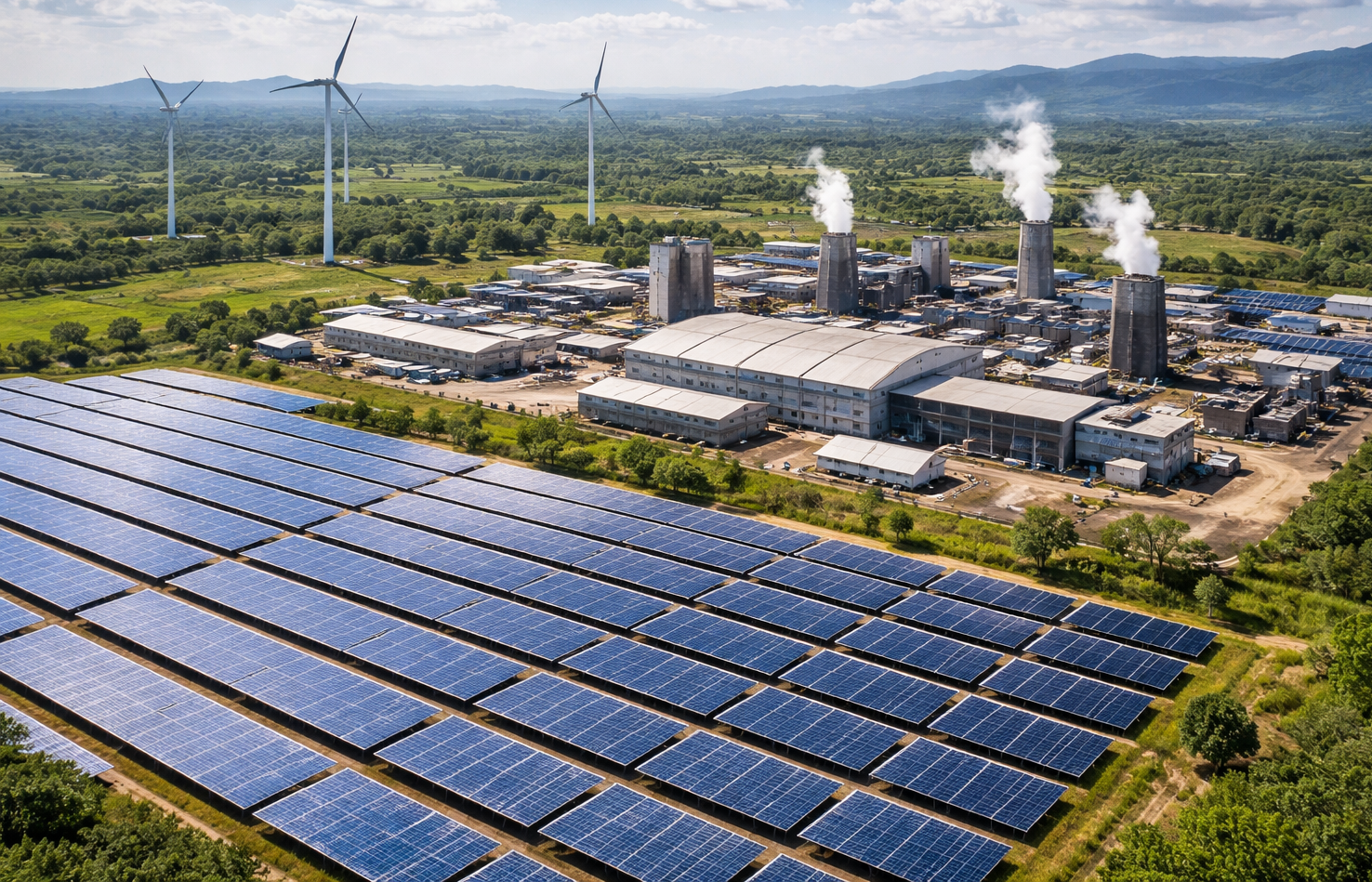
This has been dominated in most of Africa by solar power plants that are fast and easy to deploy.
Mining industries in the DR Congo have deployed 100 MW-scale solar projects to wean themselves off reliance on expensive diesel generators and supplement supply from SNEL.
Wind power plants, such as the Castle wind project in South Africa, have also been deployed to directly supply industries. This was to complement supply from ESKOM at a time when there were supply challenges in South Africa.
Across the continent, there is a realisation that traditional modes of supply through the grid must be supplemented. Industries require power that can be deployed specifically for them for cost, environmental benefits, and guaranteeing supply.
Indeed, these same reasons have seen 630 MW of mostly solar PV captive plants built in Kenya by 2025. This is16% of the installed power capacity in Kenya. Geothermal baseload power is a special addition to Kenya’s captive power space. This realisation that industries should decide for their own supply has led to the enactment of friendly regulations.
The Kenyan case has been due to organic growth in need, in the DRC it has been due to an acute need to replace diesel in mining, and in South Africa the sector was liberated owing to supply challenges in the main grid.
Regardless of the reason, industries are benefiting from captive power supply and quality power supply. Captive powerplants can be deployed faster than grid-based powerplants and do not result in additional debt on the state. These are business-to-business arrangements that increase investment flows into the country.
The majority of captive powerplants have been installed at the consumer premises. Although convenient, this often comes with space and project quality limitations. The best solar, wind, and geothermal sites are rarely located close to industries.
Therefore, African governments and regulators should allow open, non-discriminatory access to the transmission and distribution systems.
This will allow industries to buy power directly from generators located in areas with high-quality renewable energy resources and land.
Transmission and distribution operators are compensated for carrying the power to the consumer through wheeling fees. This will require investments in transmission lines, where public investments can also be supplemented by private investors.
Indeed, Uganda and Kenya are blazing the trail in the continent for private investments in transmission. These efforts, when combined with the possibility of wheeling power, will enable industries and relieve the pressure on public funding for infrastructure. As a continent, we will attract investments that will secure industrial investments and jobs.
The overwhelming need to bring power to 600 million Africans will be supported by more private investors in generation and transmission. Traditional, utility-reliant supply has shackled industrial growth in Africa. This slowed-down growth has been due to commercial, legal, and fiscal risks borne by the state.
These risks no longer need to be borne by governments. The private sector is ready to invest in infrastructure in Africa to supplement the efforts of the state. Banks are ready to deploy capital for these projects. The continent has significant renewable energy potential. Industries have an insatiable need for power expansion.
The market is ready for African exports. Africa requires supportive regulations to allow business-to-business power trade. South Africa, Kenya, Uganda, DRC, Zambia and counting, have shown it works.
George Aluru, CEO Electricity Sector Association of Kenya (ESAK)