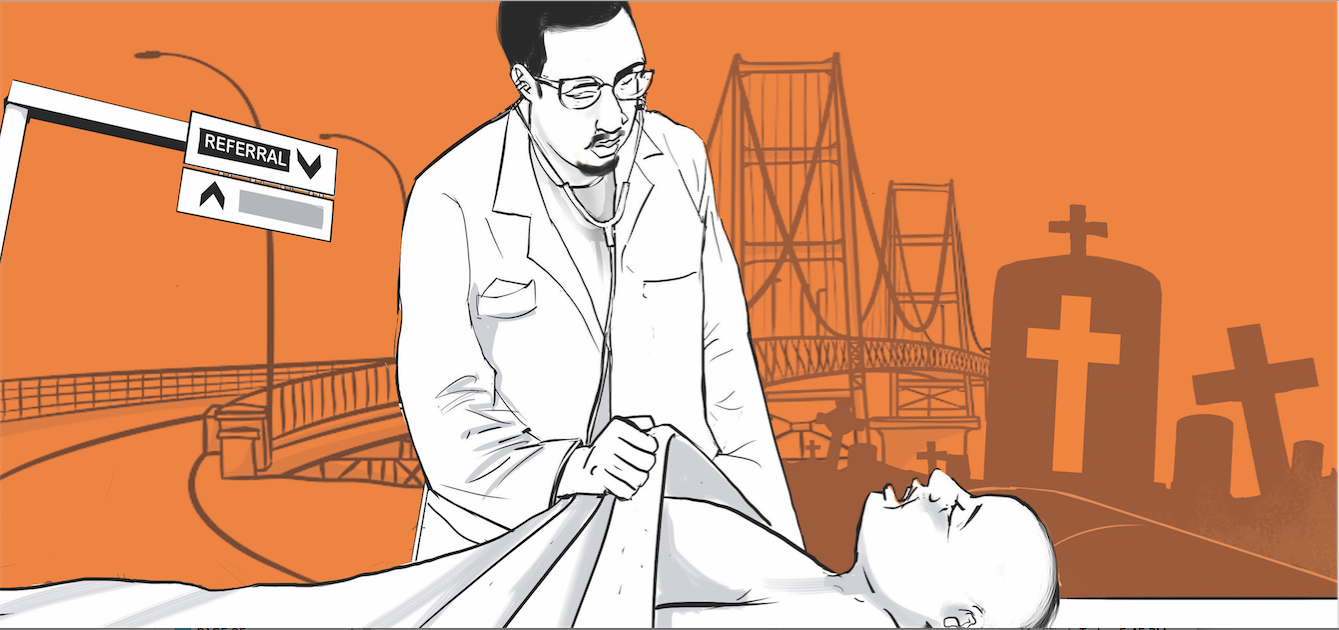
The wealthiest place in Kenya is not Westlands. It is not the oil fields of Turkana. It is the graveyard. Because buried there are people who never got the chance to be fully healed. Not because medicine failed them. Because the system failed to connect them to medicine that existed.
I think about that every Friday morning.
A patient arrives at my oncology clinic at Kenyatta National Hospital, sometimes walking, sometimes not, with a tumour that has been growing for the better part of a year. They have not been hiding from the health system. They have been inside it. They saw a nurse. They saw a clinical officer. Someone gave them painkillers and told them to rest. Nobody referred them. And now they are sitting across from me at a stage where the honest conversation I have to have is one of the hardest in medicine.
This is not a rare case. This is Friday.
Kenya diagnoses approximately 47,000 new cancer cases every year, and over 32,000 Kenyans die from the disease annually. But understand what I am telling you. Many of those 32,000 people did not die because treatment did not exist. They died because the system failed to deliver them to treatment that was waiting. The specialist was there. The possibility of survival was there. What was missing was the bridge.
That bridge is the referral system. And it is the most neglected piece of cancer care in this country.
A system is not defined by its best performance. It is defined by what it consistently fails to deliver to those who need it most. By that measure, our cancer system has a crisis it has not yet been honest enough to name.
We have invested, sometimes generously, in the visible parts of cancer medicine. Chemotherapy. Surgical theatres. The ongoing effort to expand radiotherapy access beyond what KNH and Moi Teaching and Referral Hospital can currently offer. These investments matter. I am not dismissing them.
But you can build the most sophisticated cancer centre on the continent and it will not reach the woman in Murang’a whose clinical officer was not sure whether her growing neck lump warranted a referral, decided it probably did not, and sent her home for the third time.
Potential that is never connected to purpose is potential that dies.
The referral pathway in most of our counties is an informal arrangement dressed up as a system. There is no standardised referral form. There is no tracking mechanism to confirm whether a patient actually arrived. There is no feedback loop. The clinical officer who referred that patient will never know what happened, which means they will never learn, which means the next patient gets the same hesitation. A provider who sends patients into a void and hears nothing back eventually stops sending patients at all. Can you blame them?
This failure does not fall equally. It finds the woman in a rural county who cannot cover both the bus fare to Nairobi and the consultation fee. It finds the child whose osteosarcoma is being called growing pains by someone who has never been trained to think otherwise. It finds the man whose appointment letter is still sitting in an administrative pile three months later. Every one of them carried potential. Every one of them deserved a system that honoured it.
Unused potential does not only live in graveyards. It lives in referral letters that were never written.
The frustrating part, and I mean genuinely frustrating, the kind that stays with you on the drive home, is that this is fixable. Not in the distant, wait-for-the-next-strategic-plan way. Fixable now, with what we have.
A structured referral letter with mandatory fields. An urgent two-week pathway for red flag presentations: unexplained lump, persistent pain, unexplained weight loss, pathological fracture. A community health worker trained to follow up when a patient goes quiet. A discharge summary that travels back to the facility that first referred the patient, so that shared care becomes a real thing and not a phrase we use in policy documents.
Patient navigation deserves particular mention because the evidence is now too strong to keep ignoring. A navigator, and this does not need to be a doctor or even a nurse, it can be a trained community health worker, reduces the time from symptom to diagnosis by weeks, increases treatment completion rates substantially and costs a fraction of what it costs to treat a patient who arrives at stage four because no one was watching. We keep searching for complicated solutions when one of the highest-impact interventions in cancer care is a person with a phone and a protocol.
Purpose does not always arrive in complicated packaging.
I became an oncologist because I believed the disease itself was the enemy. After years at this, I understand that the disease has a powerful ally: a health system that mistakes activity for purpose and presence for impact. That treats the referral as an administrative step rather than a lifeline.
Every patient who dies because they were never referred dies twice. Once from the illness. Once from what the system chose not to do.
We have spent years building the hospital. It is time we built the road.