
At the start of March 2026, Njeri* was excited about the prospect of becoming a mother. At 24 weeks into her first pregnancy, she was looking forward to giving her parents their first grandchild.
Everyone who knew she was expectant was elated. Njeri’s joy was cut short at her obstetrician’s office when a routine foetal well-being scan confirmed that there was no longer a heartbeat.
There had been an intrauterine fetal death. While she was still coming to terms with the news, her obstetrician advised that she undergo a procedure to remove the contents of her uterus.
She had to do this within fourteen days (two weeks) to reduce the chances of developing potentially life-threatening complications.
The thought of undergoing such a procedure left her crippled with fear because the teachings of her religious background suggested that this would be akin to having an abortion.
She felt a profoundly paralysing anxiety in her chest as she analysed the choices available to her, if at all any. What had started as a chance to hold a new life in her arms now filled her with fear for her own life.
The circumstances that befell Njeri occur to many women in Kenya and beyond. Often, they blame themselves for an outcome over which they had absolutely no control.
Society further imposes on them the stigma associated with a terminated pregnancy, its circumstances notwithstanding, while they are still tending to their physical and mental well-being. In Kenya, these women do not feel safe.
The insecurity is worse for women from socioeconomically disadvantaged backgrounds who cannot afford specialised care in private health facilities, have no access to public health facilities, or are unable to attend any facilities at all. Some find refuge in the hands of quacks who gamble with their lives, often leaving them infertile or dead.
For women of all backgrounds, the fear is not just of threats to their physical integrity, but of subjection to vexatious criminal accusations under Section 159 of the Penal Code, which criminalises intentional miscarriage.
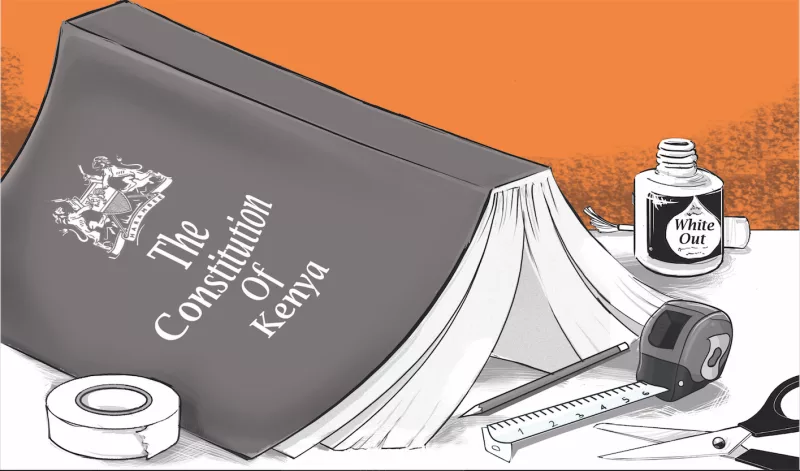
The lofty promise of Article 26(4) of the Constitution of Kenya, 2010 is lost to them at this point. The State has not taken extra steps to avail a healthcare service that guarantees their privacy and dignity as they navigate these murky waters.
These women are uncertain whether trained healthcare professionals are able—but unwilling—to perform such a procedure for fear of Sections 158 and 160 of the Penal Code, which criminalise procurement or support towards this end.
Despite being residents of Kenya in 2026, with Article 43(1)(a) in force, both women and men remain confused and uncertain as to whether a fundamental right to abortion exists. Sixty-seven per cent of Kenyans supported the Constitution of Kenya, 2010 through a referendum.
Today, courts often pass judgments that affirm the rights to which all persons are entitled. However, some factions challenge these decisions in higher courts, believing that alternative interpretations will alter the status of fundamental rights and freedoms. Kenya cares for its women—at least this is the reflection of the soul of the Katiba.
From equality and freedom from discrimination to the construing of the Constitution, the tone mandates all arms of government to promote the fundamental freedoms in the Bill of Rights. As we reflect on what it means to give to gain this year, women like Njeri in Kenya expect the State to go beyond awareness by taking concrete steps to streamline the Penal Code with their constitutional entitlements.
They look to the courts to give meaning to these entitlements by declaring them fundamental and in tandem with the spirit of the Constitution of Kenya, 2010.
The writer is a health rights expert and Network Lawyer at The Legal Caravan.