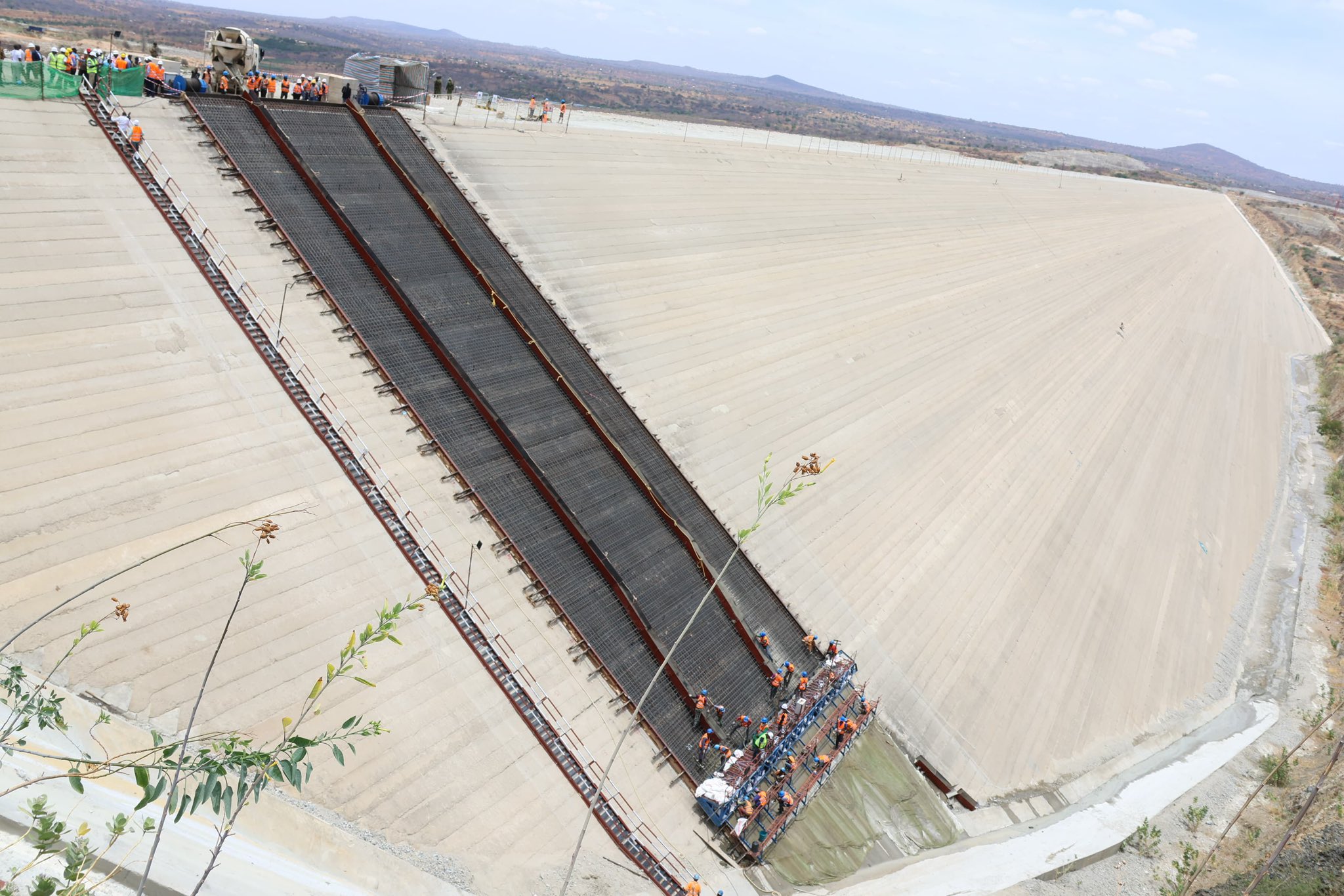
A new audit by Auditor General Nancy Gathungu reveals a troubling mix of issues that threaten the successful implementation of the mega project which kicked off in the 2017-18 financial year.
The dossier obtained by the Star cites stalled works, illegal cost escalations, avoidable interest payments and shoddy community projects at the Thwake Dam.
The Sh12.4 billion loss estimate is drawn from a combination of cost overruns and avoidable financial penalties flagged in the report of the National Treasury Vote for the year to June 30, 2025, tabled in Parliament.
At the centre of the loss is a massive increase in project cost, compared with the cost at inception and the certificates generated so far.
Initially contracted at Sh36.97 billion in November 2017, the dam’s price has ballooned to Sh48.89 billion, which is an increase of Sh11.92 billion.
“The delay in the completion of the project may result in loss of funds and inability to meet the project objectives and denying the public critical services,” Gathungu said.
On top of the adjustment, delayed payments to the contractor have triggered interest penalties amounting to Sh569 million, of which Sh468.1 million remains unpaid.
“Interest on delayed payments was an avoidable liability often un-budgeted for and distorts the current or future fiscal year’s appropriations,” Gathungu states in the report.
“The continued delay in payments may result in avoidable interest payments of Sh468.4 million and a lack of value for money.”
Combined, the cost overruns and interest payments push the taxpayer burden to at least Sh12.4 billion, and potentially higher if delays persist.
The dam, originally due for completion in November 2022, has been hit by repeated delays despite multiple extensions.
Deadlines were pushed to February 2024, then December 2024, and later to August 2025. Even then, the project had only reached 94.2 per cent completion by the end of 2024.
A site inspection in July 2025 revealed that construction had effectively stopped, with no activity for over a year, and workers had vacated the site.
“Physical verification… revealed that there were no project activities at the site for the last year and that staff had left the construction site,” Gathungu said.
The auditor warned that the prolonged stoppage could trigger further price increases due to changing market conditions, compounding the already heavy financial losses.
Water CS Eric Mugaa, in an earlier public statement, said, "This ambitious project remains on track for completion by July 2026." There are talks with Africa Development Bank to push the completion to December 2026.
"Once completed, this landmark dam will provide clean drinking water, enable irrigation for more than 40,000 hectares (98,842 acres) of farmland, and generate 20MW of hydropower," he said.
The audit further exposes governance failures within the Ministry of Water and Sanitation, with project managers found to have breached procurement laws.
The law limits contract variations to a maximum of 25 per cent of the original cost. However, the Thwake Dam’s variation reached 32 per cent.
This raises serious accountability concerns, with the audit explicitly stating that management acted outside the law.
“Management was in breach of the law,” Gathungu said, emphasising that variation can only be allowed if below or equal to 25 per cent of the original price.
Beyond the headline billions, the report also reveals waste and poor workmanship in community projects tied to the dam.
Under a Sh80 million corporate social responsibility (CSR) programme, schools, health facilities and water projects were constructed in Makueni and Kitui counties.
However, many of these are already defective, and some are non-operational due to malfunctioning devices. Thirteen projects were found with various defects.
Auditors found boreholes that cannot pump water due to faulty inverters, vandalised water tanks, collapsing ceiling boards and classrooms with cracked walls and damaged floors.
At Kathulumbi Health Centre, the ceiling is collapsing, while floors and walls show significant structural defects.
“Failure to address defects in the completed CSR projects within the defects liability period exposes the implementing entity to financial loss through increased future maintenance and rehabilitation costs that could have been avoided if timely repairs were undertaken,” the Auditor General warns.
“It also increases the risk of non-achievement of the intended project objectives, which includes provision of safe learning environments, access to basic healthcare, and availability of clean water.”
A borehole at Kwa Kimanthi and Kwa Kavithi was non-operational due to a malfunctioning system rendering it unable to pump water.
In another costly lapse, the contractor’s insurance cover expired in February 2025 and had not been renewed by July 2025.
“This was contrary to clause 18 of the contract, which requires continuous insurance,” the report states, warning that the government is now financially exposed.
“The government is financially exposed in the event of contractor default, substandard performance, or failure to correct defects.”
Land acquisition challenges also persist despite billions already spent on settling project-affected persons (PAPs).
The government disbursed more than Sh3.5 billion for land compensation affecting more than 1,800 people.
Yet four parcels remain unresolved, with disputes in court and within families.
“Delays in obtaining land ownership documents for the Thwake Dam project expose the government to the risk of disputes, encroachment and potential legal claims from third parties,” Gathungu cautions.
The government had acquired 9,158 acres for the dam project, displacing about 1,820 people.
An additional 60 acres were acquired, necessitated by the need for an employer’s camp, saddle dam, an enlarged spillway, and main access road.
The findings paint a grim picture of a project weighed down by mismanagement, weak oversight and costly delays.
Thwake Dam was contracted on November 15, 2017, with a contract amount of Sh36,971,346,445 and an expected end date of 4 November 2022.
In 2024, President Ruto gave assurances that the dam was going to be completed by the end of the year.
He announced an expansion that was to be undertaken at an additional cost of Sh7 billion, effectively pushing the cost to Sh55 billion.
The dam is expected to provide water for domestic use, livestock and irrigation, to boost food production in Ukambani. A separate audit (2023) raised water quality issues.