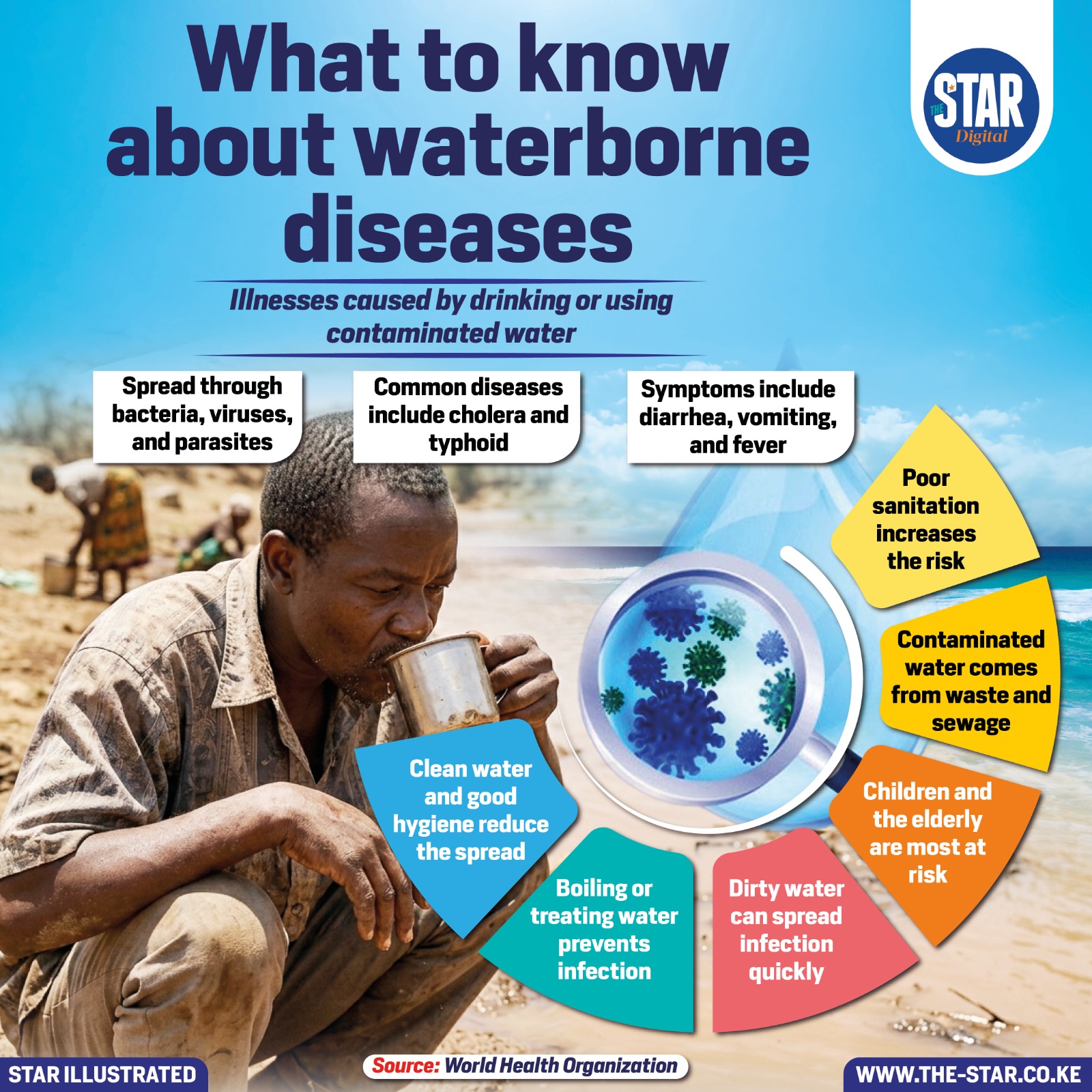
Waterborne diseases are illnesses caused by consuming or using contaminated water, often spread through bacteria, viruses and parasites.
According to the World Health Organisation, common examples include cholera and typhoid, which remain major public health concerns, especially in areas with limited access to clean water.
These diseases are typically linked to poor sanitation and hygiene, where water sources become contaminated by waste and sewage.
Symptoms often include diarrhoea, vomiting and fever, which can quickly become severe if not treated in time.
Children and the elderly are most at risk due to weaker immune systems.
The spread of infections can be rapid, particularly in overcrowded areas with inadequate sanitation facilities.
Prevention largely depends on access to safe drinking water and proper hygiene practices.
Boiling or treating water before use, along with maintaining clean environments, significantly reduces the risk.
Improving sanitation systems and promoting hygiene awareness are key to controlling and preventing waterborne diseases.