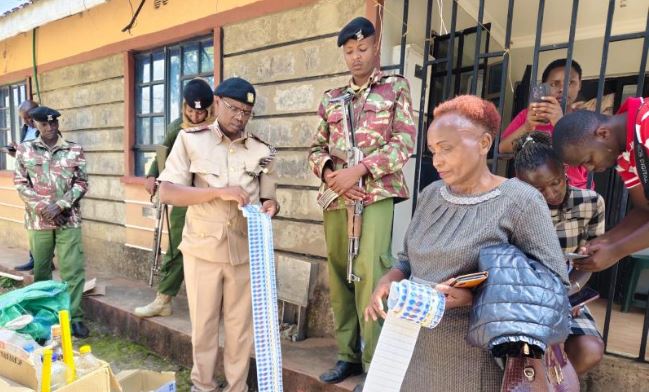
 Murang'a South deputy county commissioner Bernard Odino, displaying a roll of Kebs stamps confiscated during a raid in a home suspected to have been used to manufacture counterfeit liquor near Kenol town last December /ALICE WAITHERA
A crackdown by a multi-agency team in Nyeri county has uncovered alarming levels of substandard and potentially dangerous alcohol, raising fresh concerns over the safety of drinks sold in retail outlets.
Findings from the operation in Gatitu town revealed all sampled alcoholic beverages failed to meet the required safety standards.
Alcoholic Beverages Association of Kenya (ABAK) chairperson Kui Kinyanjui expressed concern over the findings, saying they highlight the urgent need for sustained enforcement against substandard and illicit alcohol.
“Such products endanger consumers and undermine trust in the industry,” she said.
The inspection brought together officers from the Kenya Bureau of Standards (Kebs), the Anti-Counterfeit Authority (ACA), the Kenya Revenue Authority (KRA), the county public health department, and the Directorate of Criminal Investigations (DCI).
Each agency collected samples that were independently tested at the Government Chemist, yielding concerning results.
According to results submitted to Kebs, all five beer brands sampled failed to meet national standards.
Separate findings by the Anti-Counterfeit Authority established that the contents inside the bottles did not match what was indicated on their labels, pointing to possible counterfeiting and consumer deception.
Further analysis by the Government Chemist painted an even grimmer picture, indicating that the beverages contained harmful levels of alcoholic substances deemed poisonous to the human body.
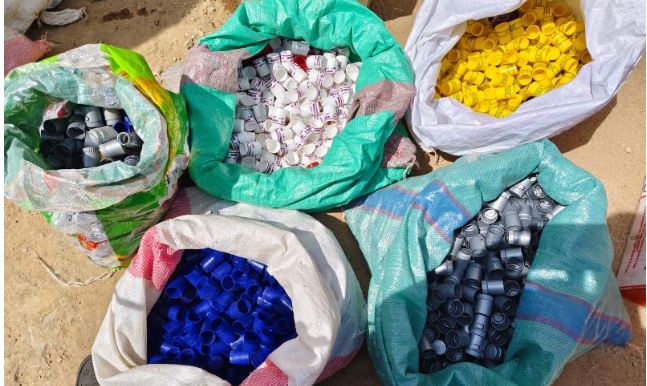 Bottle tops found in a home used to counterfeit alcohol in Kagaa, Murang'a, in December 2025 /ALICE WAITHERA
“These products were found on the shelves in branded bottles, raising serious concerns about their origin and authenticity. We must ask, who are the manufacturers behind these brands?” Kinyanjui said.
ABAK has distanced itself from the implicated brands, noting the manufacturers are not members of the association.
“As ABAK, we reiterate our industry-wide commitment to working closely with all covernment agencies to eradicate counterfeit and illicit alcohol from the market,” Kinyanjui said.
The association has also called for swift prosecution of those responsible and the immediate removal of the products from the shelves, warning that failure to act decisively could further endanger consumers and erode confidence in legitimate manufacturers.
The country has long grappled with the menace of illicit and counterfeit alcohol that continues to pose a major public health risk.
In 2024, ABAK announced that illicit alcohol accounts for nearly 40 per cent of total alcohol consumption in the country, depriving the government of more than Sh70 billion in revenue annually while exposing consumers to unsafe products.
The Central Kenya region, including Nyeri, Murang’a and Kirinyaga counties, has been particularly affected due to a long-standing culture of alcohol consumption and the proliferation of unlicensed brews.
In some areas, the availability of cheap, unregulated alcohol has contributed to rising cases of addiction, health complications and social challenges among families.
Past crackdowns in the region have led to the destruction of illegal distilleries yet the problem persists, fuelled by high demand and economic hardship.
Government-led operations have intensified in recent years targeting supply chains, manufacturers, and distributors of counterfeit alcohol.
However, enforcement agencies continue to face challenges, including the sophistication of counterfeiters who use branded bottles and labels to pass off unsafe products as legitimate.
ABAK is now urging consumers to remain vigilant and only purchase alcohol from licensed outlets, emphasising that safeguarding public health requires a collective effort between regulators, industry players, and the public.
Instant Analysis
The inspection brought together officers from the Kenya Bureau of Standards (Kebs), the Anti-Counterfeit Authority (ACA), the Kenya Revenue Authority (KRA), the County Public Health Department, and the Directorate of Criminal Investigations (DCI). Analysis by the Government Chemist confirmed the beverages contained harmful levels of alcoholic substances deemed poisonous to the human body.