Principal Secretary for Irrigation Ephantus Kimotho has called for stronger political commitment and coordinated implementation to drive Africa’s agricultural transformation under the Comprehensive Africa Agriculture Development Programme (CAADP) 2026–2035 agenda.
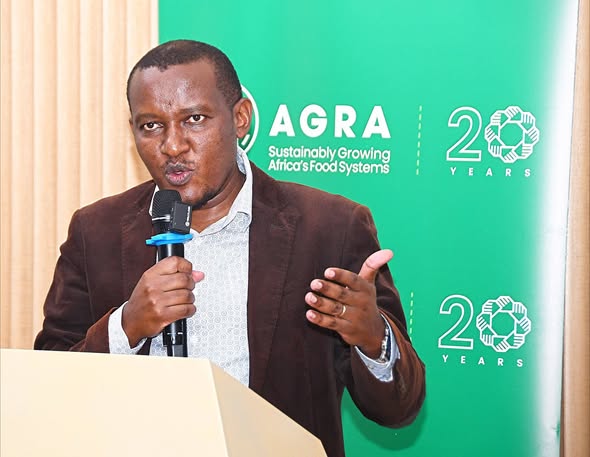
Kimotho spoke during a two-day Regional Leadership Retreat held in Limuru, which brought together 16 Permanent and Principal Secretaries from 14 African countries.
The meeting, convened in partnership with the Alliance for a Green Revolution in Africa (AGRA), focused on shifting from policy commitments to government-led execution of agricultural reforms.
Delegates from countries including Kenya, Nigeria, Sierra Leone, Senegal, Uganda, Zambia, Tanzania, Mozambique, Malawi, Mali, Burkina Faso, Somalia, and Ethiopia attended the retreat, which aimed to accelerate transformation of agrifood systems across the continent.
In his remarks, Kimotho stressed that meaningful change in agriculture will depend on practical implementation rather than policy discussions alone.
“Agricultural transformation will require consistent action, strong coordination across institutions, and sustained political commitment to deliver results,” he said.
He noted that many countries are increasingly focusing on resilience, value addition, and strengthening domestic markets, while urging governments to approach agriculture as an interconnected system rather than a standalone sector.
Kimotho said political leadership remains critical in enabling reforms, improving coordination, and mobilizing resources.
He also highlighted the role of commercialization in creating jobs, calling for investments in aggregation, clustering, and value addition to support smallholder farmers.
The PS identified mechanization, digitalization, and irrigation as key drivers of productivity and resilience, alongside financing models that bring together public and private sector investment.
On Kenya’s priorities, Kimotho pointed to the National Irrigation Sector Investment Plan (NISIP), which seeks to expand land under irrigation by one million acres over the next decade.
The plan also targets a reduction of the country’s food import bill, currently estimated at Sh500 billion, by up to half.
He said irrigation and water harvesting remain central to building climate-resilient agriculture, supported by ongoing investments in multipurpose dams, expansion of irrigated land, and adoption of efficient water use technologies.
Kimotho added that the government is promoting farmer-led irrigation development by improving access to financing for irrigation equipment, while also strengthening governance frameworks and building capacity among irrigation operators.
He emphasized the need to include women and youth in agricultural transformation by improving access to land, finance, technology, and markets.
In his closing remarks, Kimotho urged African governments to move beyond dialogue and focus on implementation by strengthening coordination, prioritizing high-impact interventions, and scaling proven solutions.
He reaffirmed Kenya’s commitment to working with partners, including AGRA, to advance sustainable and inclusive food systems across the continent.