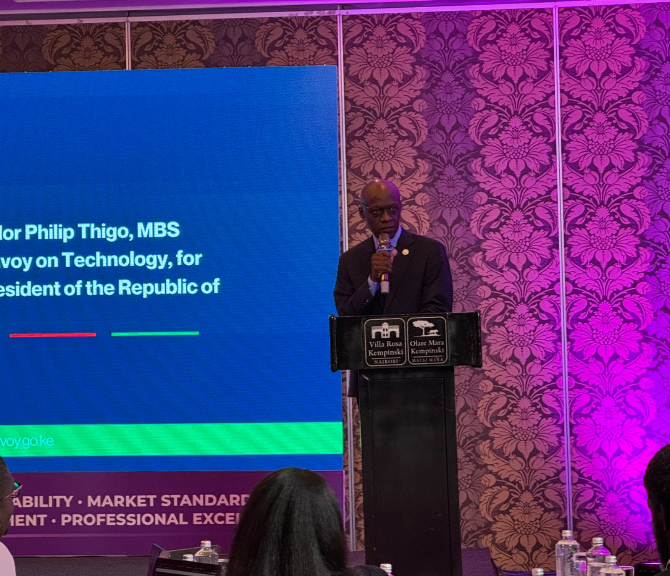
Kenya is accelerating efforts to regulate its fast-growing virtual asset market, signaling a decisive shift from a largely unregulated space to a structured and globally competitive digital finance ecosystem.
This follows a high-level roundtable that brought together policymakers, regulators and industry players to chart the implementation of the Virtual Asset Service Providers (VASP) Act, 2025.
The meeting, convened by the Office of the Special Envoy on Technology in collaboration with the Virtual Assets Chamber of Commerce, drew participation from the National Treasury, Central Bank of Kenyaand Capital Markets Authority, alongside local and international crypto firms.
The discussions mark a critical step towards formalising Kenya’s cryptocurrency and digital asset industry, which has for years operated in a legal grey area despite rising adoption among retail users and businesses.
At the heart of the talks was how to translate the VASP Act into a practical regulatory framework that balances innovation with consumer protection and financial stability.
Stakeholders emphasised the need for clear, predictable rules that can position Kenya as an attractive destination for digital asset investment while maintaining robust oversight.
One of the key outcomes of the roundtable was broad agreement on the need to prioritise licensing and supervision of virtual asset service providers.
Under the proposed framework, firms dealing in cryptocurrencies and related products will be required to obtain licenses before operating in or from Kenya.
The draft Virtual Asset Service Providers Regulations, 2026, developed by a multi-agency task force, set out strict conditions for market entry.
Applicants will be required to disclose ownership structures, source of funds and business models, as well as demonstrate adequate capital and risk management systems.
Regulators will also apply “fit and proper” tests to ensure only credible players are allowed into the market, with powers to reject applications that pose risks to financial stability.
Beyond licensing, the proposed rules introduce stringent ongoing supervision requirements. Licensed firms will be subject to audits, inspections and mandatory reporting, while also being required to maintain transaction records for at least seven years.
Consumer protection has emerged as a central pillar of the new framework. Virtual asset firms will be required to clearly disclose risks associated with digital assets, including price volatility and cybersecurity threats, before onboarding customers.
They must also implement complaint-handling mechanisms, safeguard client funds and ensure transparent pricing of fees and commissions. The regulations further prohibit misleading advertising and mandate risk warnings in promotional materials.
The framework goes a step further by addressing emerging areas such as initial coin offerings (ICOs), stablecoins and tokenised assets.
Firms seeking to launch ICOs will be required to publish detailed white papers outlining risks and governance structures, while stablecoin issuers must maintain adequate reserves to ensure redeemability.
The roundtable also highlighted the importance of designing market-friendly policies, including balanced approaches to reserve requirements, licensing structures and levies to avoid stifling innovation.
Participants underscored the need to future-proof the regulatory regime to accommodate rapid technological advancements, including the integration of artificial intelligence in financial services.
“This roundtable marks an important milestone in Kenya’s journey toward building a transparent, secure and innovation-friendly virtual asset ecosystem,” said Ambassador Philip Thigo, Special Envoy on Technology.
The government has since invited members of the public and industry stakeholders to submit views on the draft regulations, reinforcing a consultative approach to policymaking.
Officials say continued public-private collaboration will be critical in refining the rules, enhancing coordination among regulators and ensuring inclusive development of the sector.
If successfully implemented, the VASP framework is expected to boost investor confidence, curb fraud and position Kenya as a regional hub for digital finance in Africa, while safeguarding the interests of consumers in an increasingly digital economy.