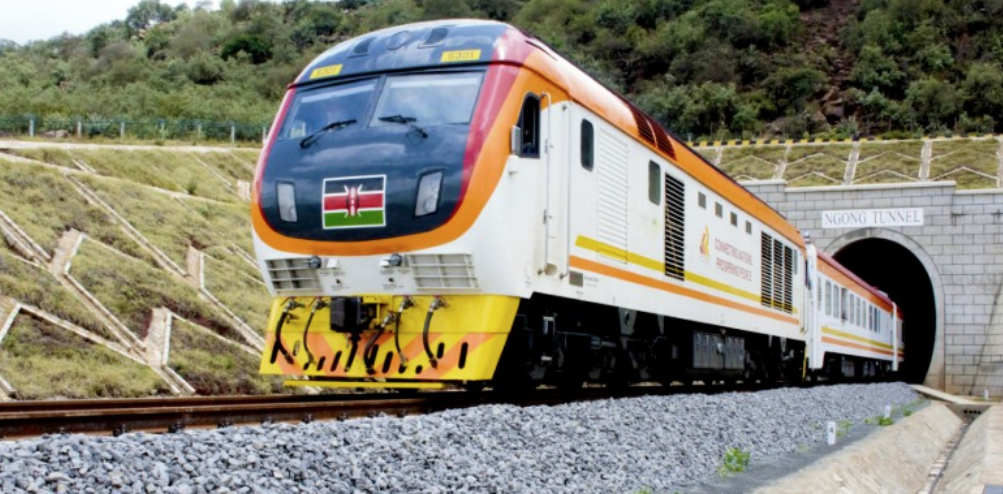
The joint launch of the extension of the Standard Gauge Railway to Kisumu, and its onward connection to Malaba at the Uganda border by President William Ruto alongside President Yoweri Museveni, marks more than a milestone in infrastructure development. It signals the steady emergence of a new economic geography in East Africa, one shaped by connectivity, efficiency, and shared ambition. As part of the broader Belt and Road Initiative, the Standard Gauge Railway is evolving into a regional backbone with the potential to redefine trade, industry, and integration across East Africa.
For years, expanding connectivity has been central to unlocking the region’s full economic potential. The extension of the SGR toward Kisumu and Malaba represents a decisive step in that direction. By linking the port of Mombasa to Uganda and paving the way for connections to neighboring countries, the railway creates a seamless corridor for trade and movement. It enhances efficiency, strengthens supply chains, and positions East Africa as a more competitive and attractive destination for investment. This is not just a transport upgrade. It is the foundation of a more dynamic and interconnected regional economy.
The implications for trade are far-reaching. A modern railway system improves the speed, reliability, and scale at which goods move across borders. For Uganda and other neighboring countries, it provides a vital link to global markets through Kenya’s coastline. For Kenya, it reinforces its role as a regional gateway and logistics hub. The connection to Kisumu also revitalizes the economic importance of Lake Victoria, opening opportunities for multimodal transport that integrates rail and lake shipping. Together, these developments create a more efficient and resilient trade network that benefits businesses, producers, and consumers alike.
Beyond trade, the SGR extension is set to catalyze industrial growth along its route. Infrastructure of this scale creates new opportunities for manufacturing, agro-processing, and logistics. Towns and cities connected by the railway are well positioned to attract investment, develop industrial zones, and expand economic activity. Farmers gain improved access to markets, while businesses benefit from streamlined supply chains. Over time, this translates into job creation, income growth, and a stronger, more diversified regional economy.
China’s role in this transformation is both significant and constructive. Through the Belt and Road Initiative, China has partnered with Kenya to deliver large-scale infrastructure that supports long-term development goals. The SGR stands as a flagship example of this cooperation, demonstrating how shared vision and practical collaboration can produce tangible outcomes. Beyond physical infrastructure, this partnership has also created opportunities for technology transfer, skills development, and knowledge exchange, contributing to the growth of local capacity and expertise.
The arrival of Chinese Vice President Han Zheng in Nairobi just on Sunday evening adds fresh momentum to this progress. His presence at this pivotal moment underscores a shared commitment to advancing connectivity, trade, and economic cooperation between China and Kenya, as well as across the wider region. High-level engagement of this nature reinforces mutual trust and ensures that key projects continue to align with the development priorities of both sides. It also reflects the importance that China places on its partnership with Africa, grounded in mutual respect and shared development.
The regional dimension of the SGR project is especially noteworthy. By jointly advancing the Malaba connection, Kenya and Uganda are demonstrating the power of coordinated infrastructure development. The railway strengthens the foundations of regional integration by making cross-border trade more efficient and by encouraging closer economic collaboration. It aligns with the broader vision of a more interconnected East Africa, where goods, services, and people can move with greater ease, unlocking new opportunities for growth and cooperation.
The SGR also opens the door to complementary developments that can amplify its impact. Investments in logistics hubs, industrial parks, and digital systems can enhance efficiency and create additional value along the corridor. As these elements come together, the railway evolves into more than a transport system. It becomes a comprehensive economic corridor that supports innovation, enterprise, and regional competitiveness.
The symbolism of the SGR is equally powerful. Railways have long represented progress, connection, and opportunity. The extension to Kisumu and Malaba reflects a forward-looking vision for East Africa, one that embraces infrastructure as a driver of transformation. It highlights what can be achieved through partnership, planning, and a shared commitment to development. The presence of leaders from Kenya, Uganda, and China at key moments in this journey reinforces the collaborative spirit that underpins the project.
In the final analysis, the SGR-BRI vision is a game changer because it addresses the core drivers of economic growth. It connects markets, enhances efficiency, supports industrial expansion, and strengthens regional ties. It transforms connectivity into opportunity and vision into reality. As the railway continues to expand, it carries with it the promise of a more integrated, prosperous, and forward-looking East Africa, built on strong partnerships and a shared commitment to progress.
The writer is a Journalist and Communication Consultant