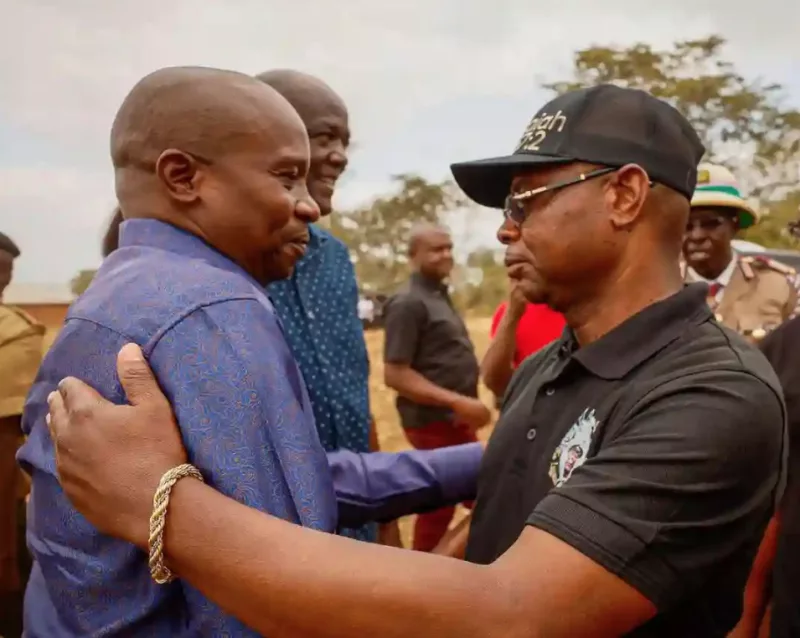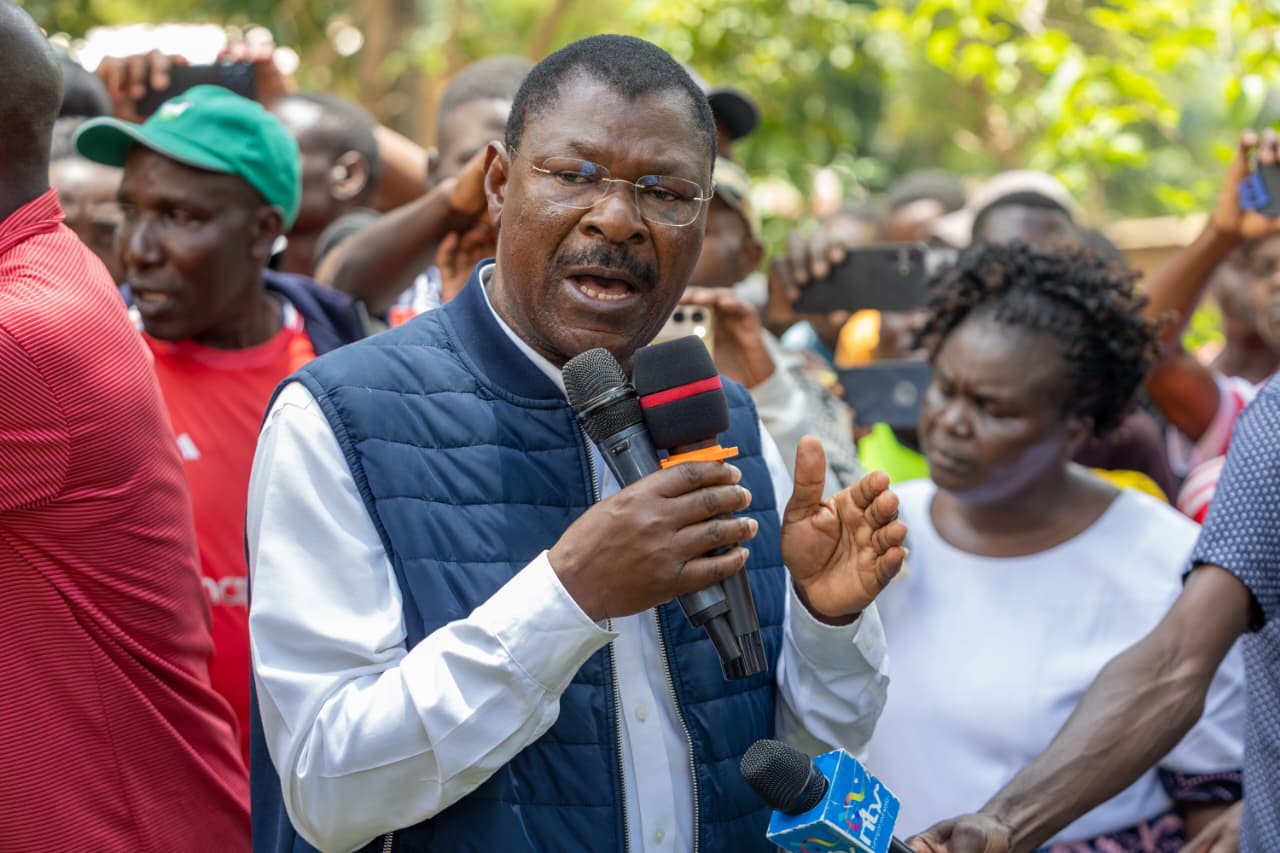
A storm is gathering within Ford Kenya, placing National Assembly Speaker Moses Wetang’ula’s party at a crossroads ahead of the 2027 general election.
At the heart of the unease is growing pressure, both overt and subtle, for smaller affiliate parties to fold into the ruling UDA.
In what could expose cracks inside President William Ruto’s Kenya Kwanza coalition, Ford Kenya leaders now say the call threatens their survival within the alliance.
Ford Kenya secretary general John Chikati (Tongaren MP) says while there has been no formal directive to dissolve the party, the signals from within Kenya Kwanza are increasingly difficult to ignore.
“We have not received any official communication, but we cannot pretend not to see what is happening,” he told the Star.
“Political messages can be coded, sometimes laced with elements of intimidation.”
According to Chikati, the pressure is not new.
He revealed that as early as two years ago, senior UDA figures had approached Ford Kenya with a proposal to fold into the ruling party, a suggestion they flatly rejected.
This coincided with the time Musalia Mudavadi’s Amani National Congress folded and merged into UDA.
Ford Kenya’s decision, it now appears, may have placed the party on a collision course with the dominant political force in government.
Recent public statements by UDA leaders have only deepened the anxiety.
Chikati singled out remarks by Nandi Senator Samson Cherargei, who warned that leaders from parties that refuse to merge risk missing out on lucrative government positions after the next election.
“Such statements raise serious concern,” he said.
PRECARIOUS GROUND
Political analysts say Ford Kenya finds itself in a particularly vulnerable position.
Its predicament is further complicated by the looming political rapprochement between Ruto’s UDA and ODM.
The ongoing negotiations arguably could significantly alter the balance of power within Kenya Kwanza.
ODM insiders have indicated the party, under Oburu Oginga’s stewardship, is eyeing a bigger stake in government.
They are potentially eyeing the Deputy President slot or, failing that, a constitutionally entrenched office.
Wetang’ula occupies one of the most powerful positions in the country as Speaker of the National Assembly, the third in command in the national pecking order.
Should ODM fail to secure a foothold in the upper echelons of government, attention could quickly turn to the seat of the speakers of the National Assembly and Senate.
Ford Kenya leaders believe they are being targeted partly because of the precedent set by Mudavadi’s ANC, which dissolved and merged into UDA last year.
The move consolidated Ruto’s grip on the coalition but also signalled a shift towards a more centralised political structure, one that leaves little room for independent affiliate parties.
Chikati insists Ford Kenya will not follow that path.
“This is a heritage party, like Kanu,” he said.
“It is part of our political history. You cannot just wish it away.”
He warned that forcing parties to fold “undermines democratic ideals and erodes ideological diversity”.
“When we fold parties, we create resistance and unease, not unity,” Chikati argued.
“Why would we disregard the constitution and move towards a monolithic party system?”
He said the mandate to determine whether a party remains viable lies with the Office of the Registrar of Political Parties, not political competitors.
SHRINKING OPTIONS
However, not everyone within Ford Kenya’s orbit is convinced the party can withstand the mounting pressure.
David Burare, a former Ford Kenya official who defected to UDA, argues that the party’s options are rapidly narrowing.
“Wetang’ula is under siege,” Burare said.
“The reality is that UDA is consolidating power and smaller parties must decide whether to align or risk political isolation.”
Burare suggests that Ford Kenya may ultimately have to adopt a model similar to that of the Pamoja Africa Alliance (PAA), associated with Senate Speaker Amason Kingi.
Kingi recently declared his party would not field a presidential candidate in 2027 but would instead rally behind Ruto’s re-election bid.
“Our responsibility is to promote the values of UDA,” Kingi said at a recent meeting in Kilifi, adding that he had been tasked by the President to popularise the party at the grassroots.
According to Burare, this is the kind of arrangement that has been quietly proposed to Ford Kenya, that is, retain nominal independence but functionally operate as an extension of UDA.
“That message has been communicated, whether directly or indirectly,” he said.
Compounding Ford Kenya’s troubles are signs that its traditional strongholds in Western Kenya may no longer be as secure as they once were.
Burare points to the recent electoral loss of the Chwele MCA seat in a November by-election as evidence of waning grassroots support.
“Ruto’s team is aware that Ford Kenya is losing ground in Bungoma and Trans Nzoia,” he said.
“That weakens their bargaining power significantly.”
On one hand, folding into UDA could guarantee Ford Kenya continued access to power and resources. On the other hand, it would mark the end of Ford Kenya as an independent political force.
The party’s legacy dates back to the country’s struggle for multiparty democracy in the President Daniel Moi era.
INSTANT ANALYSIS
Ford Kenya may soon be forced to make a defining choice, that is, one that could reshape not just its own future, but the architecture of Kenya Kwanza. With pressure mounting from within the coalition, shifting alliances at the national level, and signs of weakening support on the ground, that decision could soon become urgent for the outfit.