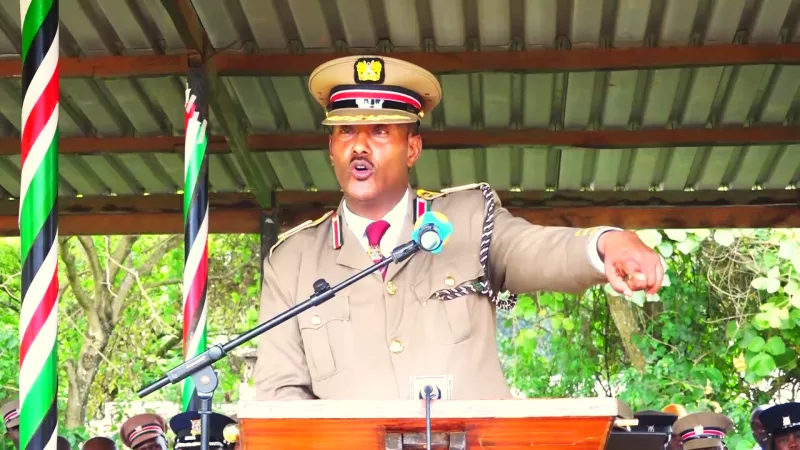
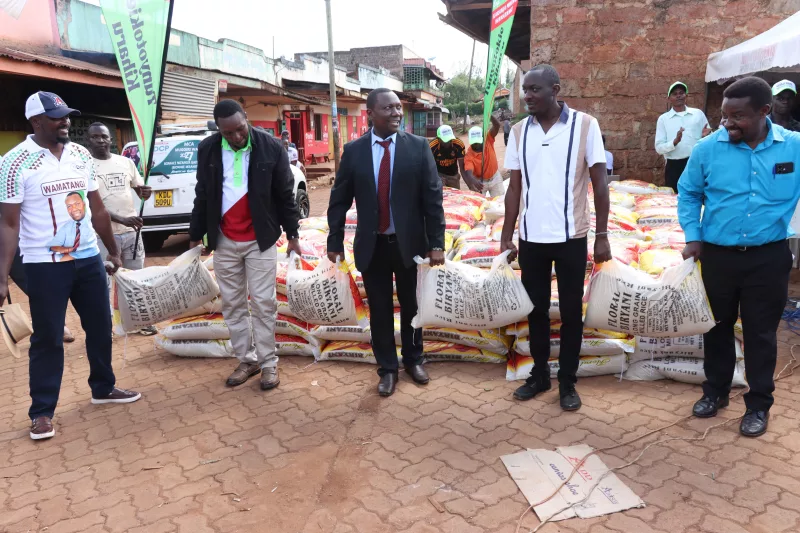
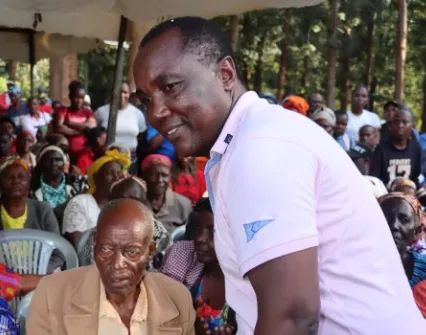
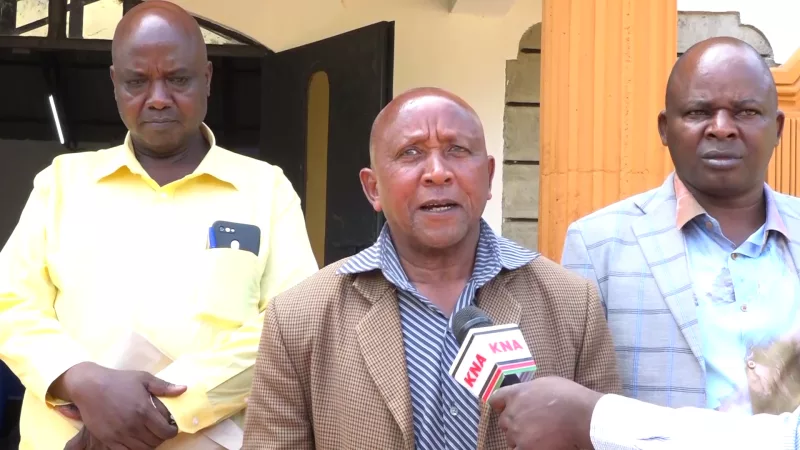
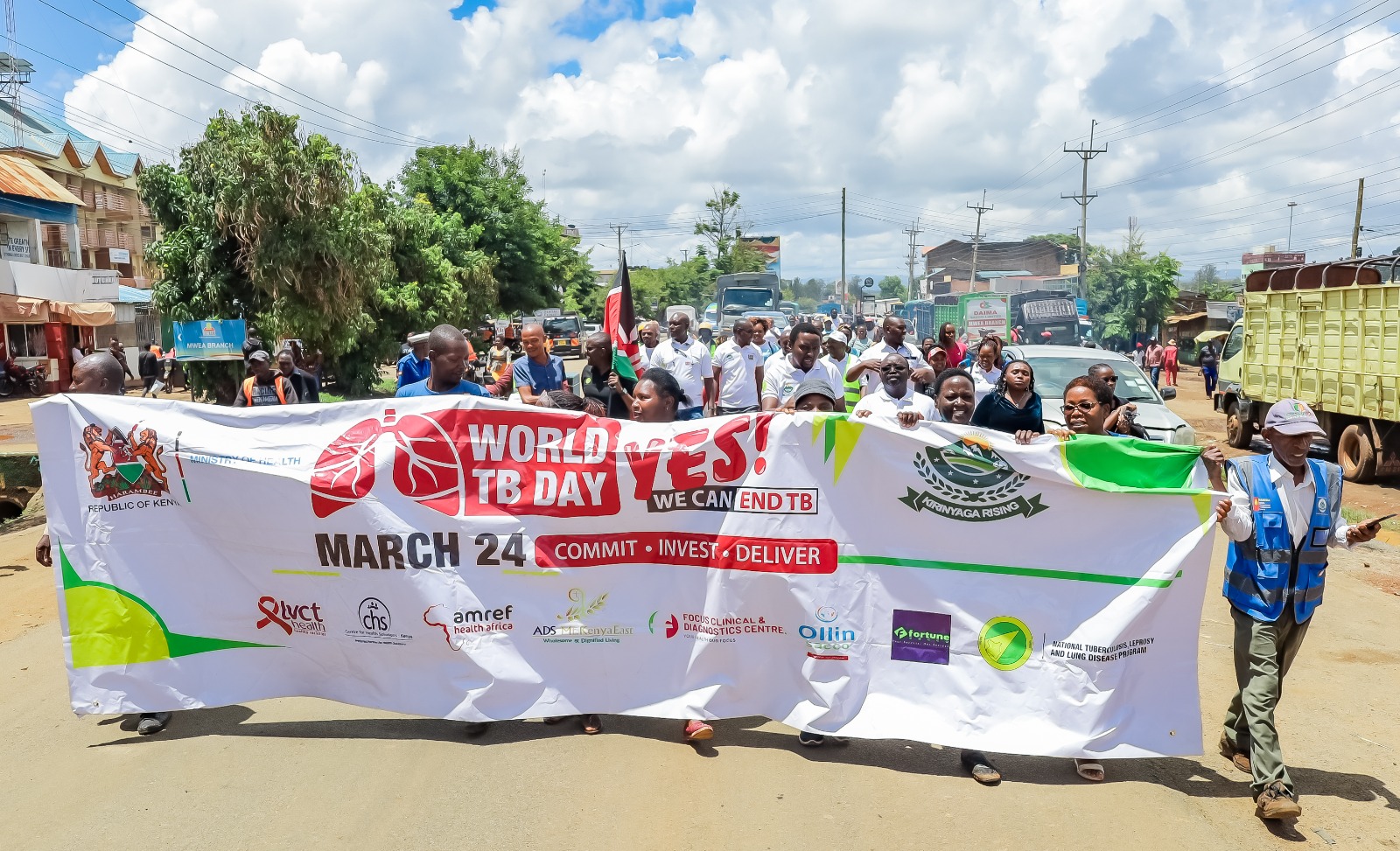
 Stakeholders walk through Wang'uru town in Kirinyaga to create awareness on TB during the World TB Day celebrations on March 24, 2026/ ALICE WAITHERA
Kirinyaga has rolled out a new strategy to intensify the fight against tuberculosis, focusing on early testing and treatment to curb undiagnosed cases.
The Kirinyaga County Strategic Operational Framework for Tuberculosis aims to ensure the fight against TB and other related diseases is well coordinated, data-driven and community-centred.
Through the strategy, the county government will expand access to TB services in both public and private health facilities, integrate TB care into routine health services, and strengthen disease prevention.
Health Executive George Karoki said current TB infection data presents a worrying number of undiagnosed cases within the population.
“Let us face reality. We are still missing cases. Too many people, especially men, are seeking medical care late, and when TB is detected late, it spreads further, costs more to treat and claims more lives,” he said.
Karoki said the county also seeks to bring disease diagnosis closer to the people and reduce the time taken to deliver patient samples to laboratory diagnostic centres.
To achieve this, he also launched the Kirinyaga County Integrated Sample Referral System Guidelines to facilitate the timely and efficient transportation of patient samples from even the most remote health facilities to laboratory diagnostic centres at sub-county, county and national referral hospitals.
“It means that a patient in the most remote part of Kirinyaga will no longer be disadvantaged. Their sample will reach the laboratory faster. Their diagnosis will come earlier. Their treatment will start sooner,” he said.
He cautioned that failure to complete prescribed treatment increases the likelihood of drug-resistant TB, which is more difficult and expensive to manage, adding that adherence is critical to individual recovery and public health control.
The strategies were announced during the World Tuberculosis Day commemoration at Nano Grounds, an area identified as having the highest disease burden in the county, underscoring the urgency of intensified interventions.
Karoki further explained the newly launched strategies are designed to strengthen case finding, improve linkage to care and ensure continuity of treatment.
He said the county is working with private health facilities and community health promoters to identify suspected cases early and refer them for testing.
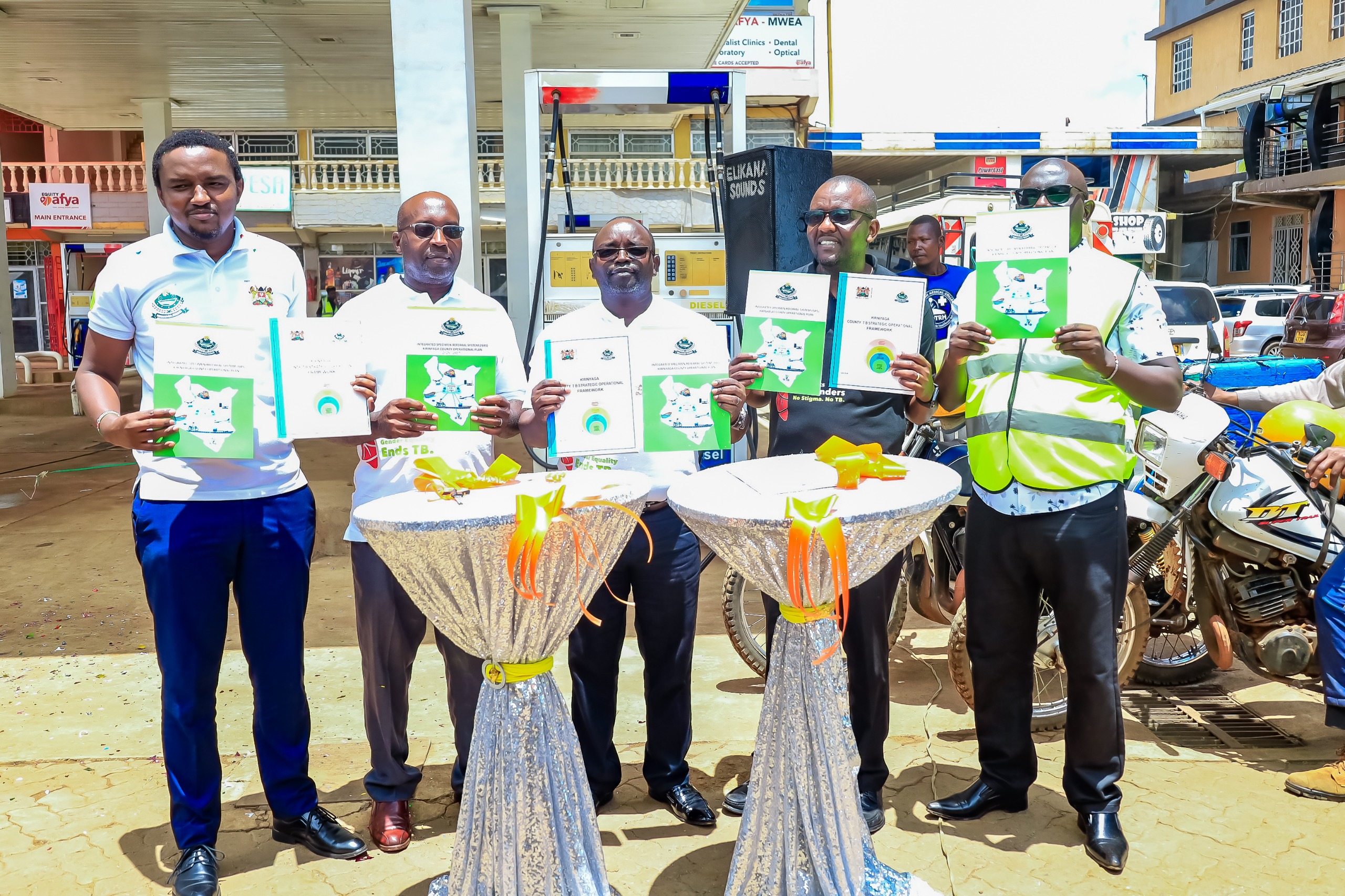 Kirinyaga health executive George Karoki (centre) launches the County Strategic Operational Framework for Tuberculosis on March 24, 2026 /ALICE WAITHERA
TB is an airborne infectious disease that primarily affects the lungs though it can also attack other organs such as the spine, kidneys and brain. It spreads when an infected person coughs, sneezes or speaks, releasing bacteria into the air.
County director of health services Esbon Gakuo said 1,500 TB cases were diagnosed in 2025.
Kirinyaga currently operates 107 TB service points, including 70 public facilities and 30 private partners, all offering free diagnostic and treatment services.
To enhance diagnostic capacity, the county has installed GeneXpert machines at Kerugoya County Referral Hospital, Kimbimbi, Sagana and Thiba hospitals, enabling rapid and accurate detection of TB and drug-resistant strains.
A 24-bed TB isolation unit at Kerugoya County Referral Hospital has also been established to manage patients requiring specialised care.
Gakuo said the county has also integrated digital X-ray services to improve early screening and case detection. He urged residents to utilise available services and get tested without delay.
“It is a critical moment for Mwea and the entire county. TB is still a threat, and the best response is early testing,” Gakuo said.
He acknowledged the contribution of healthcare workers and community health promoters in identifying and supporting patients, as well as partners including ADS and CHS for their continued support in TB programmes.
The impact of the disease was reflected in testimonies from survivors who shared their recovery journeys.
Charity Ngatia, 30, was diagnosed with TB in 2020 after several visits to health facilities. She underwent six months of treatment while pregnant and later delivered a healthy baby.
“I kept going to hospital until the diagnosis was made. I completed my medication as prescribed, even during pregnancy and today my child and I are healthy,” she said.
Ngatia said her experience motivated her to encourage others to seek testing early, noting that timely diagnosis made a life-saving difference.
Dorcas Nyawira, 26, was diagnosed in 2019 after significant weight loss and underscored adherence to treatment for patients to fully recover.
“Accepting the diagnosis is difficult but testing is important because TB can affect different parts of the body,” she said.
Nyawira said anyone experiencing persistent cough, fever, night sweats, fatigue or unexplained weight loss should seek immediate medical attention.