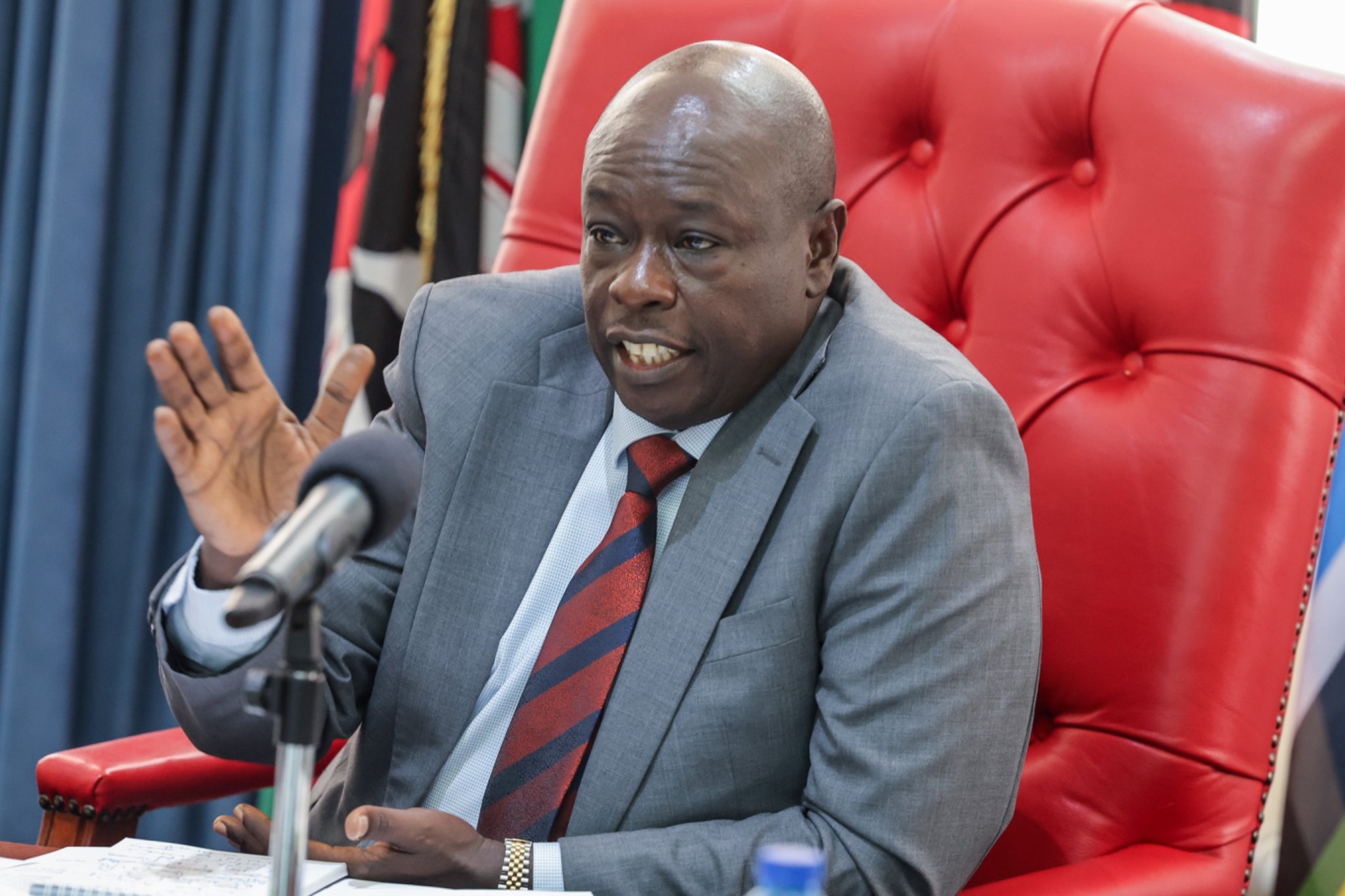
There was a tense moment during a television interview when DCP leader Rigathi Gachagua was pressed to address his past public statements.
While criticising William Ruto for using strong language against him and other opposition leaders, Gachagua was reminded that he has also previously used harsh remarks.
The former Deputy President was challenged to respond to claims that some of his comments about the President were demeaning, and whether his conduct differed.
“I had hoped you would ask me about development. Let’s talk about development,” he told hosts on Ramogi TV.
Gachagua also declined to apologise for earlier remarks about the President, saying he had “no regret whatsoever” and describing his comments as a “true description” rather than abuse.
“I have no apology to give to anybody. I described what I see, and I will continue speaking truthfully,” he said.
He added that, unlike the President, he is not bound by Chapter Six of the Constitution, which outlines the conduct expected of state officers, including public communication. Gachagua said his remarks were intended to provoke a reaction from the President.
“I wanted him to lose his temper and to stop being presidential,” he said, adding that he believed the President had responded as expected.
Earlier this month, Gachagua, who has been a vocal critic of the President, made remarks at a church event about the President’s physical appearance.
The President later responded during a separate address, criticising some of his opponents over their fitness and focus.
Gachagua subsequently dismissed claims raised against him, saying they were based on allegations circulating online.
During the interview, the DCP leader was also asked about remarks he made in a recent joint interview on Kalenjin radio stations, where he commented on the President’s development focus across regions.
He clarified that he was not questioning development in any specific area, but was advocating for equitable distribution of resources across the country.
“The President should visit everywhere; I was saying he was imbalanced because he cannot abandon the people who voted for him, and so he cannot spend all the time in one region. He must serve all Kenyans equally,” he said.