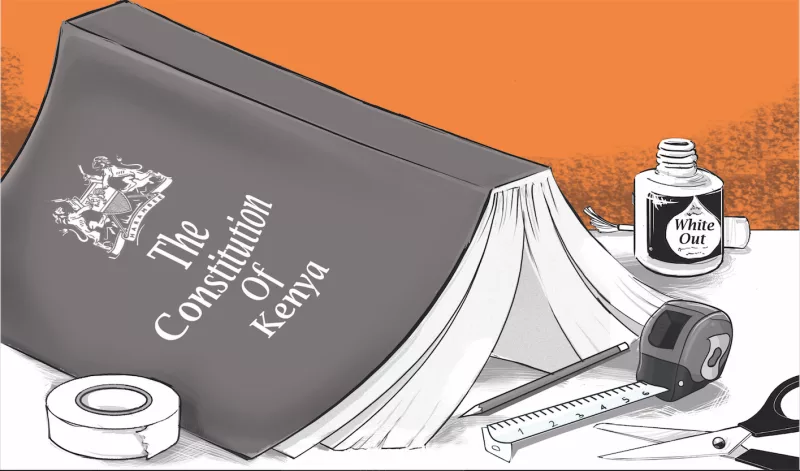
The debate on term limits is often framed as a legal question about how long a leader can stay in office. Yet this framing hides the real issue: control over the state and control over public resources.
The struggle is about whether power can be held without limits, and whether that power can be used without scrutiny. When leaders begin to treat term limits as flexible, they change the entire balance of governance.
Once the expectation of exit is removed, the incentives that guide public decision-making also shift.
A leader who does not have to leave has little reason to submit to oversight, and institutions that depend on that transition lose their leverage.
This is where the connection to public debt becomes clear. The same environment that allows an extension of power also allows decisions on borrowing to move away from public view.
Once that happens, debt stops being a tool for development and becomes a tool for control. Loans increase, terms remain unclear, and the burden is transferred to citizens who had no role in those decisions.
Across the continent, this pattern repeats in different forms: attempts to extend or bypass term limits are followed by weakening oversight institutions and expanding borrowing without clear accountability.
This leads to long-term financial obligations that outlive the leaders who created them. The result is a cycle in which political power is protected in the present while economic pressure is deferred to the future.
What makes this more serious is that the law already provides answers. Most constitutions set limits on executive power and establish systems for oversight of public finance.
These provisions fail not because they are unclear, but because they are not enforced. Courts hesitate or face pressure, parliaments fail to act with independence, and oversight bodies lose the authority required to question decisions at the highest level.
This failure has direct consequences on how people live. Rising debt affects national budgets and reduces the space for public services, showing up in underfunded hospitals, strained education systems, and limited infrastructure investment.
Citizens end up paying for decisions made without transparency and without meaningful participation. There is also a deeper institutional risk in allowing this pattern to continue. When term limits are ignored and debt expands without control, public trust begins to erode.
Once trust in elections and institutions declines, the stability of the political system itself comes into question. A constitution cannot function as a safeguard if it is applied selectively or ignored when it becomes inconvenient. Legal actors and civic groups across Africa continue to resist this erosion, often at personal risk, by challenging unlawful extensions of power and demanding accountability in public finance.
Yet their efforts cannot succeed in isolation if institutions that hold formal authority choose silence or compliance. The defense of constitutional order requires action from all parts of the system, not just from those who raise alarm. In practice, term limits and public debt must be treated as part of the same governance question.
One defines how long power can be held; the other defines how that power is used. It is not possible to secure one while ignoring the other. A state that cannot enforce limits on leadership will struggle to enforce limits on borrowing.
The way forward requires a clear position that does not shift with political convenience: term limits must be treated as binding law, not provisions open to negotiation, and all public borrowing must be subject to full disclosure and scrutiny through institutions that have both independence and capacity to act.
This is a requirement for any system that claims to operate under the rule of law. Africa’s constitutional future will depend on whether this line is held. The question is no longer whether these patterns exist, but whether there is enough will to confront them directly and consistently.
Power that does not end will continue to accumulate, and debt that is not accounted for will continue to grow. Both will continue to place their weight on citizens who have limited means to resist.