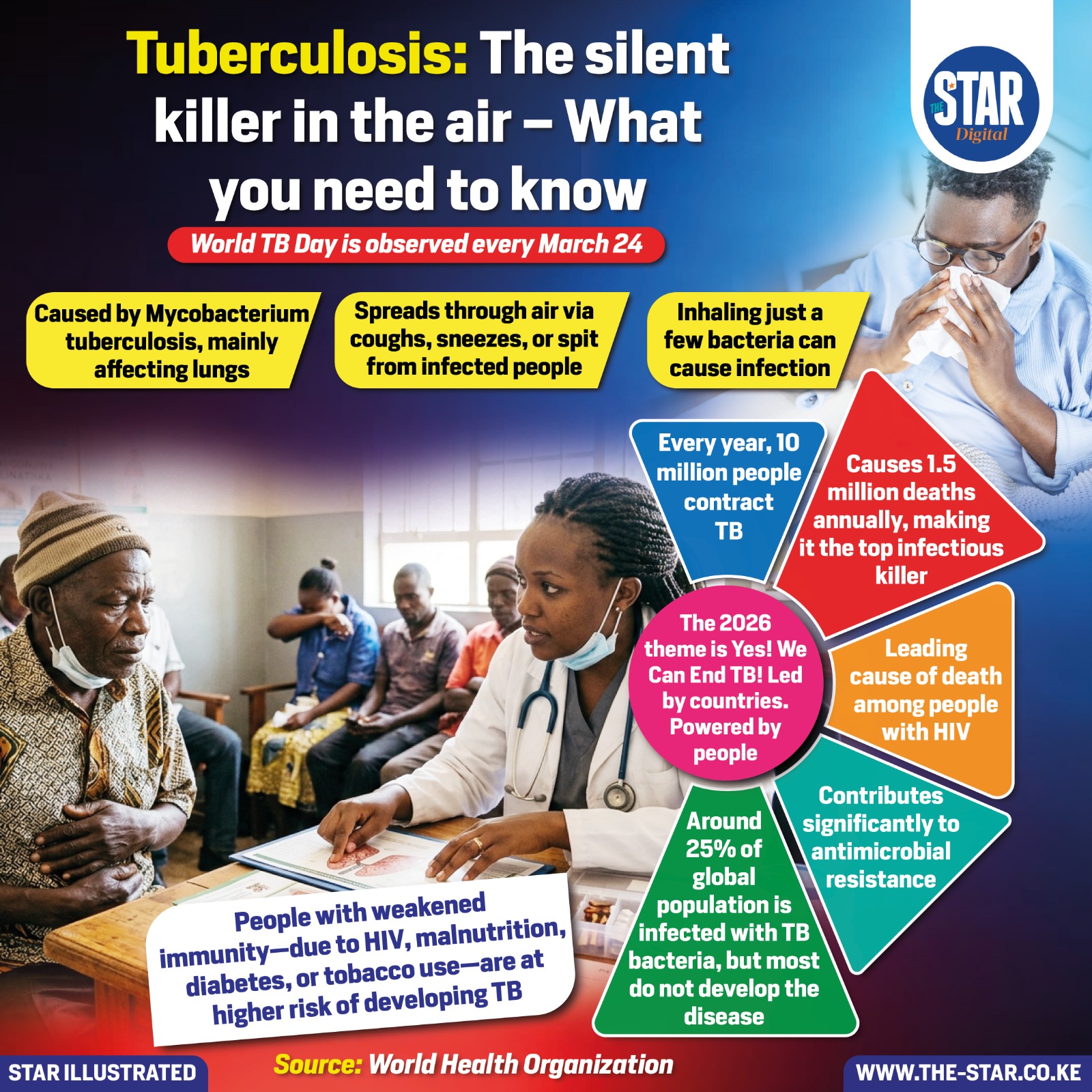
Every March 24, the world observes World TB Day, a somber reminder of a "silent killer" that continues to claim 1.5 million lives annually.
Despite being a preventable and curable disease, tuberculosis remains the top infectious killer globally.
The scale of the crisis is immense, with 10 million people contracting the disease each year.
Currently, approximately 25% of the global population is infected with TB bacteria, though many carry it in a latent state without developing the active disease.
Caused by Mycobacterium tuberculosis, the pathogen primarily targets the lungs and is notoriously easy to transmit. It spreads through the air when an infected person coughs, sneezes, or spits; remarkably, inhaling just a few bacteria is sufficient to cause an infection.
The 2026 theme, "Yes! We Can End TB! Led by countries. Powered by people," underscores a renewed push for eradication, even as the disease contributes significantly to the growing crisis of antimicrobial resistance.
The impact of TB is not felt equally across all populations. It stands as the leading cause of death among people living with HIV, highlighting a deadly synergy between the two conditions.
Those with weakened immunity—whether due to HIV, malnutrition, diabetes, or tobacco use—face a significantly higher risk of transitioning from infection to active disease.
Addressing these underlying vulnerabilities remains central to the global strategy of ending the epidemic.