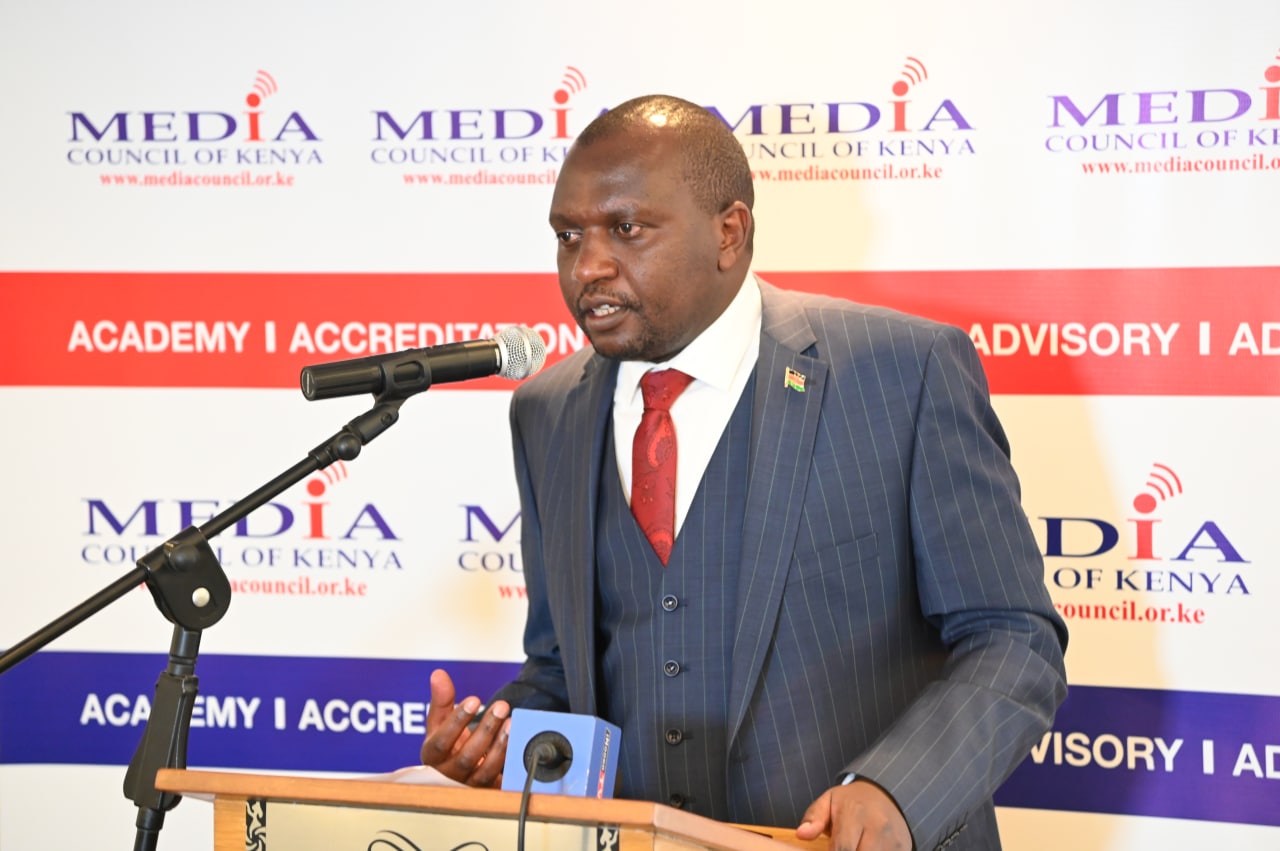
The Media Council of Kenya has raised concern over what it describes as a growing pattern of sensationalism and ethical breaches by the media.
The media watchdog warned that such practices risk eroding public trust and undermining media credibility.
Media Council CEO David Omwoyo cited a recent front-page headline that claimed former Cabinet Secretary Raphael Tuju had been abducted.
According to him, the report was published without verification. Tuju later reappeared at his residence, safe and unharmed.
MCK termed the publication of the article as “irresponsible,” noting that such high-stakes misinformation could pose a threat to national stability and individual safety.
Omwoyo criticised a subsequent editorial by the publication, saying it attempted to justify the lapse without offering a retraction or apology.
Beyond the single incident, Omwoyo said the headline reflected a broader pattern of yellow journalism in which provocative claims are prioritised over factual accuracy.
Omwoyo warned against using banner headlines to push narratives without granting subjects the right of reply, in violation of the Code of Conduct for Media Practice (2025).
The regulator warned that sensational reporting, while capable of attracting short-term attention, ultimately damages credibility and weakens the long-term sustainability of media organisations.
Omwoyo also dismissed recent attacks against the council, describing them as misguided attempts to evade accountability.
“Reminding media houses of their duty to verify facts and provide the right of reply is not censorship, but a safeguard for professionalism and press freedom,” the council said.
He cautioned that failure to uphold journalistic standards could invite legal challenges and increased state interference, outcomes it said would harm the wider media industry.
In a call to action, Omwoyo urged the editorial leadership to adhere strictly to professional standards, emphasising the need to verify information before publication and to align operations with established ethical guidelines.
Omwoyo reiterated the council’s commitment to promoting a free, fair and responsible press.
“The public deserves a media that is both bold and truthful,” he said, warning that anything less would undermine the country’s democratic space.
The Media Council of Kenya is an independent national institution established by the Media Council Act, No. 46 of 2013, for the purposes of setting of media standards and ensuring compliance with those standards as set out in Article 34(5) of the Constitution and for connected purposes.
The MCK is guided by the vision of a society where media freedom is respected, upheld, protected and maintained and where journalists, media practitioners and media houses are professional, responsible and adhere to media ethics.