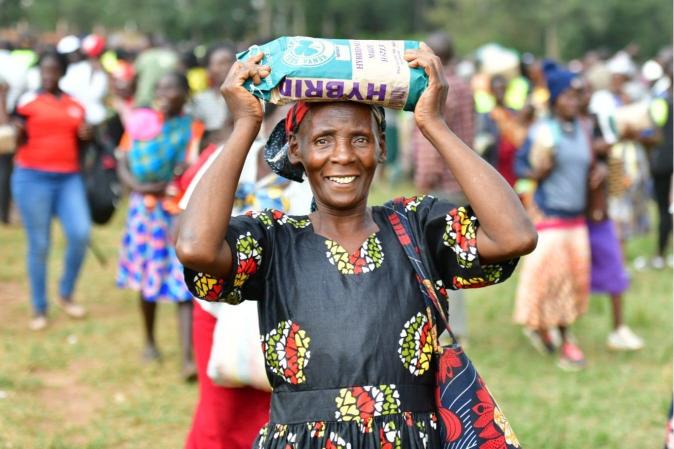
 Farmers urged to ensure they buy certified seeds to
guarantee improved yields./FILE
Farmers urged to ensure they buy certified seeds to
guarantee improved yields./FILE
The government is pushing for tougher penalties against traders in counterfeit seeds in a renewed effort to protect farmers and safeguard Kenya’s food security.
Agriculture Cabinet Secretary Mutahi Kagwe has warned that selling fake seeds will be treated as a serious economic crime, as it undermines production and exposes farmers to significant losses.
Counterfeit seeds are low-quality or fake seeds packaged and sold as genuine, high-quality commercial varieties with the intent to defraud farmers. They pose a significant threat to agriculture by causing poor germination, reduced yields, and substantial financial losses for farmers.
Kagwe said the government is engaging Parliament to review existing laws and introduce stiffer penalties for offenders, saying current punishments may be too weak to deter the growing trade.
“I am issuing a warning to the counterfeiter from another country who is selling fake seeds to our farmers,” Kagwe said. As far as I’m concerned, this is economic sabotage and should be treated as treason,” he said. “This is a matter of national security, it is not just about farming.”
He said counterfeit agricultural inputs including seeds, fertilisers and chemicals pose a direct threat to the country’s ability to feed itself.
“If you want to destroy a nation, interfere with its food systems. Fake seeds and fake inputs are one of the quickest ways to do that,” Kagwe said.
For many farmers, the impact of counterfeit seeds is often devastating, leaving them with heavy losses, as they invest in purchasing inputs, but end up with poor yields or in some cases, no harvest at all.
In Kirinyaga county, tomato farmer James Mwangi recalls a season that nearly pushed him out of farming after he unknowingly purchased fake seeds from an agro-dealer.
“I planted the seeds expecting a good harvest, but the germination was very poor. The few plants that grew were weak and did not produce as expected,” he said. “I lost almost everything that season.”
Mwangi urged the government to act firmly, saying unscrupulous traders should not be allowed to continue ruining farmers’ livelihoods.
Similarly, maize farmer Grace Wanjiku from Nakuru county said she harvested less than half of what she anticipated after using uncertified seeds.
“You invest in land preparation, fertiliser and labour, only to realise the seeds were fake. It is very discouraging,” she said. “Some farmers even give up after such losses.”
Kenyan laws govern the production and sale of seeds, but enforcement challenges persist.
For example, the Seed and Plant Varieties Act (Cap 326) mandates that all seeds sold must be certified by the Kenya Plant Health Inspectorate Service (Kephis). The law provides penalties for those found selling uncertified or fake seeds, including fines and imprisonment.
The Anti-Counterfeit Act, 2008 empowers authorities to seize and destroy counterfeit goods, including agricultural inputs, and prosecute offenders.
However, stakeholders say current penalties are often too lenient compared to the scale of losses incurred by farmers and the wider economy.
Kagwe said the government is seeking to classify the sale of counterfeit seeds as a more serious offence, potentially attracting harsher sentences.
“We must treat crimes in the agricultural sector with the seriousness they deserve. Arresting offenders is not enough if the penalties do not match the damage caused,” he said.
Despite these laws, the problem of counterfeit seeds remains widespread.
The Anti-Counterfeit Authority (ACA) says agriculture-related counterfeits account for a significant share of fake goods in Kenya. In 2023 and 2024, authorities seized counterfeit seeds and fertilisers worth tens of millions of shillings in operations across the country.
Kephis has also reported increased crackdowns on illegal seed dealers, particularly during planting seasons when demand for seeds is high. In some cases, traders have been arrested for repackaging uncertified seeds and selling them as genuine certified varieties.
A 2022 report by the Food and Agriculture Organization (FAO) estimated that as much as 30 per cent of seeds accessed by smallholder farmers in parts of sub-Saharan Africa come from informal or unregulated systems, increasing the risk of counterfeit or low-quality inputs entering the market.
Experts in the seed sector say farmer awareness needs to be improved and enforcement must be stronger.
Kephis advises farmers to always purchase seeds from licensed agro-dealers and to check for certification labels to avoid counterfeit products.
Agricultural economist Dr Peter Karanja said counterfeit seeds not only reduce yields but also hurt the national food supply and farmers’ incomes.
“When farmers lose trust in inputs, it undermines productivity and investment in agriculture,” he said. “Addressing counterfeit seeds is critical for food security and economic stability.”