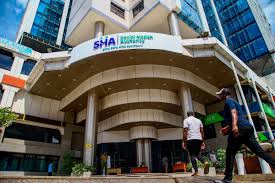
The Kalenjin and Somali communities dominate employment at the Social Health Authority (SHA), even as CEO Mercy Mwangangi said the agency does not violate ethnic balance laws.
According to a report tabled before the Senate Standing Committee on National Cohesion, Equal Opportunity and Regional Integration, SHA has a total of 564 employees.
The Kalenjin community holds 100 slots, representing 17.7 per cent, followed by Somalis with 79 jobs, accounting for 14 per cent, while the Kikuyu community has 12.1 per cent representation with 68 employees.
The Kamba community has 59 employees, representing 10.5 per cent, while the Luhya and Luo communities each have 44 employees, representing 7.8 per cent. The Kisii community closes the top seven positions with 36 employees, or 6.4 per cent.
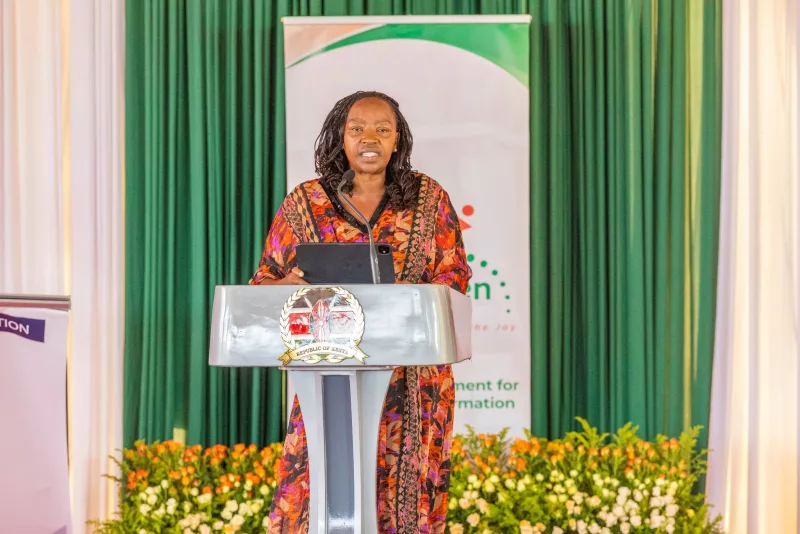
“The Authority is fully compliant with NCIA Section 7(2), ensuring that no single ethnic community holds more than 33.3% of the staff positions,” SHA CEO Dr Mercy Mwangangi said.
The report shows that the Meru community holds 20 slots, or 3.5 per cent, meaning the top eight large communities account for 80 per cent of all jobs at SHA.
Among minority communities, Borana have 16 employees (2.8 per cent), Maasai have 13 (2.3 per cent), while Embu and another Embu grouping have seven each (1.2 per cent). Gabra and Mijikenda have six each (1.1 per cent), Turkana and Teso have five each (0.9 per cent), Tharaka and Taita have three each, Orma, Taveta and Sakuye have two employees each, while Kuria, Nubia, Rendile, Ghala, Ghosa, Leysan and Makonde have one employee each.
To address ethnic imbalance, especially among marginalised and minority communities, Mwangangi said the ongoing recruitment exercise has provided an opportunity to correct the situation.
“During the just-concluded recruitment, the Authority gave priority to all candidates from marginalised communities. From the applicants' data, the communities, e.g., Kenyan Asian, Hadado, and Makonde, among others, who enlisted only one applicant, were given waivers despite their inability to fully meet the requirements of the shortlisting criteria.”
On gender representation, Dr Mwangangi told senators that the agency has complied with the law, saying overall gender parity meets the legal threshold of not less than one-third, with female officers at 49.8 per cent and male officers at 50.2 per cent.
“The authority in the just concluded recruitment exercise took due consideration to the constitutional principles of equity, social justice, inclusiveness, equality, non-discrimination particularly ensuring fair competition and merit as the basis of selection and ensuring proportionate parity to afford adequate and equal opportunities between amongst different gender.”
She also said SHA ensures that persons with disabilities are not discriminated against during hiring, advancement, and other terms, conditions and privileges of employment. Currently, a total of 28 staff members, representing 5.22 per cent, are persons with disabilities.
The age demographics of SHA show a mix of youthful and middle-aged staff, with those aged between 41 and 50 accounting for 33 per cent, youth under 35 at 31 per cent, those between 36 and 40 at 27 per cent, and those aged 51 to 60 at 9 per cent.
The authority said it has six staff members on contract for different durations, with its top leadership, including the CEO and directors, on one-year contracts.
Dr Mwangangi also said the agency has continued to provide opportunities for women, youth and persons living with disabilities (PWDs), while training and creating awareness on Access to Government Procurement Opportunities (AGPO).
“In the year 2024/25, the Authority spent Sh62,961,140.95 in support of procurement opportunities to Youth, Women and Persons with Disabilities (PWDs). This was from July 2024 to March 2025. The utilisation was 16.9%,” she said.