
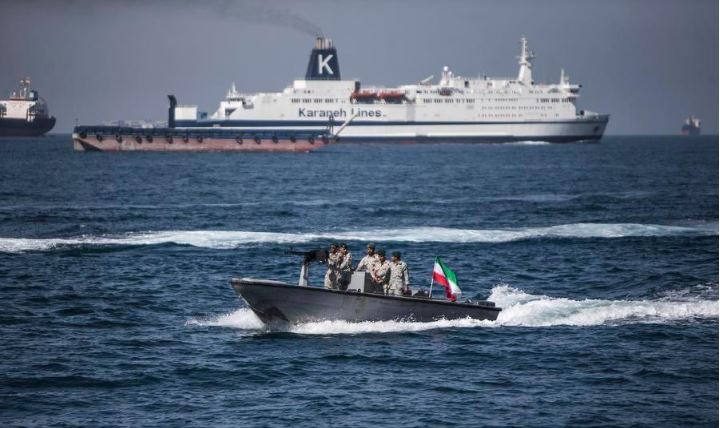
The speaker of Iran's parliament - and their top negotiator in last month's talks with the US - says the US has jeopardised shipping and energy security in the Strait of Hormuz.
In a post on X this morning in Persian - following Donald Trump's "Project Freedom" beginning on Monday - Mohammad Ghalibaf writes: "The new equation in the Strait of Hormuz is being solidified.
"Shipping security and energy transit have been jeopardised by the US and its allies with the ceasefire violations and blockade. However, their evil acts will fail.
"We know well that the continuation of the status quo is intolerable for America, while we are just getting started."
As the US-Iran ceasefire teeters on the brink of collapse, residents in the Gulf are now wondering if a full-scale resumption of hostilities is inevitable and if so, what form it will take.
With the US attempting to break the blockade that Iran has imposed on the Strait of Hormuz and with Iran lashing out at both shipping and onshore targets in the UAE it would not take much for the situation to escalate further.
Iran retains a large number of its missiles and drones, including some reportedly dug up from where they were buried to evade airstrikes in March.
The IRGC Navy is also thought to possess powerful anti-ship missiles which pose a serious threat to any US Navy warship escorting merchant vessels past Iran’s coastline.
President Trump has threatened dire retaliation if a US warship is hit.
This all reinforces the fact that it will be extremely difficult, if not impossible, to prise open the Strait of Hormuz by force.
It needs a deal that ensures Iran is not going to threaten shipping by mines, missiles or torpedo attack boats, all of which it still retains
Israel issues new evacuation orders for Lebanon after 17 killed on Monday
While we have so far focused on the Strait of Hormuz today, attacks by Israel and Hezbollah continue in Lebanon.
The Israel Defense Forces (IDF) has this morning told people in two towns in southern Lebanon to evacuate, stating that due to "Hezbollah's violating of the ceasefire agreement", the army is "compelled to act against it forcefully".
A little earlier, the IDF accused the Iran-backed group of launching two mortar attacks on its forces in southern Lebanon. Hezbollah has so far not commented.
Israeli attacks killed 17 people in Lebanon on Monday, the Lebanese health ministry says. It brings the number killed since Thursday to 110, according to the ministry.
Israel says 17 of its soldiers have been killed during the same period and accuses Hezbollah of firing hundreds of rockets and drones.
Hezbollah was not a signatory to the ceasefire between Israel and Lebanon agreed last month, but the group indicated it would abide by the terms if Israel did.
The Israeli military maintains that the agreement permits it to act against "planned, imminent or ongoing attacks". Lebanese officials dispute that interpretation and accuse Israel of repeated violations.



Comments 0
Sign in to join the conversation
Sign In Create AccountNo comments yet. Be the first to share your thoughts!