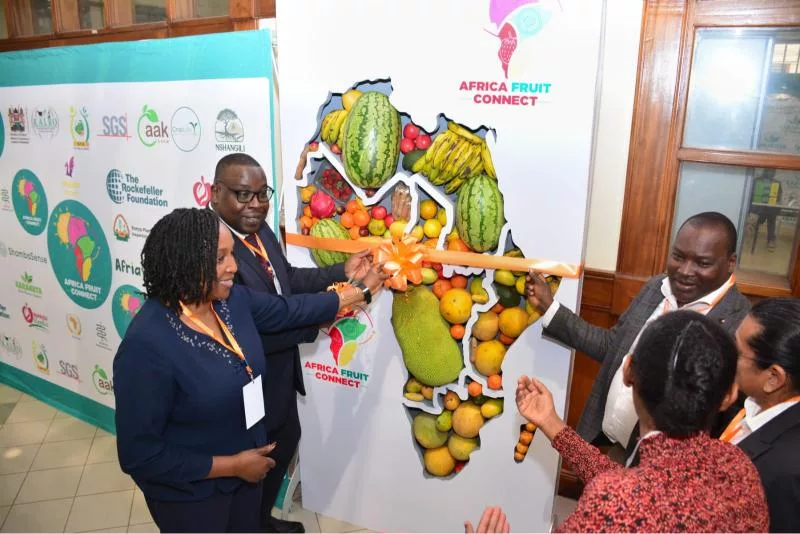
 Lillian Ndegwa, Country Director at TradeMark Africa; Tally
Einav, United Nations Industrial Development Organization (UNIDO)
Representative to Kenya, and Doris Obondo, a young entrepreneur engaged in
coffee value addition, during the Kenya edition of the International Day of
Women in Industry in Nairobi./AGATHA NGOTHO
Lillian Ndegwa, Country Director at TradeMark Africa; Tally
Einav, United Nations Industrial Development Organization (UNIDO)
Representative to Kenya, and Doris Obondo, a young entrepreneur engaged in
coffee value addition, during the Kenya edition of the International Day of
Women in Industry in Nairobi./AGATHA NGOTHO Experts are calling for scaled-up efforts to ensure women are not only participants, but also key drivers of the economy.
Women provide up to 70 per cent of labour in Kenya’s coffee sector, yet earn the least and hold minimal decision-making power.
At the International Day of Women in Industry, stakeholders called for urgent reforms to help women transition from labour-intensive roles to profitable ventures in processing, marketing, and export trade.
The International Day of Women in Industry, established by the United Nations Industrial Development Organization (UNIDO) in November 2025 and observed annually on April 21, seeks to spotlight women’s role in shaping industries globally.
Speaking at the Kenya edition, UNIDO Representative Tally Einav said the day marks a shift in thinking, where gender equality is viewed not as a social goal but an economic strategy.
“Where women equally work, lead, and innovate, industries become more productive, competitive, and resilient,” she said, noting that nearly 70 percent of UNIDO’s new projects in 2024 promoted gender equality.
She noted that in Kenya, women’s labour force participation stands at about 63 percent compared to 71.9 percent for men, but inequalities persist.
Einav said most women are concentrated in low-paying informal jobs, and they make up just 28.1 percent of wage employment in key sectors, while men dominate STEM fields.
“The gap is more evident in agriculture, particularly in coffee, where women provide 60–70 percent of labour but have limited control over land, income, and decision-making,” she said.
According to FAO data, fewer than 10 percent of women in Kenya own land individually, restricting their access to credit and investment opportunities.
UNIDO Project Associate Jote Teodor Cika noted that these structural barriers particularly access to finance and land, continue to lock women out of profitable segments of the coffee value chain. “Women are heavily involved in labour-intensive production but struggle to move into value addition, where the real income lies,” he said.
To address this, UNIDO, in partnership with FAO, is implementing a three-year approximately Sh161 million ($1.25 million) Inclusive and Sustainable Coffee Value Chain project funded by the UN Multi-Partner Trust Fund with support from Sweden. The initiative focuses on increasing women and youth participation, promoting domestic value addition, and creating an enabling policy environment.
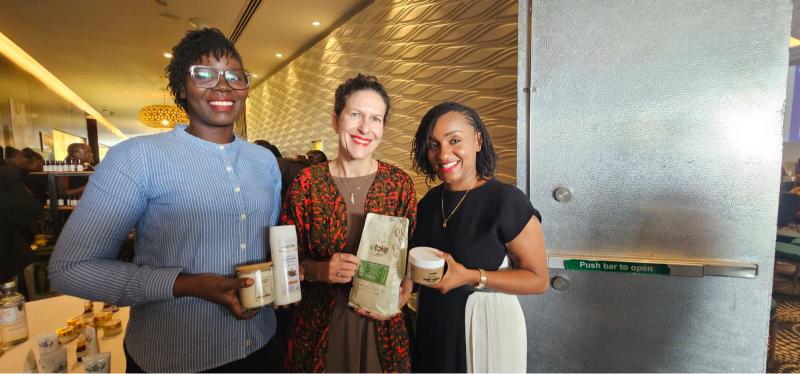
He said the project is already supporting women-led enterprises to venture into non-traditional areas such as coffee-based cosmetics, pastries, and innovations that expand income opportunities beyond farming.
Risper Ndungu, Chief Executive Officer of the Nairobi Coffee Exchange said while women have historically been confined to production and informal trading roles, progress is emerging.
“We are now seeing more women in leadership positions, including in trading and brokerage companies,” she said. However, she acknowledged that women still fall short of the constitutional two-thirds gender rule in decision-making spaces.
Ndungu pointed out the need for deliberate policy interventions, including gender-responsive licensing frameworks and increased access to financing.
“Coffee is capital-intensive. Without assets like land, women are often excluded from ownership and high-value trade roles,” she noted.
Lillian Ndegwa, TradeMark Africa Country Director noted that Kenya’s coffee sector includes about 800,000 smallholder farmers, the majority of them women.
With over more than per cent of Kenya’s coffee exports destined for the European Union, she said empowering women to engage in value addition and export markets could significantly boost incomes and national earnings.
Experts at the forum agreed that closing these gaps requires coordinated action across policy, finance, and markets.
Governments must embed gender targets in industrial policies, financial institutions must design inclusive products, and the private sector must invest in women’s skills and leadership.
“Kenya’s industrial future depends on who gets to design, participate, and lead,” Einav said. “When women move from the margins to the engine room of industry, economies grow faster and societies become more resilient.”
Her message of the International Day of Women in Industry was that empowering women is not only the right thing to do, but also smart economics.