Commuters heading to the western part of the country are set for a smoother, faster journey home once the Standard Gauge Railway project is complete.
According to the design, Phase 2B of the SGR from Narok to Kisumu will have at least seven train stations, cutting deep in some rural counties.
The train stations in Narok, Mulot, Bomet, Sotik, Sondu, Ahero and Kisumu are expected to transform travel across the region.
On Saturday, Transport Cabinet Secretary Davis Chirchir signaled that there would also be another train station in Nyamira county.
Leaders from the Gusii region have put pressure on the government to ensure a station is established at Ikonge.
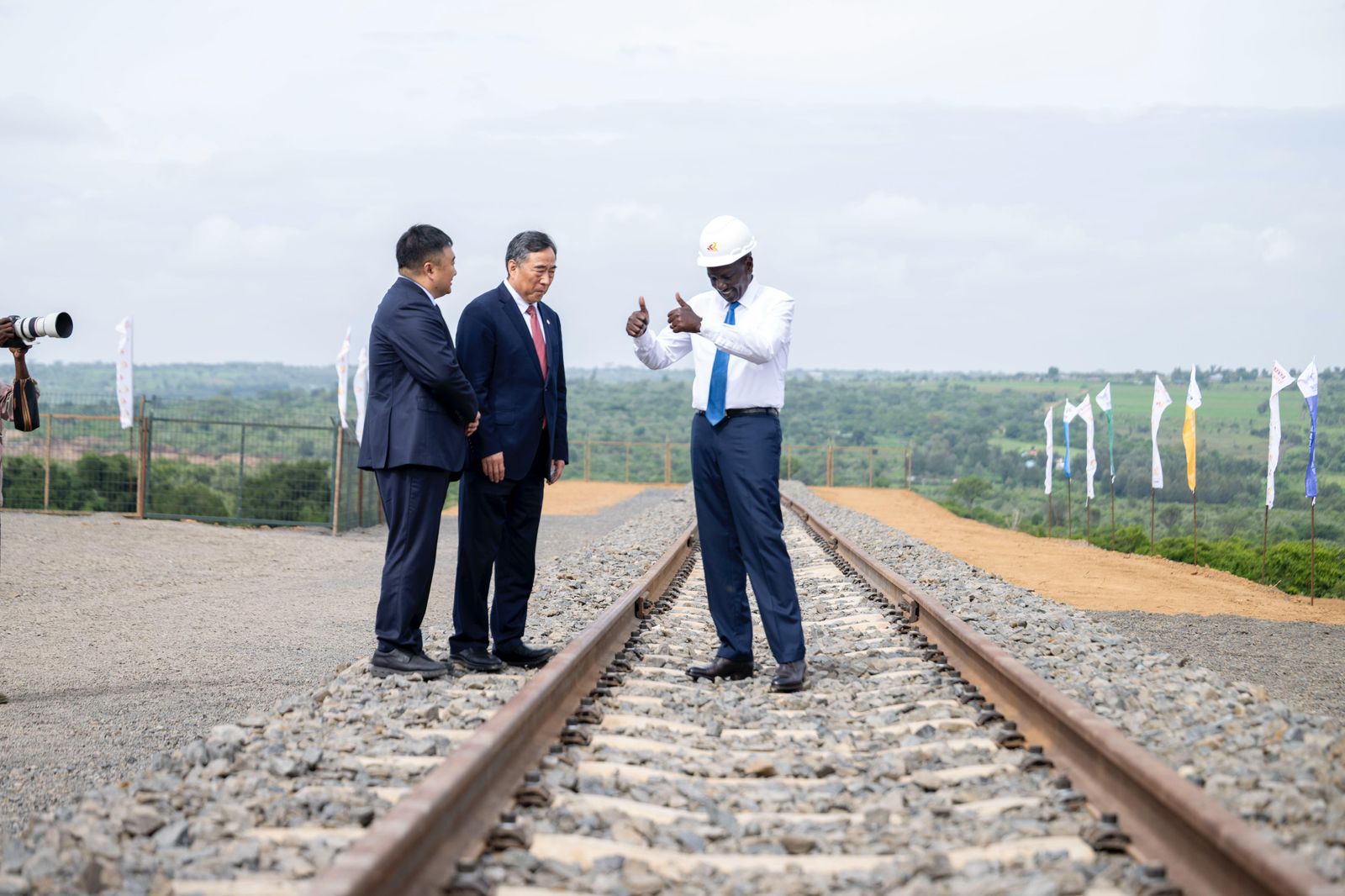
The multi-billion shilling SGR, launched by President William Ruto on Thursday, promises to ease decades of transport chaos along the western corridor—especially during peak travel seasons.
Running from Emurtoto in Narok to Kisumu, the 263-kilometre line will directly connect key economic and population centres, making rail a viable alternative to the often congested road network.
For travellers long accustomed to the grind of the narrow Nairobi–Western Kenya highway, relief may finally be in sight.
Kisumu will serve as the main passenger terminus, positioning the lakeside city as a major transport and logistics hub.
“It will ease road congestion by shifting bulk cargo to rail, cutting costs, saving time, and improving safety across our highways,” Ruto said.
For years, commuters and transporters heading west have endured long hours on overstretched roads, frequent traffic snarl-ups and high accident rates. Attempts to ease the burden through the metre gauge railway have had limited success, with trains moving at sluggish speeds and carrying minimal cargo.
The new SGR line, built to modern standards, will change that experience.
Passenger trains will run at speeds of up to 120 kilometres per hour, while freight trains will move at 80 kilometres per hour, dramatically cutting travel time and improving reliability.
Beyond passenger convenience, the project is expected to unlock trade across the region.
A branch line to Kisumu Port will facilitate seamless movement of goods to Uganda and the wider East and Central African hinterland, including Rwanda, Burundi and South Sudan.
Kenya Railways says the line will lower logistics costs, boost trade and stimulate economic growth along the corridor.
Communities hosting the stations are also expected to benefit from new business opportunities, jobs and improved connectivity.
The Kisumu–Malaba Phase 2C extension is set to further deepen regional integration, linking western Kenya to neighbouring countries and enhancing cross-border trade.
For motorists, relief is also on the horizon.
The ongoing upgrade of the Rironi–Mau Summit Road—another notoriously congested stretch—will complement the railway by easing road traffic once complete.
Together, the rail and road projects are expected to redefine travel to western Kenya—turning what was once a slow, frustrating journey into a faster, more predictable ride.
Political observers say the projects could also bolster Ruto’s standing in the region ahead of the 2027 elections, as infrastructure increasingly becomes a key campaign currency.
“He will receive votes in a way that pleases God,” said Victor Marende, leader of the Movement for Defence of Democracy.