At dawn in Nairobi’s Pipeline estate, James Otieno remembers the knock that upended his life. It wasn’t the usual landlord’s reminder.
Two auctioneers and a police officer stood at his door.
Inside his one-bedroom house were the belongings he had built up over eight years—a sofa set bought on hire purchase, a television, and his children’s bunk bed.
Otieno, a former taxi driver who had bought a vehicle through a bank to operate on ride-hailing platforms, had fallen behind on both rent and loan repayments after business slowed.
“I tried to negotiate, even asked for more time,” he says. “But the calls turned into threats, and the threats became action.”
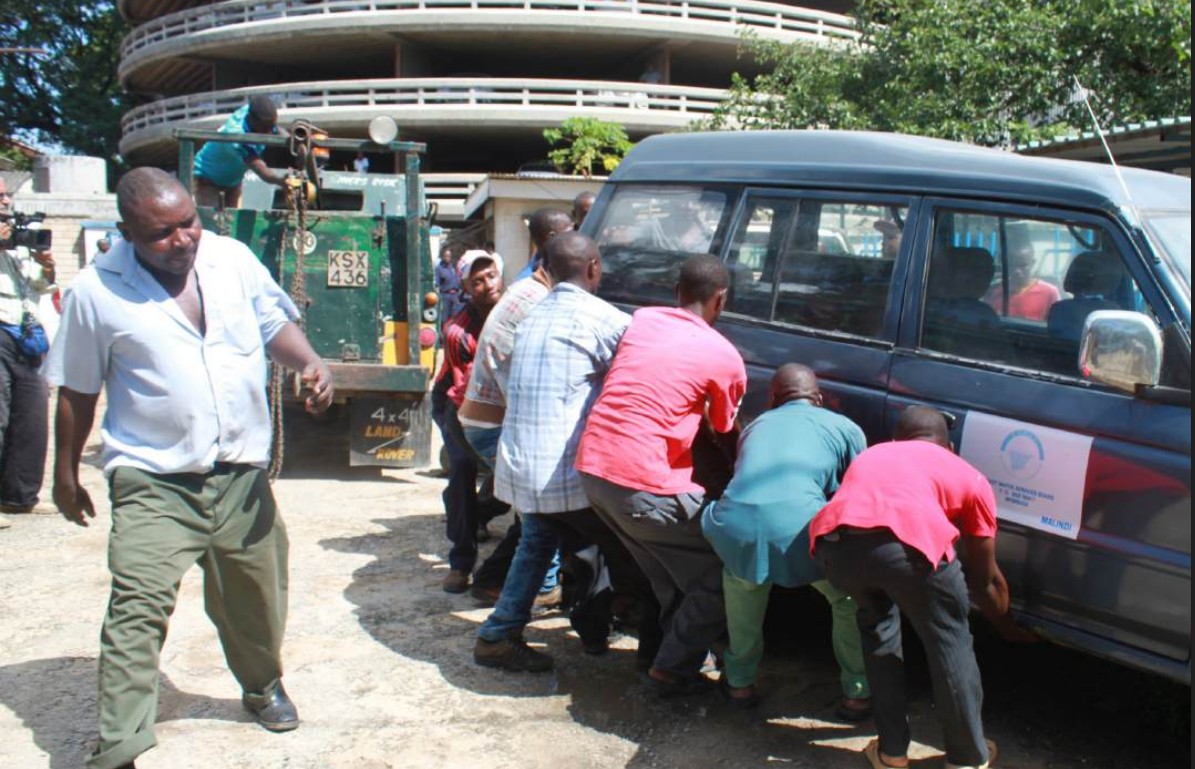
The car was repossessed and auctioned. His belongings were gone.
Several kilometres away, in Lower Kabete, Kiambu county, a similar story unfolded for Mary Wanjiku, a small-scale trader who had taken a bank loan to expand her grocery business.
At the time, demand was strong, and she even hired two assistants. But as the cost of living rose, her customers began buying in smaller quantities, some taking goods on credit they could not repay.
“I started using my savings to restock, hoping things would improve,” she explains. “Instead, the debts piled up.”
When she defaulted on her loan, the bank moved to recover the debt.
Auctioneers descended not only on her shop stock but also on her family home, which she had used as collateral.
Household furniture, electronics, and even her refrigerator were listed for sale.
“The hardest moment was when they tagged my children’s study table,” she recalls. “That’s when it became real—this was not just business, it was our entire life.”
Wanjiku says the experience has left lasting scars. “You rebuild slowly, but your confidence takes longer,” she says. “You start fearing any kind of credit.”
James Mwangi, a former office worker turned taxi operator, invested in a vehicle in 2022, banking on steady income from app-based rides.
He financed the car with a bank loan, expecting his monthly earnings to cover repayments comfortably.
However, high fuel prices, increased competition, and reduced ride demand eroded his margins.
“At first, it was manageable, but expenses kept going up while trips reduced. I started missing instalments,” he said. “After three months, the bank repossessed the car. It was later auctioned at a price far below what I owed, and I am still left with a balance.”
Mwangi and Otieno's experiences reflect a wider pattern affecting hundreds of drivers who entered the sector during its peak, only to be hit by shrinking returns and mounting debt obligations.
Property owners are also feeling the heat.
In Kiambu, a middle-income family lost a parcel of land they had hoped to develop after defaulting on a loan secured against the property.
The borrower, who had taken the loan to expand a small business, struggled after sales declined.
“We tried to negotiate with the bank, but the penalties and interest kept piling up. Eventually, the property was advertised for auction,” a family member said. “It went for much less than its value. Years of investment just disappeared.”
These personal accounts mirror a growing trend across Kenya, where tough economic conditions have pushed many into default.
A survey by the Central Bank of Kenya (CBK) reveals that 84 per cent of lenders plan to intensify recovery actions in the personal lending segment, citing heightened default risk amid deepening economic strain.
This is coming at a time when gross non-performing loans (NPLs) are dropping after hitting a record high of 18 per cent in the period between January 2024 and June 2025. Latest data by CBK shows that bad loans dipped by Sh11.4 billion to Sh720.4 billion in September 2025 from Sh731.8 billion in August, supported by higher recoveries and improved repayments as borrowing costs eased.
The NPL ratio improved from 17.6 per cent to 16.9 per cent in September and later to 16.5 per cent by the end of November, signalling the stress cycle may be turning. This is especially in sectors like trade, manufacturing, and real estate that had been hit hardest.
Data from banks that have already released results for the financial year ended December 31, 2025, shows that NPLs edged up marginally, with KCB's ratio rising to 16 per cent from 14 per cent, while Equity Bank had to strengthen its non-performing loan coverage to 67.7 per cent to cover rising bad loans.
Cooperative Bank and Stanbic Bank both saw their NPLs marginally drop during the period under review by an average of 1.8 per cent, but remained above the industry average of 16 per cent.
Kenya Bankers Association (KBA) says that although the ratio of NPLs is shrinking, its members have no option but to aggressively recover to mend their torn credit books.
"That is the only viable route after exhausting all other available options. Even so, we have started to see some borrowers repay while others restructure as lenders lower lending rates,'' the association's CEO Raimond Molenje told The Africa Report in a recent interview.
Auctioneers, once seen as a distant possibility, are now an immediate reality for struggling families and small business owners.
For many, the ordeal goes beyond financial loss. It erodes dignity, disrupts families, and forces a reset that can take years to recover from.
The sharp rise in auctions across Kenya is laying bare the depth of financial distress facing households, with defaults on rent, car loans, and mortgages pushing more families and small investors to the brink.
Auctioneers, banks, and real estate agents report a steady rise in distressed-asset sales over the past year, as high living costs, elevated interest rates, and stagnant incomes squeeze borrowers.
From household goods to land and vehicles used in ride-hailing businesses, few assets are being spared.
Perusing the newspapers lays bare the facts with pages of auction advertisements.
Landlords are increasingly turning to auctioneers to recover rent arrears, as tenants fall behind on payments.
Industry players say job losses, reduced earnings in the informal sector, and rising food and fuel costs have left many households unable to keep up.
“People are prioritising food and school fees over rent. Once arrears accumulate for months, landlords have little choice but to instruct auctioneers,” said Peter Wangwe, a Nairobi-based property manager.
Data from market analysts shows that listings for distressed properties have increased, with auction notices now a regular feature in local dailies.
Residential plots, commercial buildings, and even prime urban homes are being put up for sale.
Economists warn that the surge in auctions is a lagging indicator of deeper economic stress.
“When households begin losing assets, it signals prolonged financial pressure. It also has a ripple effect, reducing consumption, increasing poverty levels, and slowing economic recovery,” said Johnston Mwangangi, an analyst at a Nairobi-based consultancy firm.
“Land and property have traditionally been a store of value for many families. Losing them through auctions sets households back significantly and widens inequality,” the analyst added.
Even so, some investors are capitalising on the situation, snapping up assets at steep discounts at auctions.
This, however, underscores the widening gap between those with liquidity and distressed sellers forced to offload.
As economic pressures persist, stakeholders are calling for interventions to cushion borrowers, including loan restructuring, flexible repayment plans, and policies to support income growth.
For now, however, auction yards and newspaper listings continue to fill up, offering a stark reminder of the toll that tough economic times are taking on Kenyan households.
Mi Vida Homes is a leading institutional real estate developer focused on delivering quality middle-income and affordable housing in Sub-Saharan Africa. In its March 2026 report, it notes that the Kenyan auction market is heavily influenced by debt recovery, with several high-profile developments and prime land parcels placed on the block.
Key properties highlighted for auction in 2026 include prime assets linked to Cytonn Investments Assets in Nairobi and Kiambu over a Sh11 billion loan default.
They include The Ridge in Ridgeways, a mixed-use development of 9.9 acres along Kiambu Road with 800 units, and Cytonn Towers, a three-tower project along Argwins Kodhek Road. Last week, former Cabinet secretary Raphael Tuju dominated headlines over his fight with auctioneers who took over his prime property in Karen over a Sh1.9 billion debt.
The incident attracted public attention, with financial experts capitalising on it to offer counsel to Kenyans on how to manage both commercial and personal debts.
A spot check on three daily papers noted that for the past three weeks, an average of two pages has been dedicated to auctions. For instance, on March 17, NCBA Bank dedicated two pages in two local dailies to announce a public auction of 70 vehicles of different brands and models for between Sh450,000ando Sh7 million.
The bank gave interested bidders up to Thursday, March 26, to submit their bids using its online platform, CarDuka. The situation is so dire that in 2020, the lender purchased a yard to store seized vehicl.es
"Most financial institutions have the best ways of resolving debt defaults. The defaulter is required to be extremely transparent and honest, especially on incomes and expenditures. Credit officers have numerous ways to help any individual or business structure their loans for easier payment. We try to avert such situations. Auction is our very last resort,'' a senior manager at NCBA told the Star.
James Karanja of Cleverline Auctioneers says that the business is no longer booming. "Our business is tough and has been shrinking over the years. We used to execute at least three auctions per week a decade ago; we are lucky to achieve that now in a month.
He attributes this to shrinking disposable income and the lengthy judicial process. "A valid court order sought and obtained after a year is overturned within hours. We are not bad people as the public views us. We just carry out orders on behalf of our clients,'' Karanja said.
He revealed that many lenders are struggling to unload properties seized from defaulters, as potential buyers are unwilling to pay above the minimum bid price.
According to him, buyers are seeking to purchase auctioned properties at the lowest cost possible; few takers can match the reserved bid prices. This is against the Land Act 2012, which prevents banks from selling seized assets at less than 75 per cent of their current market value.