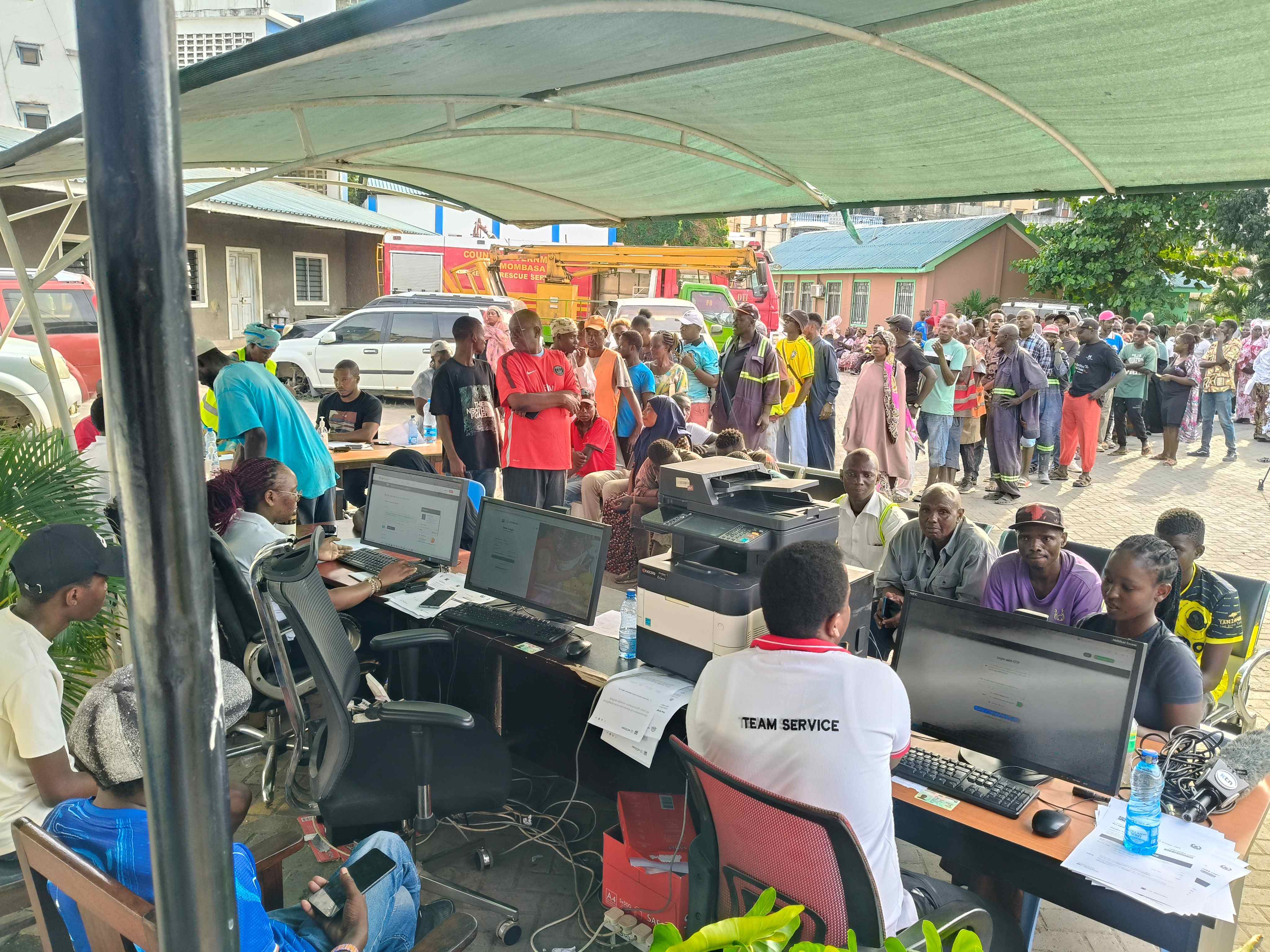
Waste collection groups queue for Certificates of Good Conduct / BRIAN OTIENO
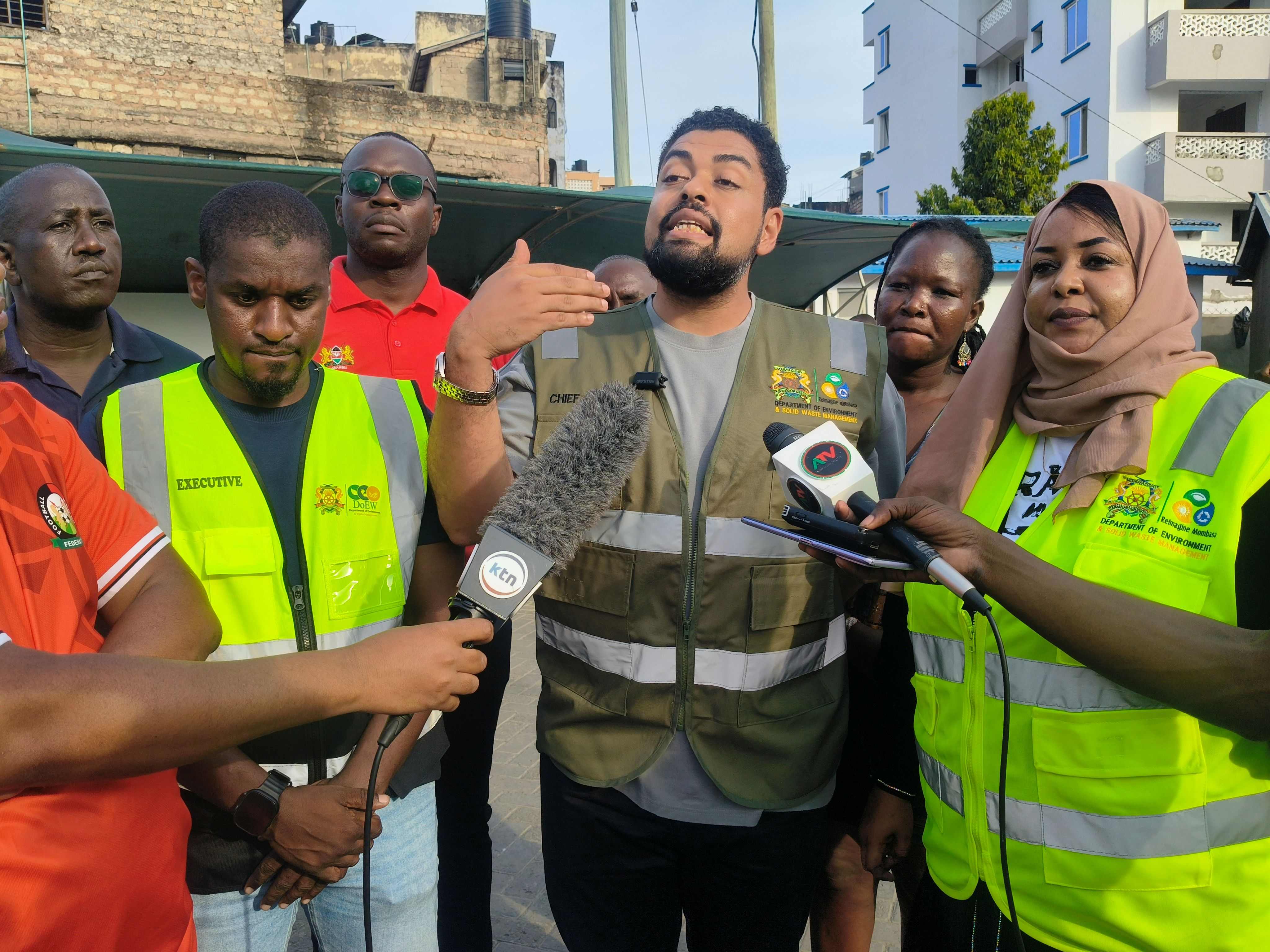
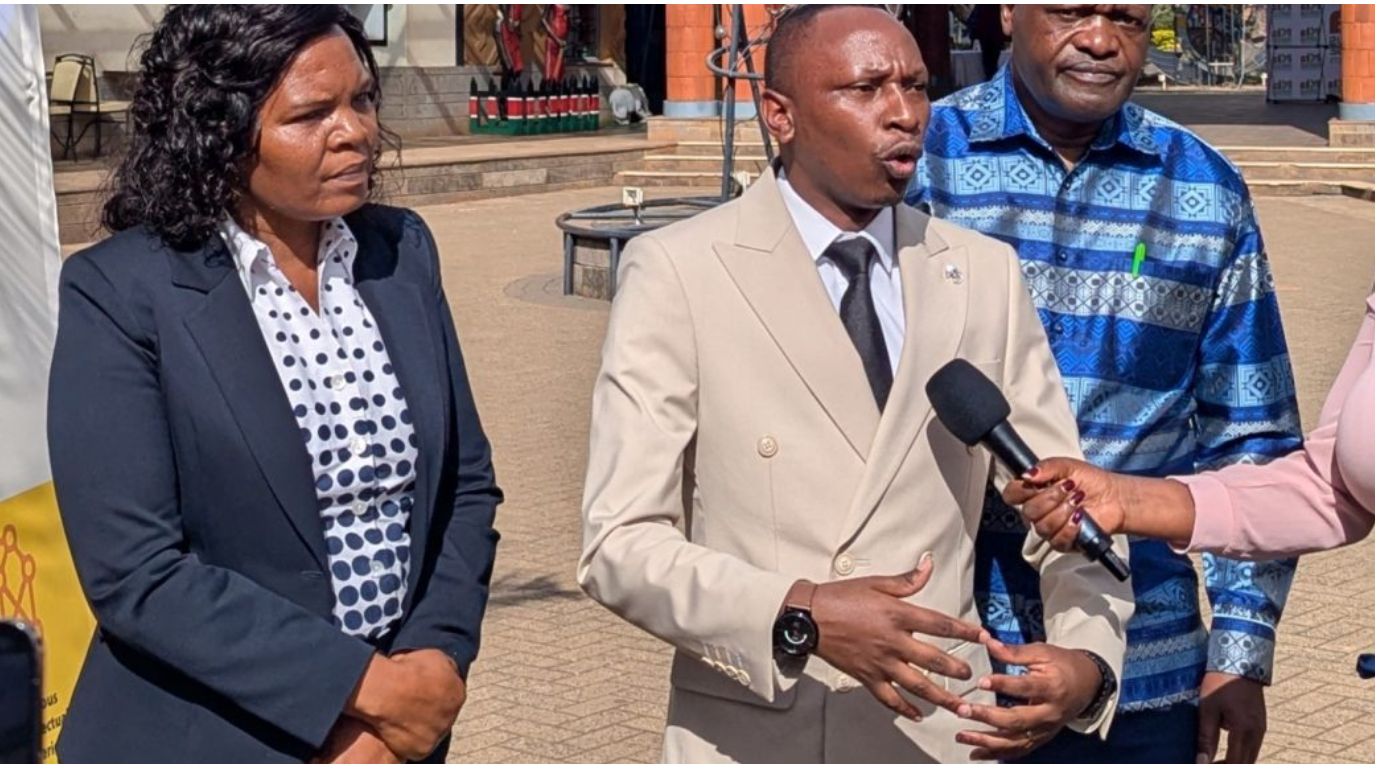
Environment chief officer Hamid Shehan on Monday / BRIAN OTIENO
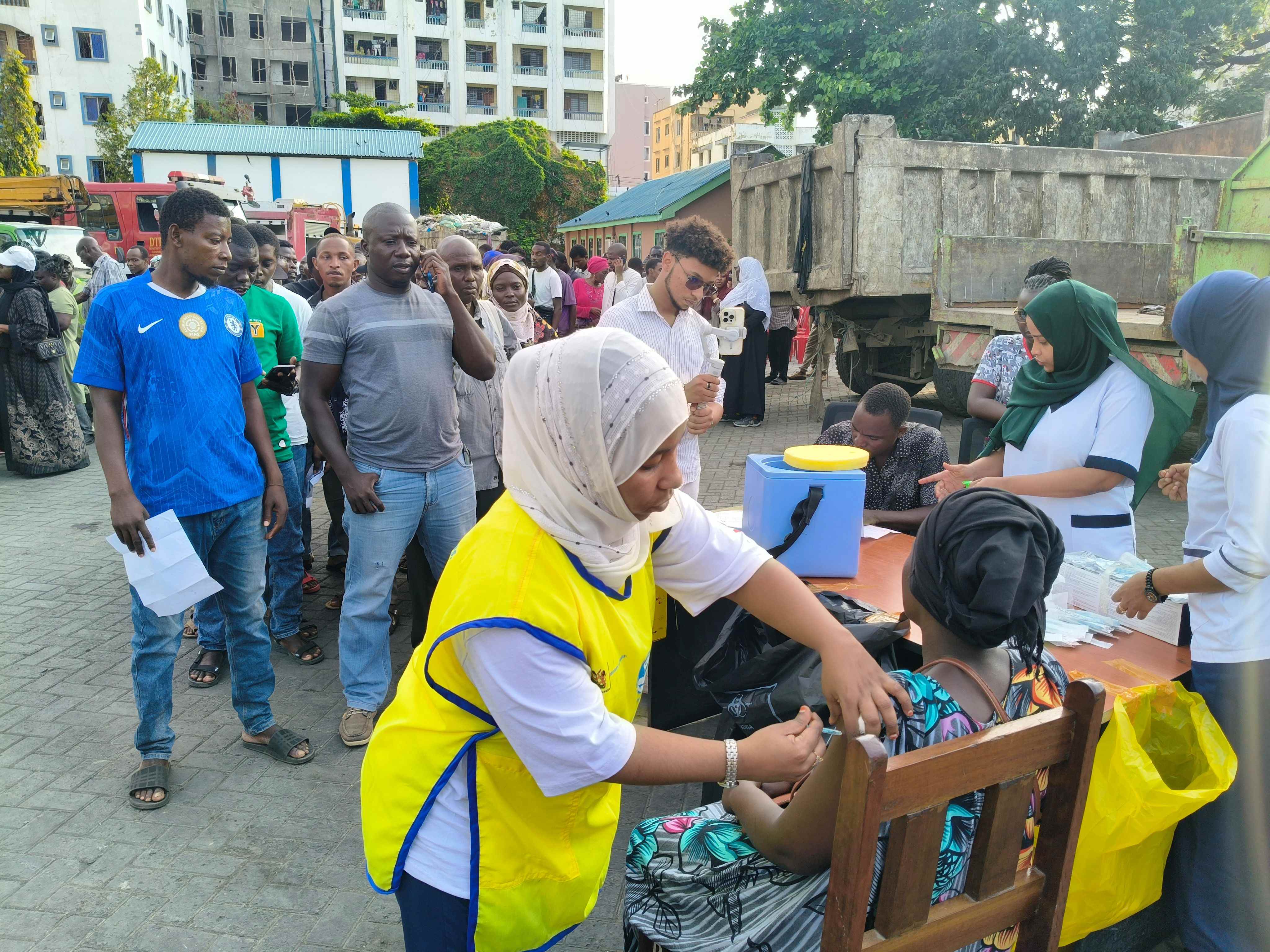
A youth gets vaccinated ahead of waste collection contract / BRIAN OTIENO
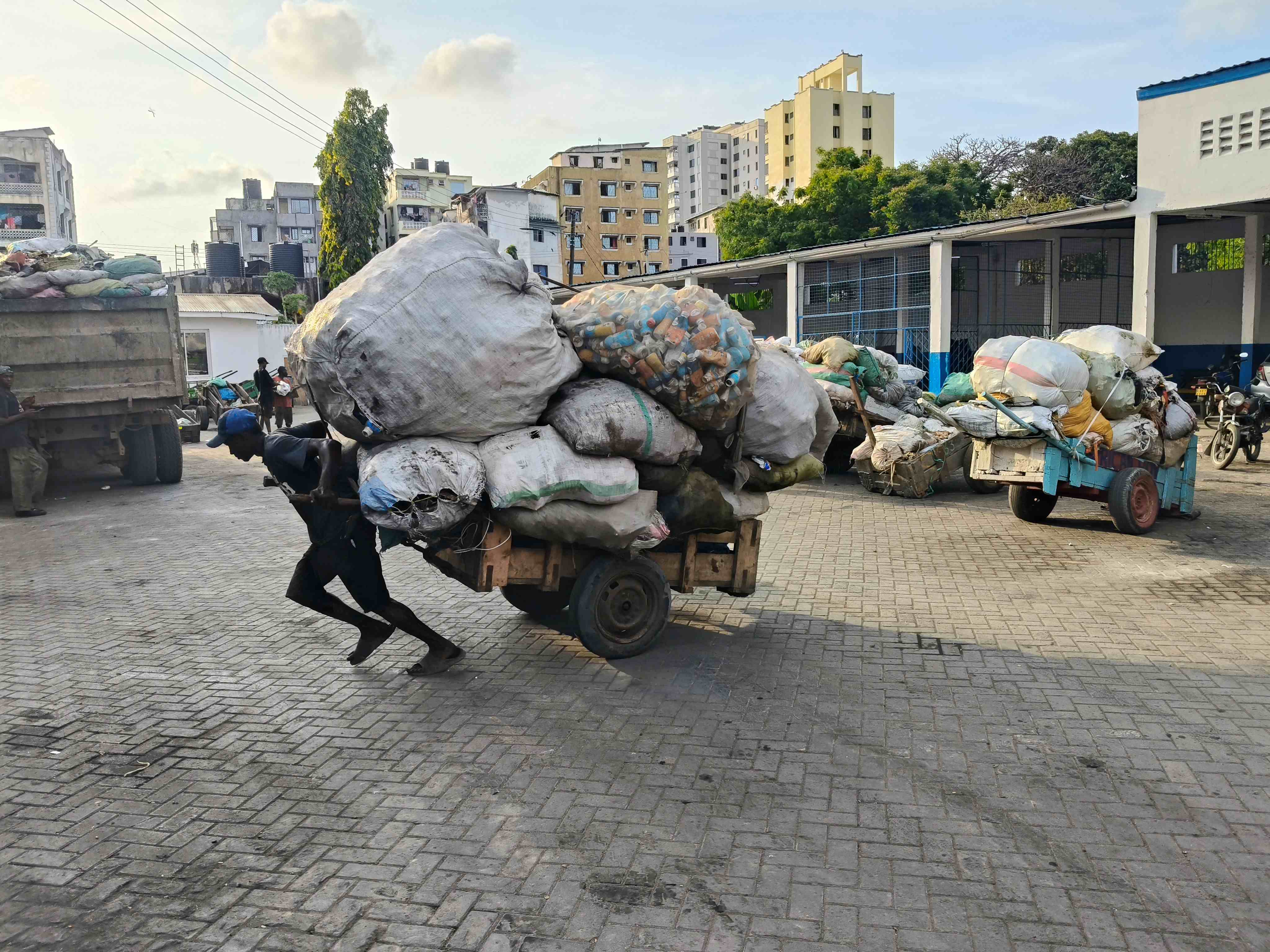
A group takes collected waste to the transfer station at the environment department yard / BRIAN OTIENO
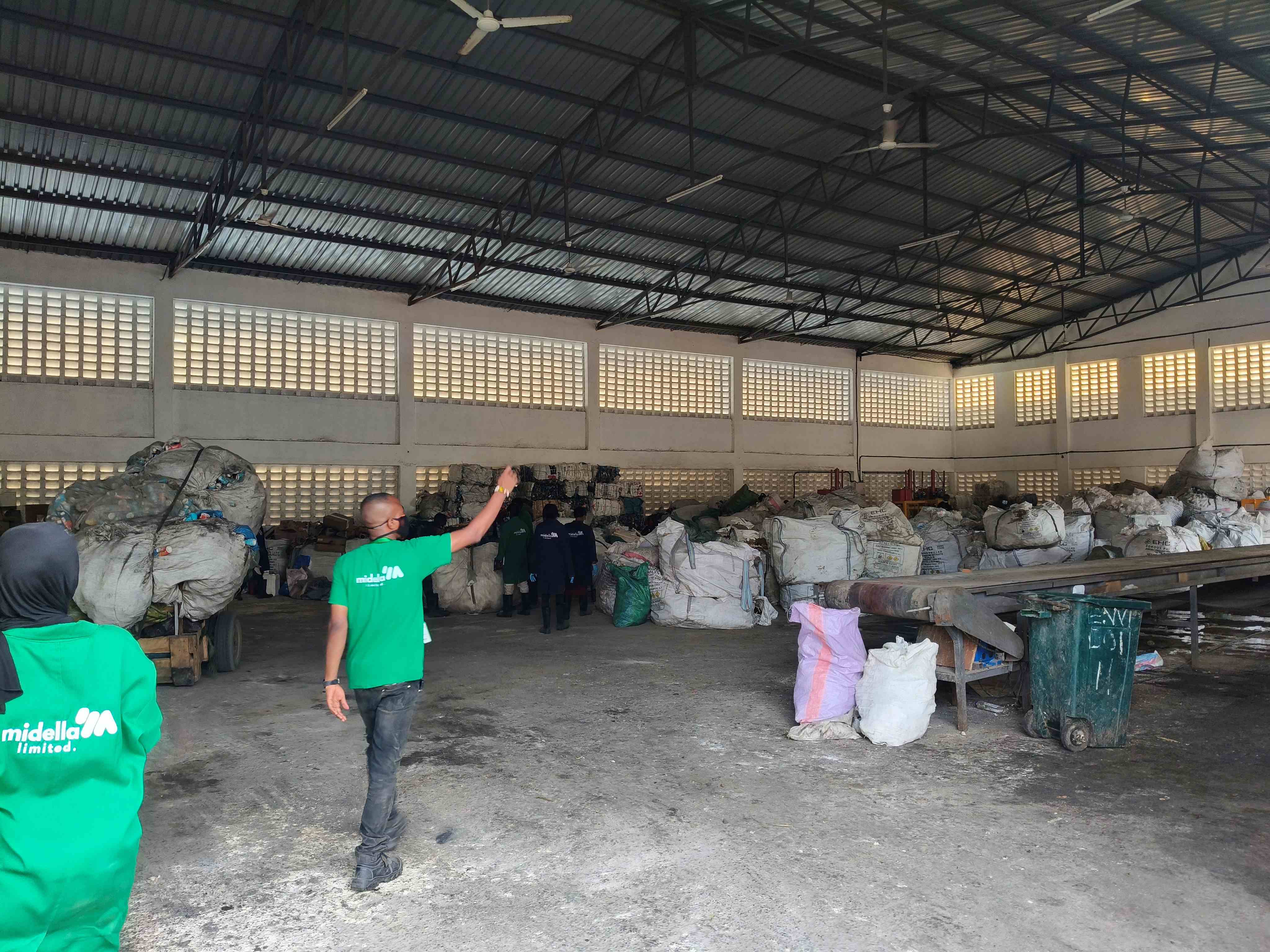
A waste transfer station at the environment department yard / BRIAN OTIENO
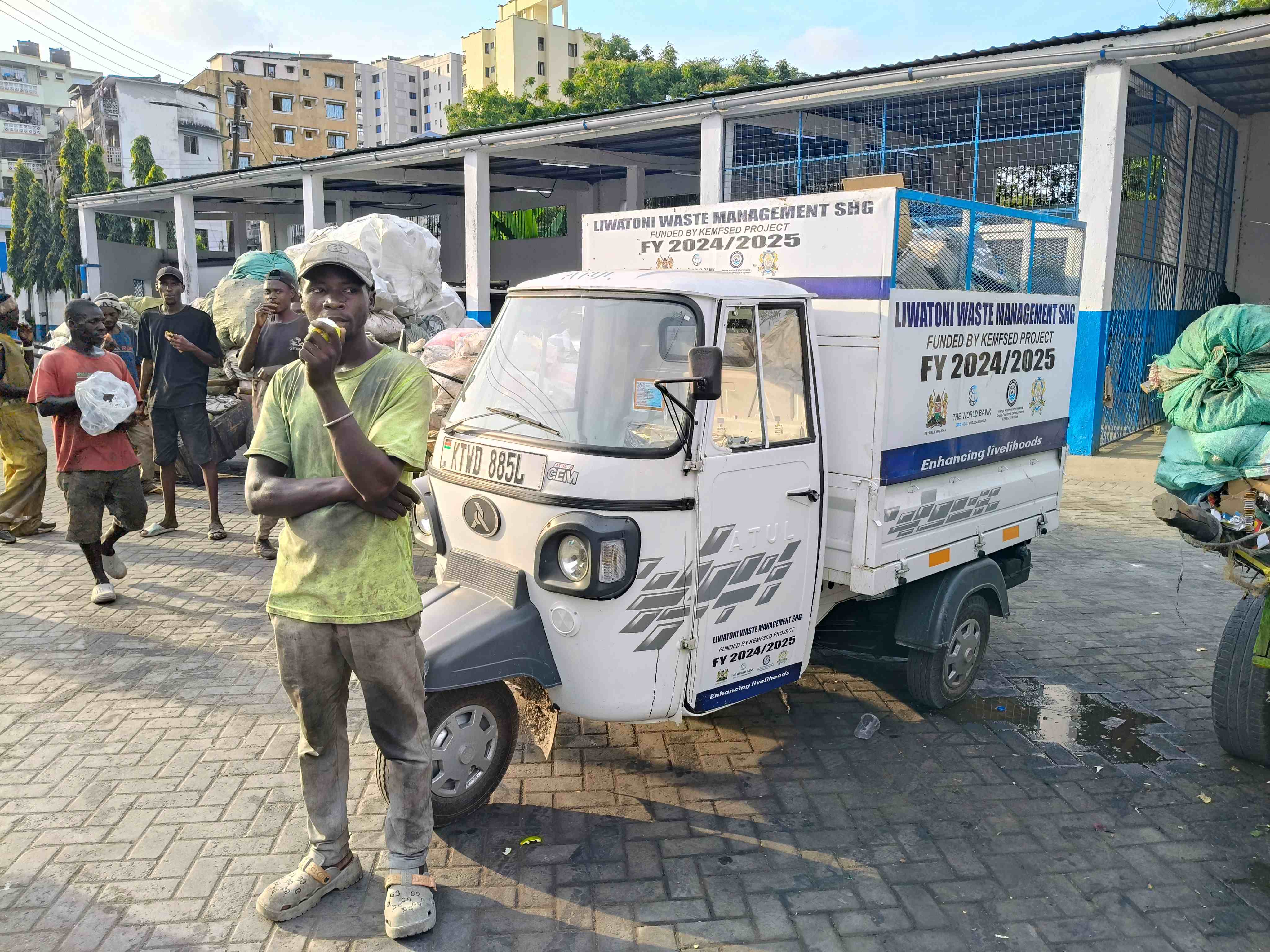
A tuktuk that will be collecting garbage from the households / BRIAN OTIENO
Youth groups in Mombasa county are set to earn Sh150,000 a month following a Sh17 billion venture the county has signed with Ghana’s Jospong Group of Companies.
The 35-year deal seeks to modernise and sustainably manage waste collection in the coastal city.
Mombasa produces between 900 and 1,200 tonnes of waste daily and about 68 per cent of it organic.
The county’s current capacity allows collection of only 460 to 704 tonnes, leaving much of the waste dumped in open, illegal sites.
A report released by Haki Yetu last year listed 74 active illegal dumpsites, though more than 50 have since been shut down.
Governor Abdulswamad Nassir has made clean water, drainage and waste management central to his administration’s development agenda.
Lands and solid waste executive Hussein “Amadoh” Mohamed said the partnership is designed to turn Mombasa into a model city for sustainability and cleanliness.
On Monday, 500 youth received certificates of good conduct and vaccinations in preparation for the first phase of the project.
Environment executive Kibibi Abdalla said the initial three-month trial will involve 41 youth groups handling waste collection and management across the county.
After the pilot, the programme will expand to include about 200 groups employing 3,000 youths.
Each group will earn between Sh100,000 and Sh150,000 monthly based on performance metrics developed by the county.
Households will not be charged for garbage collection. The youth groups will receive custom-made tuktuks for waste collection, while four new Isuzu compactor trucks — each capable of carrying the load of four tippers — will enhance efficiency.
According to environment chief officer Hamid Shehan, Mombasa has been divided into 600 zones for waste collection.
The pilot groups will operate within assigned zones, collecting garbage twice a week and conducting thorough cleanups weekly. Fumigation will be carried out monthly.
Waste will be taken to transfer centres for sorting before being compacted and transported to the Mwakirunge dumpsite, which is being upgraded into a sanitary landfill.
The landfill will safely isolate waste from the environment to prevent soil, air and groundwater contamination, while collecting and treating leachate and capturing methane gas for potential use.
Shehan said private waste collectors will also be incorporated into the programme. “This is not just about garbage management — it’s about improving the health of our people,” he said.
Currently, garbage is collected in three daily shifts — at 3.30am, 7.30am and 2pm — but the county plans to add an 11.30am shift due to increased waste collection.
Shehan said the new system has already led to fewer illegal dumpsites and more efficient use of fuel and resources.
The deal follows a series of exchanges between Mombasa and Ghana. Governor Nassir led a 26-member delegation to Ghana in August to study JGC’s waste management model after a team from JGC visited Mombasa in July.
JGC’s flagship subsidiary, Zoomlion Ghana Ltd, operates similar systems across Africa as part of its drive to promote sustainable waste solutions.
County to pay Mombasa youth groups 150,000 shillings per

Comments 0
Sign in to join the conversation
Sign In Create AccountNo comments yet. Be the first to share your thoughts!