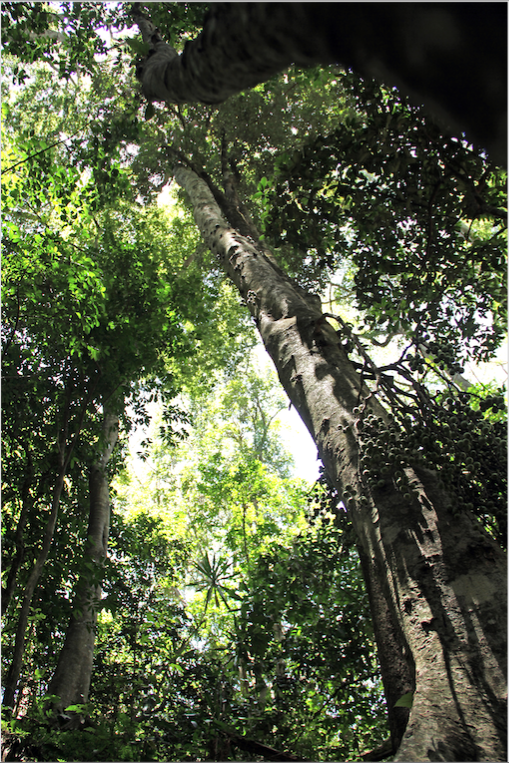
"Until you dig a hole, plant a tree, water it and make it survive, you haven't done a thing.” These words by Prof Wangari Maathai, the Nobel Peace Prize laureate and founder of the Green Belt Movement, resonate more as we celebrate the International Day of Forests this March 2026.
Celebrated every March 21 since 2012, this special day draws attention to the importance of all types of forests and of trees to life on earth. Forests are enablers of economic growth and development, while protecting nature for present and future generations.
This year’s theme, forests and economies, puts an emphasis on the clear connection between the socio-economic development of nations and forests. Besides being a major source of income and creating millions of jobs from forest production to the trade of renewable raw materials, they are a source of food, sustaining millions of people and communities.
The Food and Agriculture Organization of the United Nations (FAO)’s State of the World’s Forest Report (2024) indicates that nearly 6 billion people use non-timber forest products, including 2.77 billion rural users in the Global South. Non-Timber Forest Products (NTFPs) are resources naturally produced in forests outside timber that can be harvested for human use without cutting down trees. They include fruits and nuts, vegetables, fish, game, medicinal plants and more that are important for our livelihoods. With such immense value, one would expect forests to be fully protected.
Yet, this is far from the reality.
Take, for instance, the Congo Basin, which has been correctly named the lungs of Africa or the beating heart of the world because of its significance in the fight against climate change. It is struggling to maintain its forests and reach sustainable biodiversity. Deforestation, degradation, mining and other human interests are putting a strain on this central African rainforest like never before. This reflects the pressures that forests are facing worldwide that continue to outweigh protection efforts.
As the impacts of climate change continue to threaten life on earth with ever-increasing floods and persistent droughts, forests and communities that exist must be put at the centre of all conversations.
Most countries have developed elaborate strategies and policies for the restoration and preservation of forests. Coupled with other supporting regional and international initiatives, there is enough to ensure that forests are growing for the benefit of all.
What has always been lacking is a deliberate shift from well-crafted policies to action by all stakeholders. Take, for instance, the recent Nairobi Declaration, themed Zámba Heritage Initiative, where governments committed to mobilise $400 million (Sh51.5 billion) for responsible forest management. If only this initiative were well-actioned, there would be a huge growth of forests.
Therefore, as the world celebrates International Forest Day, let all stakeholders undertake local, national and international efforts toward organising campaigns to raise awareness on the importance of all forests and to undertake tree planting initiatives, where even children and young people will be involved to cultivate the culture of conservation.
As the world continues to face mounting threats in the form of hunger, poverty, disease, conflicts and other challenges, forests and trees remain a cost-effective solution to these crises. Halting deforestation and forest degradation will immediately restore the planet for the benefit of all.
Above all, let there be an immediate integration of innovation in forest conservation. Already, open access to remote sensing and the use of cloud computing are having tremendous results in the generation of high-quality forest data and improving the management of forests. What is missing are efforts to better engage women, youth and indigenous peoples in developing locally led solutions and a deliberate endeavour to shift from policies to action. Time is running out for action. We must protect our forests now!
Israel Bionyi is Senior Regional Communications Manager – Africa, Forest Steward Council
Morris Makabe is communications specialist, Strathmore University