A new audit of the National Treasury has exposed how domestic borrowing is bleeding the country dry as commercial banks make a killing.
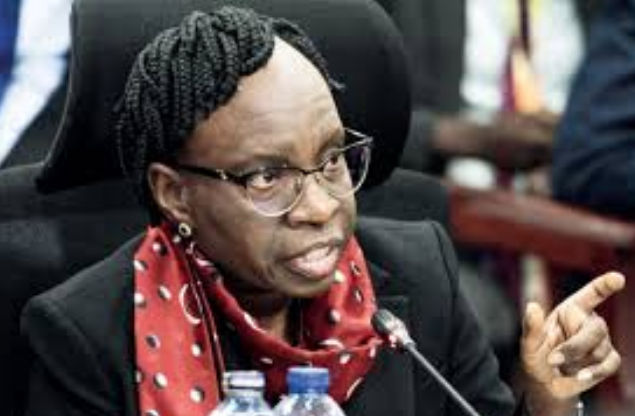
Auditor General Nancy Gathungu has warned against what she terms as overreliance on expensive internal debt.
It has emerged that the cost of domestic debt is more than three times the cost of external borrowing.
Gathungu’s review for the period to June 30, 2025, shows that while domestic debt makes up 53 per cent of the stock, it consumes 82 per cent of the annual finance costs.
Details show that Kenyans paid Sh862 billion in interest on local loans in the period under review, which is more than three times the Sh184 billion paid for external debt.
Public debt stock was Sh11.8 trillion, split between Sh6.3 trillion in domestic debt and Sh5.45 trillion in external obligations.
A trail of financial data leads to the vaults of the country’s commercial banks, most of which have just posted record profits.
Banks remain the largest holders of government securities.
Treasury data shows that as of June 30, 2025, the share of government securities held by commercial banks increased to 37.4 per cent.
As per the public debt report, it reflects increased exposure to government securities by banks, underscoring their continued dominance in the domestic debt market.
Pension funds held 14 per cent, while insurance companies' holdings were at 12.6 per cent, as other investors – private companies, saccos, money market funds held 11.5 per cent.
Banks, in the same period, further increased their holdings in treasury bills to Sh534 billion – about 52 per cent, up from Sh185 billion in 2024.
They also dominated Treasury Bonds, increasing their holdings to Sh1.6 trillion.
“This sharp rise reflects heightened bank appetite for short-term government securities, partly driven by liquidity management considerations,” the report reads.
Gathungu said the Treasury needs to enhance fiscal discipline through the growth of revenues and controlled expenditure.
“This is to reduce overreliance on expensive internal debt,” the auditor general said, giving an unqualified opinion on the prevailing debt repayment situation.
According to an analysis by the Kenyan Wall Street, the largest banks earned Sh110.4 billion in interest income from government securities in the first half of 2024 alone.
Industry-wide, pre-tax profits surged to a record Sh311.8 billion in 2025, crossing the Sh300 billion mark for the first time.
Even banks facing internal pressures have leaned into government lending.
Holdings of government paper by a struggling bank, for instance, rose sharply to Sh96.9 billion from Sh63.8 billion a year earlier.
Unlike concessional external loans that are often sourced from multilateral institutions at single-digit interest rates, domestic borrowing is driven by market forces.
As a result, investors demand significantly higher returns. To attract funds locally, the government has had to offer double-digit yields on Treasury instruments.
Gathungu warns that without stronger fiscal discipline, the country risks locking itself into a cycle of high-cost borrowing to finance recurrent expenditure.
By December 2025, domestic interest payments had already reached Sh414.1 billion, nearly half of the full-year target of Sh851.4 billion.
Monetary policy easing from the Central Bank of Kenya, which cut its benchmark rate from 13 per cent in June 2024 to 8.75 per cent by February 2026, also came into play.
Several stakeholders, including MPs, budget experts and fiscal analysts, have warned that the Treasury’s dependency on local banks is hurting the economy.
National Assembly’s budget committee, chaired by Alego Usonga MP Sam Atandi, highlighted the burden of servicing debt.
The House team reported that interest payments now exceed 25 per cent of the budget, hence constraining the fiscal space severely.
Taxpayers stand to bear debt-related costs of Sh1.54 trillion in the next financial year, which MPs said ‘reflects past excessive borrowing’.
Concerns are rife that huge amounts have crowded out development expenditure.
Senators at the Finance Committee recently warned in a review of the 2026 medium-term debt strategy that expensive domestic borrowing will cripple the exchequer.
“Without sustained fiscal consolidation and prudent debt management, Kenya risks breaching its obligations under the PFM Act,” the committee chaired by Mandera Senator Ali Roba said.
The strategy shows the government plans to rely heavily on domestic borrowing over the next three financial years.
A total of 78 per cent of net borrowing is expected from local sources, compared with 22 per cent from external sources, between 2026-27 and 2028-29.
“Domestic borrowing may be easier to access, but it comes with higher interest rates and shorter repayment periods,” Roba said.
He went on, “This could place enormous pressure on the national budget”, warning that nearly 45 per cent of domestic debt will mature within three years.
The audit further revealed how Treasury defied its own debt plan in the year to June 2025, with preference to domestic debt.
The report reveals that instead of the approved 55:45 mix between domestic and external borrowing, the government ended the year with a 70:30 split, respectively.
Net domestic borrowing hit Sh886.7 billion, more than double the planned Sh413.1 billion, while external borrowing came in at Sh374 billion.
The government’s aggressive domestic borrowing has also squeezed credit to businesses and households.
With banks prioritising lucrative government securities, private sector credit growth slowed to just 2.2 per cent in the year to June 2025.
At the same time, lending rates remained elevated at between 15 and 18 per cent, locking out many small businesses from affordable financing.
Average deposit rates dropped from 11.24 per cent to 7.63 per cent within a year, even as total deposits increased, resulting in billions in lost income for households.
Following heavy external debt repayments in 2024, the government scaled back foreign borrowing and leaned more heavily on the domestic market.
But the audit suggests that this pivot has come at a steep price.
For a way out, CoB Margaret Nyakang’o advised the government to reduce fiscal deficit in the medium term, implement the borrowing mix of 50:50 for domestic to external debt.
“This will reduce the over-reliance on domestic borrowing,” Nyakang’o said, adding that the strategy in the 2025 debt strategy should be taken up.
“The government should ensure the adopted policies provide a conducive environment for the private sector to operate,” the budget boss quipped.