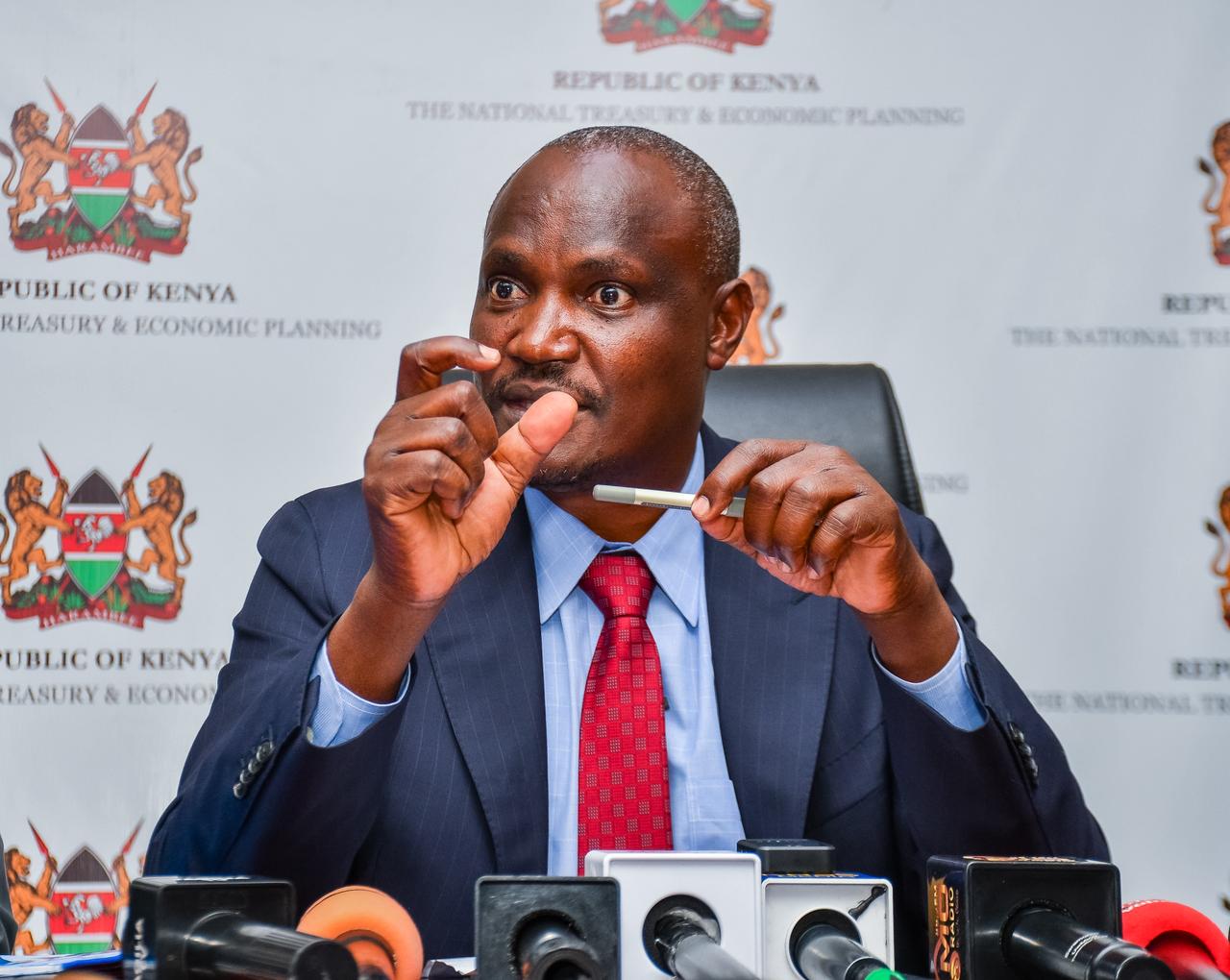
The National Treasury has embarked on yet another radical cost-cutting drive to raise more money amid the prevailing cash crunch.
Treasury CS John Mbadi has ordered ministries and counties to identify idle assets within their jurisdiction and commercialise them.
The directive clears the way for monetisation of idle public land, buildings, railways, road reserves and government vehicles.
For the first time, Treasury is ordering a nationwide audit of idle assets with a view to generating revenue from them.
It has imposed a 90-day ultimatum for ministries and counties to identify, value and act on the assets, while also cutting operational costs.
In a circular dated February 12, CS Mbadi directed all accounting officers to take stock and fast-track plans for leases, joint ventures and concessions.
He cited “instances of idle and underutilised assets, duplication, weak maintenance practices and inadequate asset planning across the public sector entities.”
Principal secretaries and other accounting officers are required to subject the assets to independent valuation before commercialisation.
Further to this, Treasury, in a cost-cutting push, has imposed strict limits on the leasing of office space by public institutions.
“No public institution shall lease or rent office space where suitable Government-owned space is available and unutilised,” the directive states.
Leasing will only be permitted with prior approval and proof that no public premises exist.
The circular also calls for efficient use of office space, including the “rationalisation of office accommodation to eliminate excess or idle space”.
Mbadi has further directed entities to consider constructing or purchasing government buildings instead of long-term leasing arrangements.
“Leasing shall only be undertaken with prior approval and justification demonstrating unavailability of government premises,” the circular reads.
In addition, rent for government-owned residential buildings will be aligned with prevailing market rates.
“Rental rates shall be reviewed regularly to ensure transparency and revenue optimisation but at least once every five years.”
Compatible institutions have been directed to co-locate to “reduce duplication and operating costs”.
“Capital investment decisions shall be supported by cost-benefit analysis demonstrating long-term value for money,” Mbadi said.
Government vehicle fleets have also been targeted, with agencies directed to adopt car-pooling systems and reduce idle units.
“Optimisation measures include fleet pooling, leasing or chartering where permitted, managed services, and advertising,” the circular adds.
Treasury says the measures should be implemented without compromising core service delivery or security.
Accounting officers have also been directed to make data-driven decisions on vehicle acquisition and replacement.
“PSs and accounting officers shall promote fleet pooling and shared use, reduction of idle and underutilised vehicles.”
In another cost-cutting move, institutions have been instructed to prioritise repairs at national polytechnics and TVET institutions within a 40km radius where capacity exists.
Unserviceable vehicles are to be transferred to these institutions as training equipment, in line with disposal regulations.
Conference and training facilities will also be commercialised through leasing, event hosting, public-private partnerships and management contracts.
“All initiatives shall comply with existing service regulations and proper revenue accounting,” Mbadi said.
The latest directive comes even as earlier austerity measures and cost-cutting drives have yet to yield tangible results.
Audits by Controller of Budget Margaret Nyakang'o and Auditor General Nancy Gathungu have repeatedly raised questions about the state’s ability to rein in wasteful spending.
Controller of Budget reports have consistently flagged inefficiencies, underutilisation of resources and questionable expenditures across government.
The circular further opens up key public infrastructure, including roads and railway assets, to commercial exploitation under a regulated framework.
Agencies have been directed to pursue “commercialisation of road corridors and way-leaves” through mechanisms such as advertising, concessions, service facilities and tolling.
“Commercialisation of road corridors… [shall include] tolling and user charges under approved frameworks,” the Treasury states.
This could pave the way for expanded toll roads, increased private sector participation in transport infrastructure and new revenue streams from public spaces.
Railway assets have similarly been earmarked for commercialisation through passenger and freight concessions, leasing of stations and railway land, and tourism services.
“Excess asset capacity should be reallocated to needy sectors of the public service… to enhance optimal use of available assets,” the circular says.
For railway assets, Treasury has indicated that ownership shall remain vested in the government.
“Principal secretaries/accounting officers shall ensure compliance with this circular and timely submission of accurate reports,” the CS directed.
The call aligns with a parallel government push to privatise profitable state-owned enterprises like Kenya Pipeline Company.
President William Ruto is also simultaneously rolling out the National Infrastructure Fund to ring-fence privatisation proceeds.