Muslims around the world celebrate two major religious festivals: Eid al-Fitr and Eid al-Adha, each with its own significance, rituals, and traditions. While both are occasions of prayer, charity, and community, they mark different events in Islamic faith.
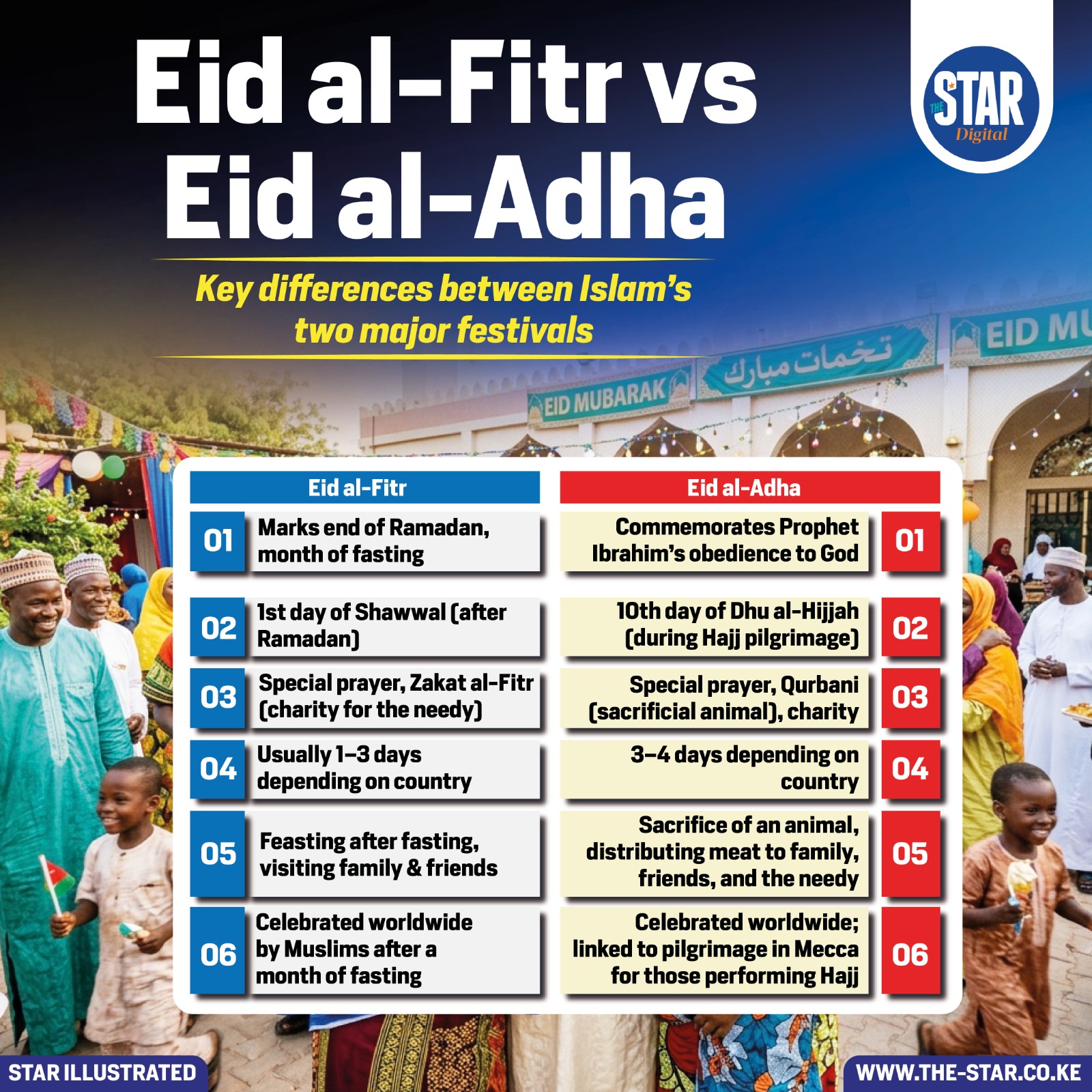
Eid al-Fitr marks the end of Ramadan, the holy month of fasting. It falls on the 1st day of Shawwal and is celebrated with a special prayer followed by giving Zakat al-Fitr, a charity for the needy. The festival usually lasts 1–3 days, depending on the country, and is characterized by feasting after a month of fasting, visiting family and friends, and communal celebrations.
Eid al-Adha commemorates the obedience of Prophet Ibrahim (Abraham) to God. It occurs on the 10th day of Dhu al-Hijjah, coinciding with the Hajj pilgrimage in Mecca. Key observances include a special prayer, the Qurbani (sacrifice of an animal), and distribution of meat to family, friends, and the needy. Eid al-Adha usually lasts 3–4 days, and while it is celebrated worldwide, it holds a unique connection to those performing Hajj.
In essence, Eid al-Fitr celebrates the conclusion of fasting, focusing on gratitude and community, whereas Eid al-Adha commemorates devotion and sacrifice, highlighting obedience and generosity. Both festivals, however, are marked by prayer, charity, and the spirit of togetherness among Muslims globally.