
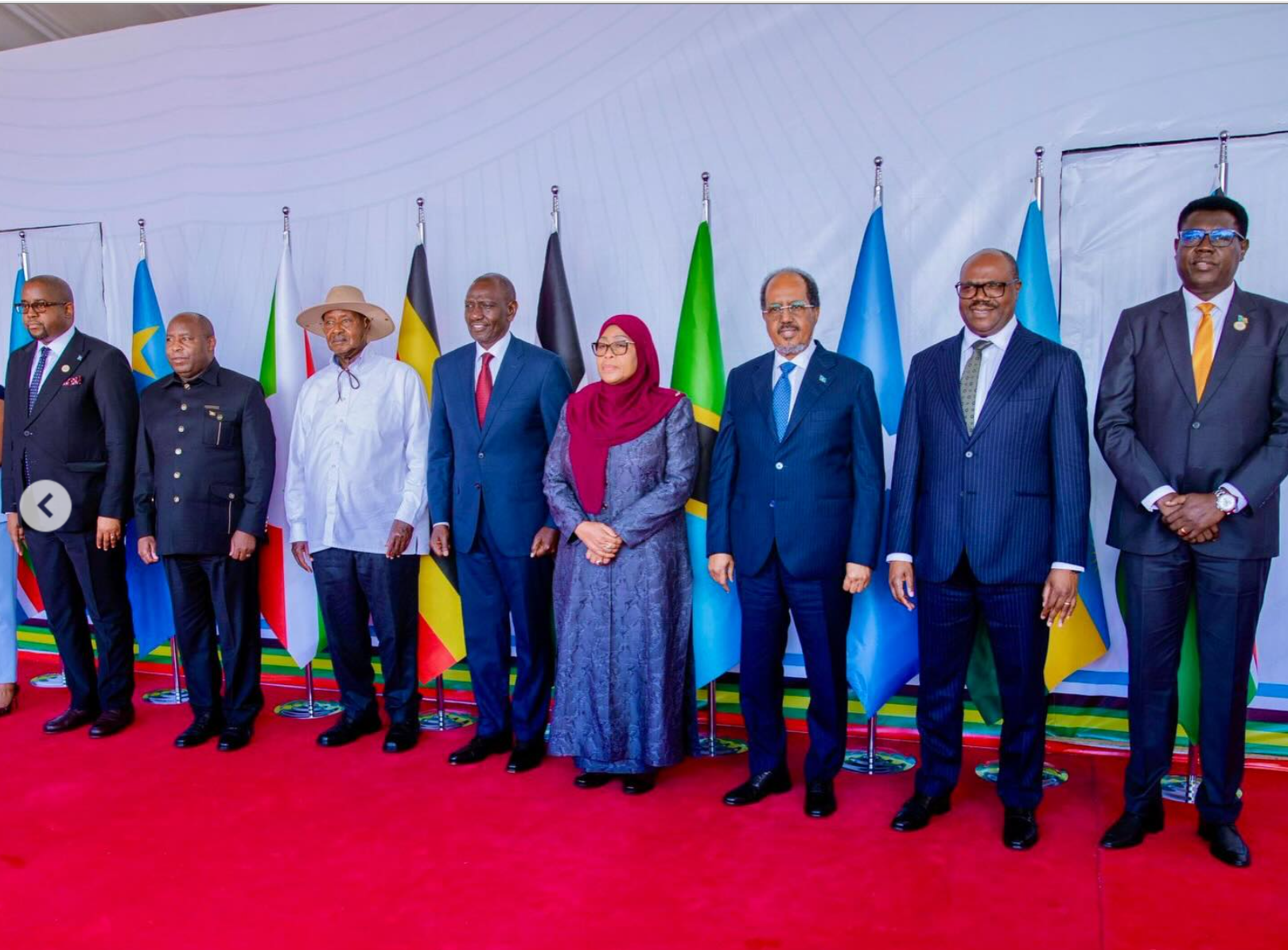
 The East African Community (EAC) Heads of State convened on March 7 to deliver major reforms to the Community's financing and governance architecture.
The East African Community (EAC) Heads of State convened on March 7th and delivered major reforms to the Community's financing and governance architecture. They revised the hybrid financing formula from 65% equal contributions, 35% assessed contributions (based, e.g. on GDP), to 50/50. They also waived half of accumulated arrears by defaulting states with a two-year clearance timeline for the balance, introduced compliance requirements for nominations to senior positions and, crucially, replaced quorum requirements from all members to two-thirds.
These are significant steps towards restoring EAC’s institutional integrity. But the key question is whether the Summit’s decisions address the fundamental reasons that brought the Community to the brink of collapse. The Community's crisis was never about the financing formula’s design or the size of the contribution. It was about the political will to comply and to enforce compliance. It was about the absence of consequences for non-compliance.
Math Won’t Solve Non-Compliance
Kenya, Uganda, Tanzania, and Rwanda remained up to date on contributions, while the rest have accumulated significant arrears. The new 50/50 formula addresses equitable burden concerns. Smaller economies will pay less, larger ones more. But marginal reductions change nothing about compliance calculus. Not for past arrears nor for future obligations.
For instance, DRC's GDP is almost that of Tanzania, so GDP-weighting won't reduce DRC's obligation significantly. So why would anyone believe DRC will suddenly pay when it's currently paying virtually nothing, despite faithfully paying its dues in SADC?
Nevertheless, the pragmatic one-off 50% debt amnesty demonstrates political goodwill by compliant states to move forward together as eight. The two-year arrears clearance timeline is very generous, well beyond the Treaty's eighteen-month standard. No one can now claim that the burden is unreasonable or that the formula is unfair. Defaulters have been given extraordinary grace. The question is whether they will honour it.
Breaking Paralysis, Consolidating the Community
The Summit also reformed decision-making by deciding that the quorum of all EAC organs and institutions is two-thirds instead of all partner states. Previously, the absenteeism of any member meant that decisions could not be made, paralysing the Community. This new quorum rule prevents boycotts from freezing decision-making, enabling compliant states to advance integration initiatives.
The Summit introduced the first enforcement mechanisms by tying compliance directly to institutional influence. States that fail to domesticate the Treaty, ratify all EAC legal instruments and meet financial obligations punctually can no longer nominate candidates to the Community's five senior positions. The message to non-compliant members was clear: failure to meet obligations may make them permanent institutional outsiders.
This is critical since chronic non-payment has not been about lack of capacity but rather a deliberate political choice by partner states. The signal was reinforced through the appointment of a Secretary-General from Tanzania. Uganda, another faithful contributor, became Summit Chair, with Rwanda appointed Rapporteur (meaning it chairs the next Summit).
These reforms show that the Summit is quietly managing the expansion and consolidating the Community - stabilising the organisation and restoring its functionality – rather than deepening integration immediately.
Sanctions Inevitable
The Summit, again, directed the finalisation of the sanctions against non-compliant members, a direction long delayed by vetoes from states subject to those sanctions. The Treaty provides clear tools. Article 143 empowers sanctions for non-compliance. Article 146 permits suspension for failure to meet financial obligations within eighteen months. Article 147 allows expulsion for gross and persistent Treaty violation. Multi-year non-payment is by any reasonable reading, both gross and persistent. Together, the Summit's directive and the Treaty's provisions make sanctions all but inevitable.
The drafters anticipated that consensus rules would give a state subject to sanctions a veto over proceedings against itself. Article 148 explicitly removes this veto. Defaulting states cannot block enforcement, while compliant states helplessly watch the Community collapse.
A Warning Shot
The original EAC collapsed in 1977 when shared institutional commitment became politically inconvenient. It took sixteen years to start rebuilding it with the establishment of the Tripartite Commission for East African Cooperation in 1993, which culminated in the EAC’s reestablishment in 1999, with a robust legal framework.
Now, the generation that understood the cost of the 1977 failure is gone. The institutional memory that drove the 1999 re-establishment is fading. Heads of State have fired a warning shot, making it clear they will not allow what has been steadily built over three decades to be disintegrated by financial delinquency.
But a warning shot only works if those being warned believe enforcement will follow. The Treaty is clear. The legal tools exist. A community that cannot enforce its most basic membership obligations risks becoming an increasingly expensive diplomatic club.
The Summit decisions show that the Heads of State are acutely aware of this. But their reforms are only as strong as their implementation. The world is watching.
---
Mugendi Nyaga is an actuary and a public policy analyst,