The push for gender equality across Africa faces its steepest climb within the realm of social and cultural norms, according to a recent GeoPoll survey spanning Kenya, Nigeria, South Africa, and Egypt.
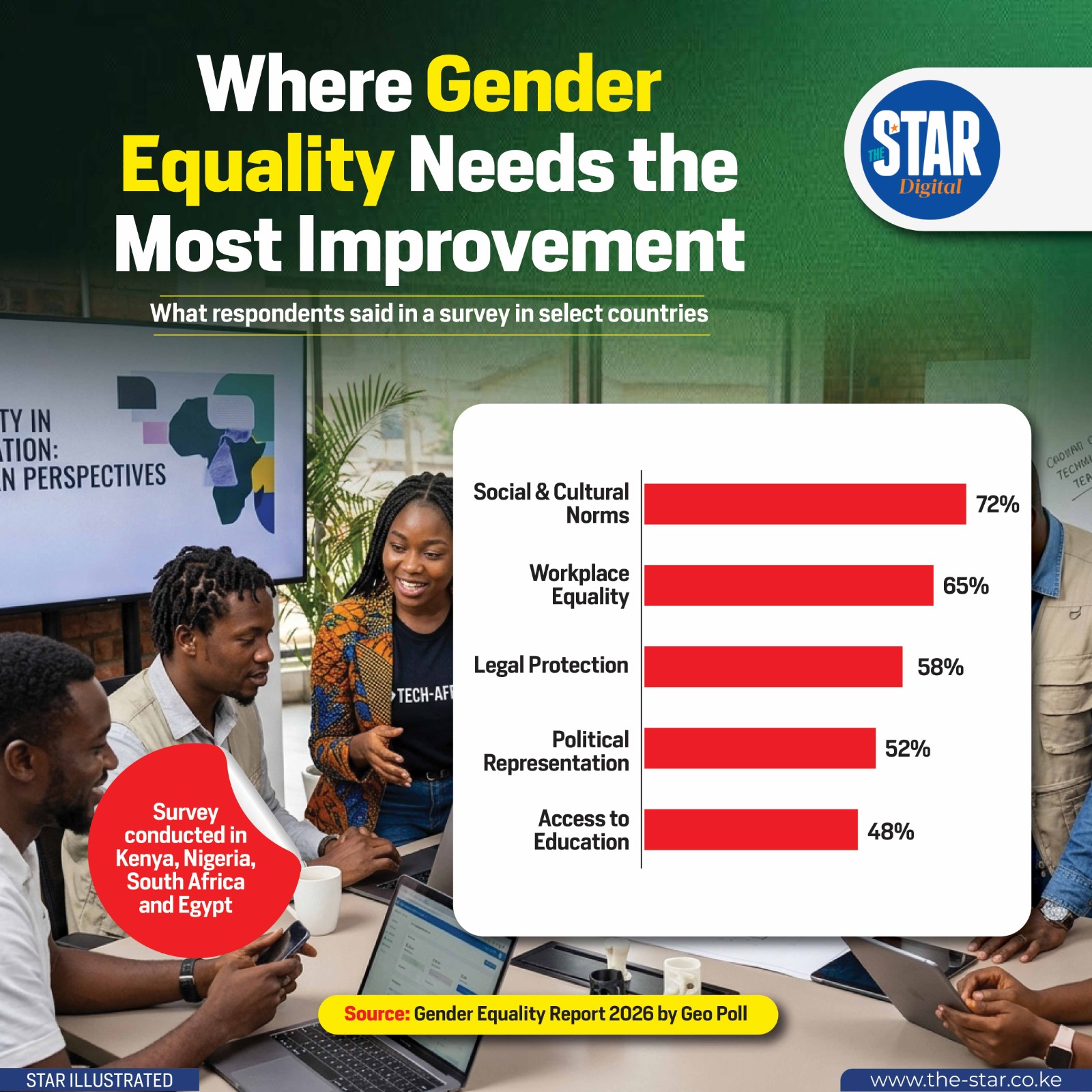
Findings from the Gender Equality Report 2026 reveal that a staggering 72% of respondents identify deeply rooted societal traditions and cultural expectations as the primary barrier to parity.
This suggests that while policy changes are vital, the battle for equality is being fought most intensely in the minds and homes of citizens.
The workplace remains another significant frontier of discontent, with 65% of those surveyed citing professional environments as a critical area requiring improvement.
This concern outpaces the demand for better legal protections, which was flagged by 58% of participants. The data highlights a disconnect between having laws on the books and the lived experience of women navigating corporate ladders and labor markets.
Representation in the halls of power also remains a point of contention. Over half of the respondents, at 52%, believe political representation is a major hurdle, indicating a persistent thirst for more inclusive governance and leadership roles.
Interestingly, access to education—once the central pillar of the equality movement—is viewed as the area needing the least relative improvement at 48%.
While still a significant concern, its lower ranking suggests that progress in school enrollment has shifted the public focus toward what happens after graduation: the struggle for legal safety, political voice, and cultural respect.